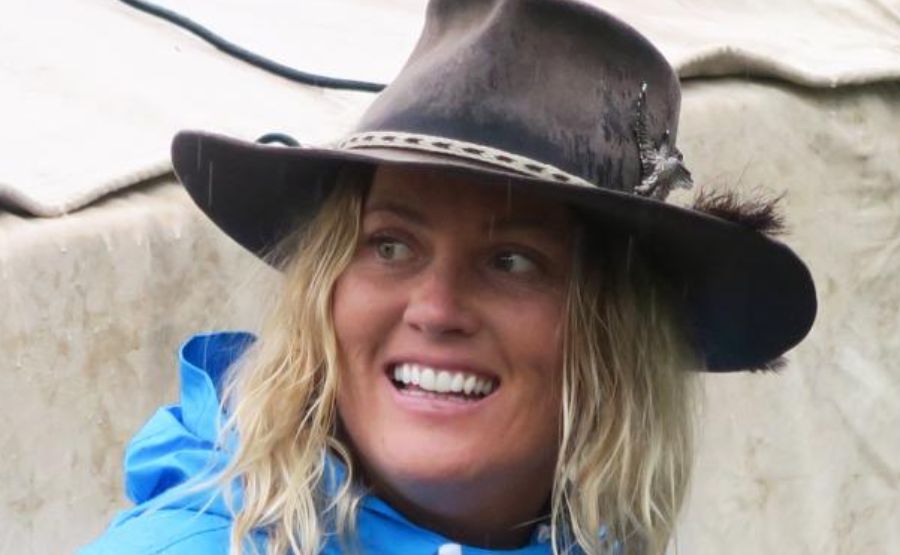
Misty Raney: The Woman Who Learned to Swing a Chainsaw Before She Wanted To
Quick Bio
| Detail | Information |
| Full Name | Misty Raney Bilodeau |
| Born | November 9, 1979, Sitka, Alaska, USA |
| Nationality | American |
| Primary Roles | Reality TV personality, carpenter, farmer, homestead builder, licensed mountain guide |
| Television | Homestead Rescue, Discovery Channel (2016–present; 102+ episodes across 12+ seasons) |
| Family Business | Alaska Stone and Log (founded by father Marty Raney) |
| Father | Marty Raney — master builder, mountaineer, musician |
| Mother | Mollee Roestel |
| Siblings | Miles Raney (adventurer/traveler), Melanee Stiassny (rafting business owner, Girdwood, AK), Matt Raney (co-star, Homestead Rescue) |
| Husband | Maciah Bilodeau (carpenter and surfer; married March 17, 2000) |
| Son | Gauge Bilodeau (born 2011) |
| Residences | 800 sq. ft. cabin, Hatcher Pass, Alaska (summers); Hawaii (winters) |
| Notable Achievement | Co-summited Denali with Marty Raney; documented in a Japanese film |
| Certified | Licensed mountain guide |
| Estimated Net Worth | $400,000–$600,000 (2025) |
| @mistyraneybilodeau (119K+ followers) |
A Childhood That Was Its Own Curriculum
To understand Misty Raney, it helps to understand what childhood looks like when school is a remote Alaskan wilderness and the curriculum is survival. Misty was born on November 9, 1979, in Sitka, Alaska, the third of four children born to Marty Raney and Mollee Roestel. All four Raney children carry names beginning with M — Miles, Melanee, Misty, and Matt — a deliberate choice by their parents meant to knit the family into a single coherent unit.
Since 1974, the Raneys had resided in Alaska. Their homestead in Haines, in the southeastern panhandle of the state, sat surrounded by a high concentration of Alaskan brown bears. The family often lived without power, running water, or plumbing. This was not a lifestyle choice made from some ideological perch — it was the only life they knew, and it demanded total participation.
From the time she was small, Misty hauled water, split firewood, helped coax crops from soil that resisted cultivation, and participated in the annual family hunts for moose, caribou, and Dall sheep. When Marty expanded into Wasilla with his building company, Alaska Stone and Log, the children became part of the workforce. They peeled logs, quarried stone, and absorbed construction techniques through sheer repetition.
“When I was a kid, our buddies, they’d go out and do who knows what,” Misty recalled in an interview with the Alaska Sporting Journal. “But we were always at work. My whole childhood we worked — all the time — and I look back at how important those expectations were at a really young age.”
She resisted some of it at first. Chainsaws and woodcutting were not, initially, appealing to her. By age twelve, they had become her favorites.
See also “Debby Clarke Belichick: The Architect of a Life Built on Her Own Terms“
The Raney Philosophy: Work Before Play, Always
The Raney household operated by a code that most American families would find extreme. Marty Raney believed — and still believes — that character is built through the deliberate withholding of comfort. The family walked the entire Chilkoot Pass, the historic trail used by Klondike Gold Rush miners in 1898, when the children were all younger than ten. It was an educational statement made in physical suffering.
Marty’s own backstory reinforces the ethic. He left school at sixteen to move to Alaska. He eventually summited Denali — the highest peak in North America, at 20,310 feet — multiple times, later as a certified guide. He built a mountaineering guiding business, a stone-and-log construction company, and became a recording musician with original songs performed at altitude. His productivity was a form of instruction.
Misty absorbed it all. She developed not just individual skills — carpentry, farming, hunting, fishing, food preservation — but something harder to teach: the ability to hold multiple complex problems in mind simultaneously and solve them with limited resources. That cognitive habit, forged in the Alaskan backcountry, would become her most distinctive professional quality decades later.
Her sister Melanee chose a different but related path: she owns a successful rafting company in Girdwood, Alaska. Her brother Miles became a mountain biker and adventure traveler, one of the most widely traveled explorers in the family’s orbit. Her younger brother Matt became both an accomplished stone mason and, eventually, her co-star on national television. The Raney children went in distinct directions, but each direction ran through the same wilderness education.
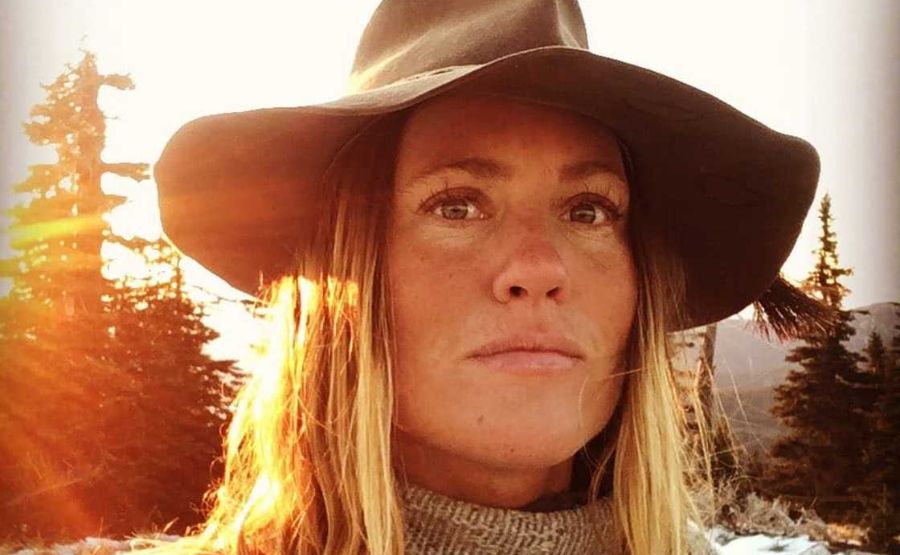
On Denali: The Mountain That Revealed a Father and a Daughter
Among the many things Misty Raney has done that most people will never do, one stands out for its emotional as well as physical weight. She summited Denali alongside her father Marty — a climb that produced a Japanese documentary and a family story that tells you everything about both of them.
The expedition included nine Japanese climbers, Marty, and Misty. At 14,000 feet, the weather stalled the group for ten days. When it finally cleared and the ascent resumed, Marty developed altitude sickness.
He told Misty he wanted her to turn back with him. The mountain would always be there, he said.
What that exchange contained — a father acknowledging his own limitations, a daughter being asked to choose between ambition and loyalty — captures the particular texture of the Raney family dynamic. It was a moment of physical extremity that was also a moral test. Misty has described the conversation in interviews without sentimentality, but with evident weight. The ordeal found its way into a documentary screened in Japan, a record of one of the quieter, more revealing moments in her life.
She holds a certified mountain guide license. The credential is not ornamental.
Marriage, Home, and the Architecture of a Chosen Life
Misty married Maciah Bilodeau on March 17, 2000. He is a skilled surfer and a carpenter, which provided her marriage to a tradesman a particular symmetry. The two met through the overlapping world of Alaskan outdoor life and built a partnership grounded in the same values Misty grew up practicing: physical competence, self-sufficiency, and a preference for doing over talking.
Maciah has called Misty “Little Marty” — a nickname she finds simultaneously painful and flattering. The comparison to her father, who is by her own account the hardest worker she has ever known, serves as both an affectionate tease and a sincere compliment.
Their son Gauge was born in 2011. The Bilodeaus maintain an 800-square-foot cabin in Hatcher Pass, Alaska — a structure notable for its deliberate smallness in a culture that measures aspiration in square footage. They spend Alaskan summers there, farming, building, and keeping the homestead functioning. They move to Hawaii when winter sets in, where Maciah can surf and the family can enjoy the warmer climate. The rhythm is not a compromise — it is a considered architecture of a life designed around what each season offers.
Misty rarely discusses her marriage publicly with any depth. Her Instagram account — which carries more than 119,000 followers — shows glimpses of family life, occasional fishing shots, and updates tied to the show. She does not perform domesticity for an audience. She simply lives it, and occasionally lets people look.
Her weight gain, noticed by fans in 2019, prompted speculation about pregnancy. She addressed it directly and practically: working at the physical intensity her lifestyle demands requires caloric fuel, and the body adjusts accordingly. No apology, no extended explanation.
Homestead Rescue: The Show That Found Her, Not the Other Way Around
When Discovery Channel launched Homestead Rescue on June 17, 2016, they were not looking for a character to play a role. They were looking for people who already had the role. The Raneys — Marty, Matt, and Misty — were recruited precisely because their expertise was not constructed for television. It existed before any camera crew arrived.
The show’s premise is functional rather than theatrical. Families attempting to live off the grid across America — in Montana’s high country, in the Florida swamps, in remote corners of Appalachia and the Sonoran Desert — reach a crisis point and call for help. The Raneys arrive, assess the damage, and rebuild over the course of weeks, installing the practical infrastructure of sustainable survival: water systems, livestock enclosures, greenhouses, food preservation setups, structural repairs.
Misty’s domain on the show spans agriculture, food systems, and construction. On paper, this describes the “softer” side of the operation — the growing and preserving, the gardens and smokehouses. In practice, she switches between digging structural posts into freezing ground and constructing a greenhouse out of salvaged windows with ease. She diagnoses a homestead’s failures with the same directness she brings to everything: quickly, completely, without flattery.
Her official Discovery Channel bio offers a characteristic quote: “I love to swing a hammer, and to construct things from a few simple materials. It’s weird, but I do. Anything to do with constructing, gardening, livestock, hunting, obtaining water, and more, my family thrives in helping people get a handle on their own problem. Alaska keeps us tough.”
The “it’s weird, but I do” is telling. Misty Raney knows that her pleasure in physical construction reads as unexpected in a woman, and she names that oddness without defensiveness or apology. She then moves on.
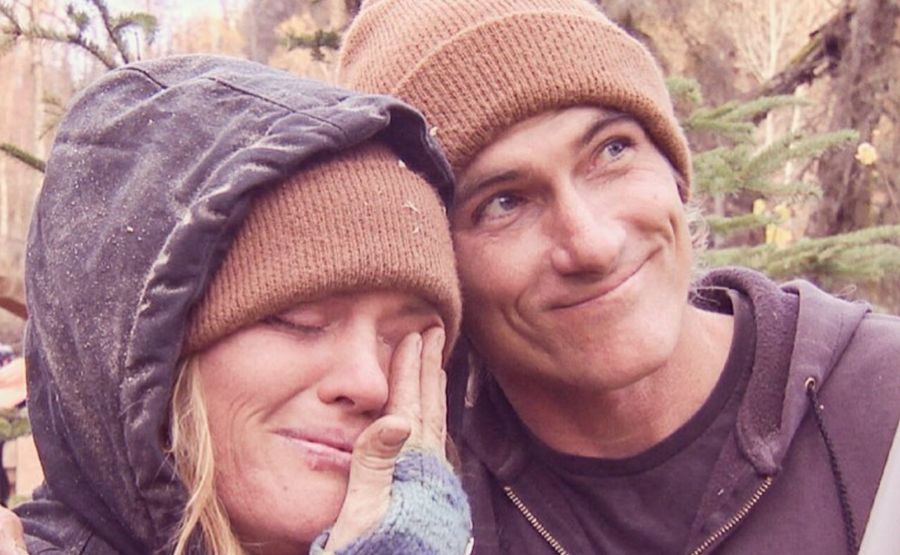
The Straight-Talking Provider
It’s possible that early viewers of Homestead Rescue had preconceived notions about the three-person team’s gender roles. Marty carries the patriarch’s authority. Matt handles the hunting and predator-related work. Misty, the only woman, might reasonably have been expected to occupy a supporting role — gentle, encouraging, handling the domestic logistics.
What actually happens on screen is more interesting. Misty diagnoses structural problems with the same authority as her father. She drives fence posts, constructs cold frames, and builds solar-powered water systems. She tells struggling families, without hedging, exactly what they have done wrong and what they must do differently. She is not unkind, but she is clear — the show’s description of her as “straight-talking” is accurate.
“People are patting me on the back and giving me props, telling me, ‘It’s amazing what you’ve done,'” she said in the Alaska Sporting Journal interview. “But actually, I say to look at these women and how they’re living their lives. They are made of a material that doesn’t exist, because any normal woman would have given up years ago.”
This redirection of credit — from herself to the homesteading women she helps — is a consistent pattern. She takes particular satisfaction in seeing struggling female homesteaders find their footing. One family, the Crums of Montana, affected her deeply. She talked about how, after working with them under challenging circumstances for weeks, she was the first to cry during the farewell.
Across more than 102 episodes and twelve seasons, she has worked in subarctic Alaska, flood-prone lowlands, drought-stricken deserts, and subtropical wetlands. Each environment required different adaptations of the same core knowledge. Her famous working declaration — “You can grow food anywhere, it is all about technique” — is not optimistic. It is agricultural engineering delivered with conviction.
Personal Life, Private Struggles, and the Weight of Public Attention
Misty Raney occupies a peculiar position within American reality television: she is genuinely, substantively famous for doing genuinely, substantively useful things. This is rarer than it sounds. The genre typically manufactures conflict and drama from interpersonal friction. Homestead Rescue manufactures drama from environmental extremity and the high stakes of family survival.
The health-related speculation she faced in 2019 — fan commentary on her weight, rumors about eating disorders and compulsive behavior — exemplifies the particular discomfort of inhabiting a female body in a medium that subjects female bodies to relentless commentary. She addressed the weight gain factually. She did not dignify the disorder rumors with a direct response. Her silence on that front was its own form of communication.
Her mother Mollee Roestel, who raised the Raney children in the Alaskan backcountry, has chosen not to appear on the show — as has older sister Melanee, who runs her rafting business independently in Girdwood, and brother Miles, who travels internationally as an adventurer. The family’s selective relationship with publicity reflects a shared temperament: they engage where engagement serves a purpose, and withdraw where it doesn’t.
Mollee’s health — she lives with Type 1 diabetes, as does her son Matt — has been part of the background context of the Raney family story. Managing chronic illness within an extreme off-grid lifestyle is one of the quieter forms of difficulty that the show does not always highlight.
Misty’s domestic life in Hatcher Pass and Hawaii represents a deliberate counterweight to the travel demands of Homestead Rescue. The show sends her across the continent for weeks at a time. Her home — small, functional, chosen — provides the anchor. The 800-square-foot cabin is not a failure of ambition. It is a philosophical statement about the right relationship between shelter and sufficiency.
Legacy and the Larger Conversation She’s Part Of
The homesteading movement that Misty Raney represents on screen has grown substantially in the decade since Homestead Rescue premiered. Interest in off-grid living, food sovereignty, and self-sufficiency accelerated through the pandemic years, the supply chain disruptions of 2020–2022, and the ongoing anxiety about climate instability and economic fragility. The number of Americans attempting some form of subsistence agriculture or off-grid living has increased markedly.
Misty Raney did not create this movement. She arrived at its moment of greatest public interest with a lifetime of genuine credentials. That combination — skill that predates the trend, delivered without condescension — distinguishes her from the content creators and lifestyle influencers who have flooded the homesteading media space.
Her specific contribution to the cultural conversation is the insistence that food security is engineering, not aesthetics. A greenhouse built from salvaged windows is not charming — it is functional, and its function is a family’s winter food supply. A predator-proof chicken enclosure is not a rural design project — it is the difference between having livestock and losing it to a bear. She strips the romanticism away from off-grid living without discouraging anyone from pursuing it.
Her role as a woman doing the full range of homestead labor — including heavy construction, hunting, and the physical work that culture associates primarily with men — normalizes a division of labor based on competence rather than gender. She does not make speeches about this. She simply does the work on camera, week after week, across twelve seasons and counting.
The Alaska Stone and Log family business remains part of her professional life alongside the television work. The television income — roughly $400,000 to $600,000 in estimated net worth as of 2025 — reflects both her show earnings and the accumulated value of a life built, as her father’s always was, through multiple streams of skilled labor.
Her son Gauge is now in his teens. He is being raised across two of the most distinctive environments available to an American child: the subarctic wilderness of interior Alaska and the coastal warmth of Hawaii. Whether that childhood produces another generation of Raneys oriented toward the land, or something entirely different, is not yet visible. What is clear is that Misty is making the same bet Marty made — that the absence of luxury, combined with the presence of demanding work, produces people who can navigate a complicated world.
Final Thoughts
Misty Raney has the somewhat unusual distinction of being a television personality whose fame rests on skills that existed long before any producer called. She was a carpenter, a farmer, a mountaineer, and a homestead builder before Homestead Rescue gave those qualifications a national audience. The show amplified what was already there rather than constructing something new.
That authenticity is what the audience responds to. The Discovery Channel’s decision to insist on minimal scripting, and Marty Raney’s insistence on the same, produced a show that looks and feels different from manufactured reality television. Misty’s on-screen persona — direct, empathetic, physically capable, emotionally honest — is not a persona. It is the person.
Her biography resists the conventional narrative of struggle-and-triumph that biography tends to seek. She did not overcome her background; she emerged from it fully formed. Her challenges have been environmental rather than social — altitude sickness at 14,000 feet, a homestead in bear country, crops that may or may not survive an early freeze. These are the challenges she chose, and continues to choose, every season.
The homesteading conversation she participates in is increasingly urgent. As global food systems show their fragility and as more people seek meaningful work connected to physical reality, the knowledge Misty Raney carries — and freely distributes throughout twelve television seasons—becomes more, not less, pertinent. She would probably not say it in those terms. She would say Alaska keeps you tough, and leave it there.
That economy of language is itself part of the lesson.
FAQs
1. Who is Misty Raney?
She is an American reality television personality, carpenter, farmer, and homestead builder, best known as a co-star of Homestead Rescue on Discovery Channel. She appears alongside her father Marty Raney and brother Matt Raney, helping struggling off-grid families across the United States.
2. When and where was Misty Raney born?
She was born on November 9, 1979, in Sitka, Alaska.
3. Who are Misty Raney’s parents?
Her father is Marty Raney, a legendary Alaskan homesteader, master builder, mountaineer, and musician. Her mother is Mollee Roestel, who raised the family in the Alaskan backcountry. Mollee has chosen not to appear on the show.
4. Does Misty Raney have siblings?
She has three: Miles Raney, an adventurer and world traveler; Melanee Stiassny, who owns a rafting company in Girdwood, Alaska; and Matt Raney, her younger brother and co-star on Homestead Rescue.
5. Who is Misty Raney’s husband?
She is married to Maciah Bilodeau, a carpenter and experienced surfer. They married on March 17, 2000.
6. Does Misty Raney have children?
Indeed. Gauge Bilodeau, her son with Maciah, was born in 2011.
7. Where does Misty Raney live?
She divides her time between an 800-square-foot cabin in Hatcher Pass, Alaska, where the family spends summers, and a home in Hawaii, where they spend winters.
8. What are Misty Raney’s professional skills?
She is a trained carpenter, homestead builder, farmer, food preservationist, greenhouse builder, and licensed mountain guide. She specializes in food production systems, predator-proof livestock enclosures, and sustainable water systems.
9. When did Homestead Rescue premiere?
The show premiered on Discovery Channel on June 17, 2016. As of 2025, it has run for more than twelve seasons and over 102 episodes.
10. Has Misty Raney climbed Denali?
Yes. She climbed Denali alongside her father Marty in an expedition that included nine Japanese climbers. The climb, which saw Marty develop altitude sickness at 14,000 feet, was documented in a Japanese film.
11. What is Misty Raney’s role on Homestead Rescue?
She serves as the show’s primary expert in agriculture, food systems, construction, and food preservation. She designs and builds greenhouses, garden systems, livestock enclosures, and smokehouses, and teaches homesteading families to grow and preserve their own food.
12. Is Misty Raney involved in the family business?
Yes. She participates in Alaska Stone and Log, the family business founded by Marty Raney, which specializes in construction using natural materials including stone and log.
13. What is Misty Raney’s estimated net worth?
Her estimated net worth as of 2025 is approximately $400,000 to $600,000, derived from her television salary, involvement in the family business, and public appearances.
14. Does Misty Raney have social media?
She maintains an Instagram account (@mistyraneybilodeau) with over 119,000 followers and a Facebook page. She shares selective updates about the show and family life.
15. What is Misty Raney’s nickname within her family?
Her husband Maciah calls her “Little Marty” — a reference to her father — which she describes as both painful and a genuine compliment.
Empowering curious minds to explore, learn, and think deeper with Fact Aura.