Mona Vaynerchuk: The Pharmacist Who Rewrote the Prescription
Mona Vaynerchuk matters in 2025 not because she married one of the internet’s most recognizable entrepreneurs, but because she built a credible, science-backed wellness platform years before that marriage gave her a wider audience — and because the tension between those two identities reveals something honest about what it costs to be a woman with her own career who is consistently introduced as someone else’s partner.
She was born Mona Vand in Los Angeles on March 10, 1985. She earned a Doctor of Pharmacy degree in six years. She worked as a clinical pharmacist in the city where she grew up, realized within months that conventional prescription culture was not what she had trained for, and quietly rebuilt her professional life from the ground up. That process — from licensed pharmacist to wellness brand founder, podcast host, television producer, content creator, and investor — took roughly a decade and produced a following of millions before Gary Vaynerchuk ever posted a word about her.
That chronology matters. It is the framework through which the rest of her story should be read.
Quick Bio
| Detail | Information |
| Full Name | Mona Vaynerchuk (born Mona Vand) |
| Born | March 10, 1985 |
| Birthplace | Los Angeles, California, USA |
| Nationality | American |
| Ethnicity | Iranian-American (parents immigrated from Iran post-revolution) |
| Education | Doctor of Pharmacy (PharmD), Massachusetts College of Pharmacy and Health Sciences, Boston (6-year program) |
| Early Career | Clinical and compounding pharmacist, Los Angeles |
| Brand Founded | “The Modern Pharmacist” (2014) |
| TV Series | Dr. Mona Vand: The Modern Pharmacist (2014–) |
| Podcasts | Mona-Vated (multiple seasons); Mona’s Clean Dinners; CoreSelf (with Chloe Flower) |
| Media Appearances | NBC, The Doctors (CBS), Yahoo Finance, The Telegraph |
| TikTok | 14M+ likes |
| 500K+ followers (@monavaynerchuk) | |
| YouTube | 640K+ subscribers |
| Siblings | Nema Vand (branding executive, Shahs of Sunset cast); Sarah Vand |
| Mother | Mojgan Afsahi (microbiologist, Senior Clinical Analyst) |
| Husband | Gary Vaynerchuk (married June 14, 2025) |
| Relationship Public | February 21, 2022 |
| Estimated Net Worth | $4 million (unverified) |
| Identified As | Holistic Pharmacist, Entrepreneur, Investor |
| Diet | Plant-based since 2015 |
| Current Base | New York, NY |
The Immigrant Inheritance
To understand Mona Vaynerchuk, begin before she was born.
Her parents left Iran in the wake of the 1979 Islamic Revolution, the same upheaval that sent hundreds of thousands of Iranians across borders and into new countries with very little except education, ambition, and the particular resolve of people who have watched a familiar world collapse. They settled in Los Angeles, where a significant Iranian diaspora was already forming in the city’s western neighborhoods.
Her mother, Mojgan Afsahi, built a career as a microbiologist and Senior Clinical Analyst — a rigorous scientific path that required both intellectual discipline and professional persistence in a new country. Her father’s details remain outside the public record. Mona has two siblings: her brother Nema, who became a digital marketing and branding executive and later gained a national television profile on Bravo’s Shahs of Sunset, and her sister Sarah.
The family’s choice to minimize deep immersion in Iranian cultural practices was deliberate, rooted in the anti-Iranian sentiment that spiked in America during the 1980s. Persian immigrant families of that era frequently made the same calculation: protect the children from the racism attached to their heritage by keeping that heritage partially private. Mona has since spoken publicly about the complexity of that inheritance — the desire to reconnect with Farsi, the language she grew up distanced from, and the longing to reclaim a cultural identity her parents partly sheltered her from for her own protection.
There is something quietly poignant in that dynamic. The parents who ensured safety by stepping back from their culture produced a daughter who, in her forties, began the work of recovering it.
See also “Damon Darling Net Worth: The Comedian Who Turned Rock Bottom Into a Stage“
The Pharmacy Degree and the Immediate Crisis of Purpose
Mona enrolled in a six-year Doctor of Pharmacy program at the Massachusetts College of Pharmacy and Health Sciences in Boston while still in high school — a rigorous professional commitment that most people who set foot in it spend years questioning before they finish. She didn’t question it. She loved science.
In early interviews, she described her enthusiasm for pharmaceutical chemistry with genuine warmth. She was drawn to understanding how compounds move through the body, how individual biochemistry shapes drug response, how nutrition and pharmacology intersect in ways that conventional medicine had not fully integrated. That last interest was the sign she may not have read carefully enough before entering clinical practice.
She graduated, returned to Los Angeles, and began work as a clinical pharmacist specializing in compounding — a sophisticated and genuinely demanding branch of pharmacy that allows practitioners to formulate customized medications, adjust dosing, eliminate preservatives, and tailor treatments to individual patients rather than defaulting to commercial standards. Compounding demanded the scientific precision she had built her academic identity around. It was also, she realized, not the work she actually wanted to be doing.
The dissonance that followed was real. She had completed one of the more demanding professional doctoral programs available in American healthcare. She had passed her boards. She had a title, a license, and a clear career path. And she knew, with increasing certainty, that the path led somewhere she did not want to go.
Most people in that position stay. The sunk cost of years and debt and training is almost impossible to argue about. Mona did not stay. She worked long enough to fund the initial stages of a different life, then stepped out of clinical pharmacy entirely.
Building “The Modern Pharmacist”
In 2014, Mona Vand launched what she called “The Modern Pharmacist” — a project that, in its earliest form, was a web series and media brand designed to bridge the gap between pharmaceutical expertise and the wellness conversations that conventional medical communication had largely refused to have.
The concept was both intellectually coherent and strategically timed. American consumers were, by 2014, already consuming massive volumes of wellness content through nascent social media channels and early YouTube. But most of that content lacked scientific foundation, and most clinically credentialed voices were tethered to institutional communication norms that prohibited the kind of direct, personal engagement she was proposing.
She occupied a genuine gap. A licensed pharmacist willing to talk about plant-based eating, supplement sourcing, the difference between pharmaceutical marketing and evidence-based nutrition, and the specific science behind why certain foods behaved the way they did in the body — that combination did not exist at scale before she built it.
The TV series launched on IMDB-registered credits beginning in 2014. Her brother Nema served as line producer in the early seasons. Media appearances on NBC, The Doctors on CBS, Yahoo Finance, and The Telegraph followed, giving her a credibility architecture that lifestyle influencers without her credentials could not replicate.
She also attracted unexpected industry attention. Russell Simmons, the co-founder of Def Jam Records and a prominent advocate of plant-based living, was among those who attended her launch events, lending visible endorsement from outside the wellness bubble. The signal it sent was clear: this was not simply another health blogger. This was someone building a movement with pharmaceutical authority behind it.
The Platform, the Burnout, and the Return
Between 2015 and 2022, Mona Vand’s digital presence grew across every channel simultaneously. She committed to a plant-based diet in 2015 and made that commitment central to both her content and her self-presentation. She built a YouTube channel to over 200,000 subscribers in a single year, an acceleration rate that attracted significant attention from other creators. She launched the Mona-Vated podcast. She grew TikTok to over 14 million likes. She wrote a blog, developed recipes, filmed wellness tutorials, and maintained a visual identity — clean design, professional but accessible — that positioned her at the intersection of expert and relatable.
She also hit a wall.
At some point before 2022, Mona stepped off social media entirely for approximately a full year. The details remain personal and she has addressed them obliquely rather than exhaustively in public. What she has acknowledged includes perfectionism, the invisible weight of producing content across multiple platforms simultaneously, and the specific kind of burnout that arrives when the work of performing wellness becomes itself an obstacle to experiencing it.
The withdrawal was complete and intentional. When she returned, the framing had changed. The content expanded beyond strictly pharmaceutical wellness into spirituality, fashion, relationship conversations, and the kind of inner life content that she had previously kept outside the brand’s frame.
The return produced the CoreSelf podcast with cellist and entrepreneur Chloe Flower, a series that brought Gary Vaynerchuk onto an episode that became widely circulated, and a third season of Mona-Vated that ranged considerably further than its first two.
Personal Life, Family, and the Relationship That Changed Everything
The moment that shifted public awareness of Mona Vand permanently arrived on February 21, 2022, with two nearly simultaneous Instagram posts.
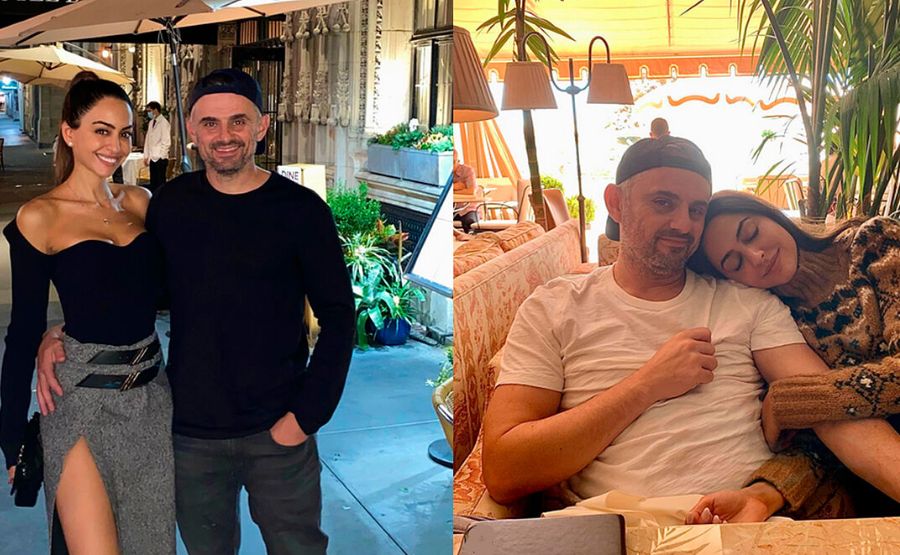
Gary Vaynerchuk posted a photo of them together and wrote that she made him “so deeply happy.” She posted a photo of herself leaning against him and wrote that life with him was beautiful. The internet’s reaction, as is typical for revelations that carry implications beyond their literal content, was complicated.
Gary had been married to Lizzie Vaynerchuk since 2004. They shared two children — a daughter, Misha Ava, born in 2009, and a son, Xander Avi, born in 2012. Gary had spent years publicly positioning himself as intensely private about family, a man whose professional persona was relentless and vocal but whose domestic life remained deliberately invisible. The posts were, for many who followed him closely, genuinely shocking.
Mona’s role in the narrative that followed was one she had no control over. She became, in segments of the internet, a subject of speculation about the timeline of the relationship’s private origins. Rumors that the relationship predated its public announcement circulated widely and have never been confirmed or denied. The connection to Gary ran through legitimate professional channels — her brother Nema had business ties to Gary’s companies, including VaynerProductions and One37pm — but the precise personal history remains the Vaynerchuk household’s own.
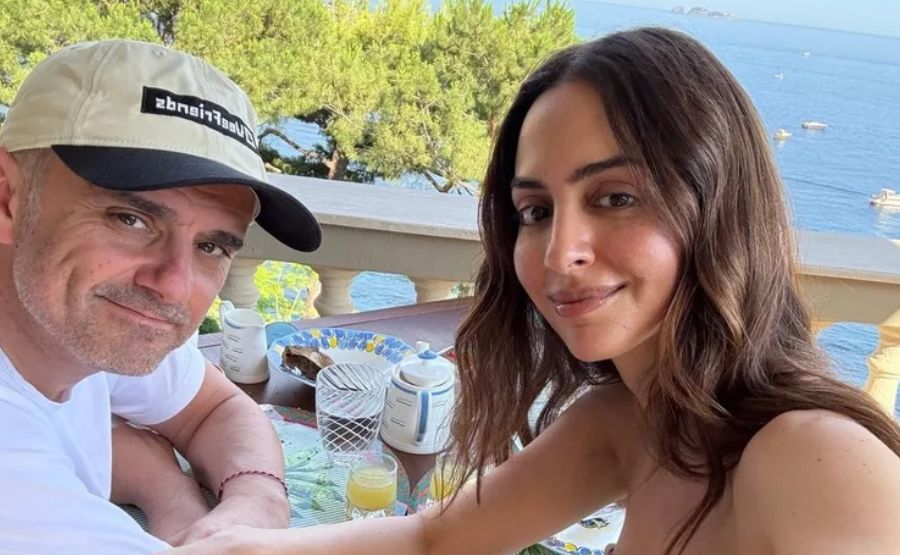
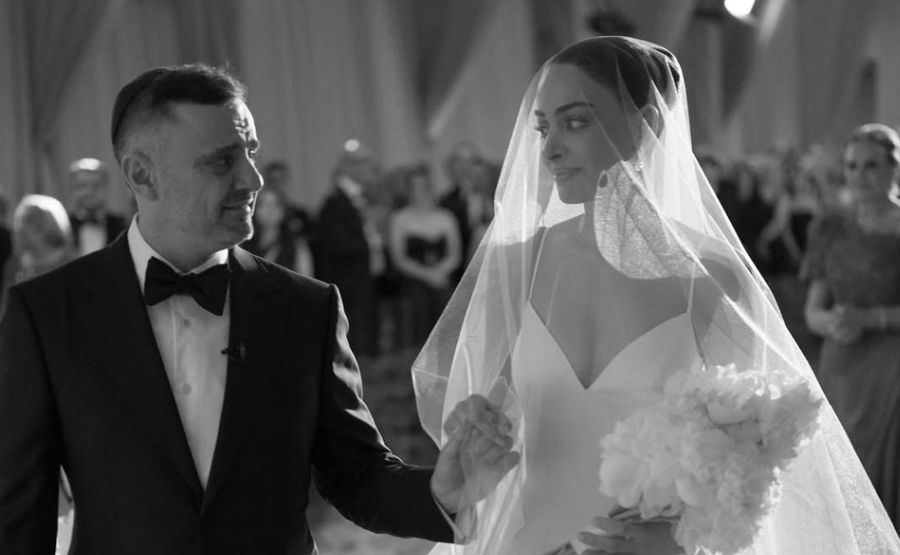
What the public record confirms is a relationship that operated transparently after February 2022. They appeared at the Pencils of Promise Gala in New York on November 4, 2024. They attended the Fanatics Super Bowl Party in New Orleans on February 8, 2025. They married on June 14, 2025, in an intimate ceremony that was reportedly held in Toronto, attended by close family and friends. Gary shared wedding photographs on Instagram on July 19, 2025, with the caption: “Mr. & Mrs. Vaynerchuk 6•14•25.”
The marriage was small, private, and entirely consistent with the values both of them had publicly described. It also generated, upon announcement, a fresh round of public commentary that had very little to do with Mona’s decade-long career as a wellness entrepreneur.
The Platform in 2025 and the Identity She Built
As of 2025, Mona Vaynerchuk describes herself professionally as a Holistic Pharmacist, Entrepreneur, and Investor — the last word a relatively recent addition that signals a deliberate expansion into capital allocation.
Her TikTok sits at over 14 million likes. Her Instagram, now under @monavaynerchuk, holds more than 500,000 followers. Her YouTube channel has grown past 640,000 subscribers. Her podcast continues into its later seasons with expanded thematic range.
The content she produces is operationally specific in ways that distinguish it from the lifestyle wellness category. She discusses which cooking oils undergo oxidation at high heat and why the distinction matters. She explains the specific inflammation pathways that certain food additives activate. She covers supplement sourcing with the literacy of someone who understands pharmaceutical-grade versus consumer-grade manufacturing standards. She has noted, as a matter of practical habit, that she arranges for hotel minibars to be cleared when she travels — a detail that is simultaneously practical and a measure of how deeply the plant-based commitment runs.
Her Persian heritage has become increasingly visible in her content. Family recipes that include traditional Iranian dishes appear alongside her wellness framing. The relearning of Farsi, which she has discussed publicly as an ongoing process, connects the cultural recovery to the broader self-understanding her forties appear to be producing.
The family dynamics with Gary’s children from his first marriage remain outside the public record, which is consistent with how Gary has always managed information about Misha and Xander. What social media reveals is a blended family navigating a significant transition with notable privacy, which is itself a value statement.
Legacy: The Credential That Built the Credibility
Mona Vaynerchuk’s most durable contribution to the wellness media space is structural rather than personal: she demonstrated that pharmaceutical credentials, used honestly, could build an audience that mainstream wellness content could not.
The wellness industry in 2025 is genuinely difficult to navigate. It contains legitimate preventive health information alongside profound misinformation, responsible supplementation guidance alongside predatory marketing, and science-based nutrition advocacy alongside unfounded claims that actively harm people. The credentialed voice that can draw those distinctions clearly, in accessible language, while remaining genuinely useful rather than just reassuring — that voice is rare and valuable.
Mona earned a six-year doctorate and then used it to talk to people about food. That sounds simple. It was not. The institutional pharmacy world she left behind does not typically celebrate its members walking into social media to challenge prescription culture in favor of preventive nutrition. She absorbed that implicit professional friction and built her platform anyway, and the 640,000 YouTube subscribers who found her before she married anyone famous represent the organic result of that gamble.
The question the next decade will answer is whether the Vaynerchuk surname and the expanded platform that comes with it will allow her to scale that credibility further — or whether the association with Gary’s considerably larger audience will gradually flatten her specific professional identity into a supporting role in someone else’s story.
She has not, as of the available record, shown any inclination to allow the latter.
Final Words
Mona Vaynerchuk presents a particular kind of biographical challenge. Her public record is genuinely split between two distinct phases — the decade she spent building a wellness brand entirely on her own professional terms, and the years since February 2022, during which her personal life became part of a much larger, noisier story. Reading those phases honestly requires keeping them separate.
The first phase produced a Doctor of Pharmacy who walked away from the conventional career her training indicated, spent years building a brand that bridged pharmaceutical science and holistic health, appeared on national television, attracted the attention of industry figures with no obvious professional incentive to notice her, and grew a multi-platform following in the hundreds of thousands. That is a substantive career built from original intellectual commitments. It predates the relationship with Gary Vaynerchuk by roughly eight years.
The second phase introduced complications that belong to any honest account of her public story. The timing of the relationship’s public announcement, the questions about its private origins, the opacity around Gary’s divorce — none of these are Mona’s to fully answer publicly, and she has not tried to. She has maintained consistent boundaries around personal information while continuing to develop her professional platforms.
The contradictions in her story are real. A woman who built a platform on transparency about health and wellness keeps significant aspects of her personal life entirely private. A pharmacist who trained within a system that emphasizes evidence-based medicine built a brand that sometimes operates in spaces where evidence is thinner. A wellness advocate who recommends plant-based living hosts a podcast called Mona’s Clean Dinners that has earned criticism from some quarters for aesthetic proximity to dietary perfectionism.
These contradictions do not diminish her. They make her a three-dimensional person building a career in public, which is always, at some level, a performance of a self that is only partially visible.
She is forty years old. She is a pharmacist. She is an entrepreneur and investor. She is a wife and stepmother. She is a first-generation American whose parents fled a revolution to give their children a different life in a country that was not always kind to them. She is relearning her grandmother’s language.
That is more than enough to build a biography around.
FAQs
1 Who is Mona Vaynerchuk?
She is an American wellness entrepreneur, podcaster, and Doctor of Pharmacy, born Mona Vand on March 10, 1985, in Los Angeles. She built the “Modern Pharmacist” brand beginning in 2014, hosts multiple podcasts, and married Gary Vaynerchuk on June 14, 2025.
2. What is her educational background?
She earned a Doctor of Pharmacy (PharmD) from the Massachusetts College of Pharmacy and Health Sciences in Boston, completing the six-year program before returning to Los Angeles for clinical practice.
3. What did she do before wellness content?
She worked as a clinical and compounding pharmacist in Los Angeles after graduating. She recognized quickly that conventional prescription pharmacy did not align with her interest in preventive, holistic health and transitioned out of clinical practice to build her own platform.
4. What is “The Modern Pharmacist”?
She introduced the brand and media concept in 2014, which connects holistic health with medicinal science. It includes a TV series, a blog active since 2015, and content across YouTube, TikTok, Instagram, and her podcasts.
5. What podcasts does she host?
Her primary podcasts include Mona-Vated (now in its third season), Mona’s Clean Dinners, and CoreSelf (co-hosted with cellist and entrepreneur Chloe Flower).
6. What is her ethnic background?
She is Iranian-American. Her parents immigrated to the United States from Iran following the 1979 Islamic Revolution and raised their three children in Los Angeles.
7. Who is her brother?
Nema Vand, a digital marketing consultant and branding executive who gained a national television profile as a cast member of Bravo’s Shahs of Sunset. He served as line producer on her TV series during its early seasons.
8. When did she and Gary Vaynerchuk go public?
February 21, 2022, when they simultaneously posted matching photos on Instagram — Gary writing that she made him “so deeply happy” and Mona describing life with him as beautiful.
9. When did they marry?
June 14, 2025, in an intimate ceremony with close family and friends, reported to have taken place in Toronto. Gary publicly shared wedding photographs on July 19, 2025, with the caption “Mr. & Mrs. Vaynerchuk 6•14•25.”
10. Does she have children with Gary?
No confirmed children together as of 2026. Gary has two children from his first marriage to Lizzie Vaynerchuk — a daughter, Misha Ava (born 2009), and a son, Xander Avi (born 2012).
11. What is her estimated net worth?
Multiple sources estimate her net worth at approximately $4 million, derived from her brand ventures, podcasting, content creation, media appearances, and investments. She has not publicly confirmed this figure.
12. What is her dietary philosophy?
She has followed a plant-based diet since 2015. Her wellness approach consistently emphasizes preventive lifestyle modification — nutrition, movement, mental health — over pharmacological intervention as a first-line response.
13. Did she stop using social media?
Yes. She stepped away from social media entirely for approximately a year before returning around 2022. She has acknowledged burnout, perfectionism, and the challenge of sustaining content production across multiple platforms simultaneously.
14. What media outlets has she appeared on?
NBC, The Doctors (CBS), Yahoo Finance, The Telegraph, eHealth Radio Network, and the Beyond Influential podcast, among others.
15. How does she describe herself professionally?
As of 2025, she identifies publicly as a Holistic Pharmacist, Entrepreneur, and Investor — a trio of titles that reflects both her clinical training and the business infrastructure she has built over the past decade.
Empowering curious minds to explore, learn, and think deeper with Fact Aura.