Michael Jackson Siblings: Nine Lives in the Shadow and Light of a Dynasty
The story of Michael Jackson’s siblings is ultimately a story about what it costs a family when one of its children becomes a myth — and what the others do to survive it.
Quick Facts
| Detail | Information |
| Family Origin | Gary, Indiana, USA |
| Parents | Joseph Walter “Joe” Jackson (July 26, 1928 – June 27, 2018) and Katherine Esther Jackson (née Scruse, born May 4, 1930) |
| Total Children | 10 (including Brandon, who died at birth) |
| Surviving Siblings (as of 2026) | Jackie, Jermaine, La Toya, Marlon, Randy, Janet (6 living) |
| Deceased Siblings | Brandon Jackson (March 12–13, 1957), Tito Jackson (October 15, 1953 – September 15, 2024), Michael Jackson (August 29, 1958 – June 25, 2009), Rebbie Jackson (May 29, 1950 – date varies by reports) |
| Birth Order | Rebbie (1950), Jackie (1951), Tito (1953), Jermaine (1954), La Toya (1956), Marlon (1957), Michael (1958), Randy (1961), Janet (1966) |
| Childhood Home | 2300 Jackson Street, Gary, Indiana (two-bedroom house) |
| Group Formation | Jackson Brothers (1964) → Jackson 5 (1966) → The Jacksons (1976) |
| Key Labels | Steeltown Records (1967), Motown Records (1969–1975), Epic Records (1976–) |
| Rock & Roll Hall of Fame | Inducted 1997 (as Jackson 5) |
| Hollywood Walk of Fame | Star received 1980 (as The Jacksons) |
| Combined #1 Hits | 27 U.S. number-one singles across all family members |
| Estimated Records Sold (group) | Over 150 million worldwide |
| Notable Individual Awards | Janet: Billboard Icon Award (first Black woman); Jermaine: Grammy nomination (1981); Rebbie: gold album for Centipede |
| Key Relationships | Jermaine married Hazel Gordy (Berry Gordy’s daughter, 1973–1988); Janet married James DeBarge (annulled), René Elizondo Jr. (div. 2000), Wissam Al Mana (div. 2017) |
| Next Generation Notables | 3T (Tito’s sons), Jaafar Jackson (Jermaine’s son, portrayed Michael in 2026 biopic) |
A Two-Bedroom House That Changed American Music
Nine children in two bedrooms. That is where the story begins — not on a stage, not in a recording studio, but in a cramped working-class home on Jackson Street in Gary, Indiana, where Joe Jackson returned each day from the Inland Steel Company in East Chicago and Katherine Jackson kept the household moving on faith, music, and discipline.
Joe had dreamed of boxing and of performing with his rhythm-and-blues band, the Falcons. Neither ambition paid the bills. What he found instead, when he caught his son Tito secretly playing his guitar in the early 1960s, was a different path — not for himself, but through his children. He was impressed enough by Tito’s playing that he bought the boy a guitar of his own. Jackie and Jermaine soon joined in. Marlon and eventually young Michael followed.
The Jackson Brothers were born from that discovery, evolving into the Jackson 5 by 1966. By November 1967, they had signed their first professional contract with Steeltown Records in Gary. Within two years, Motown Records had them under contract, and the trajectory of American pop music would never be quite the same.
Katherine’s contribution ran quieter but no less deep. A devout Jehovah’s Witness, a pianist and clarinet player who had once dreamed of performing country-and-western music, she shaped the family’s moral fabric and musical sensibility. She also instilled faith and resilience — qualities each of her children would draw upon in the turbulent decades ahead. While Joe saw opportunity, Katherine saw people. The tension between those two perspectives defined the Jackson household for half a century.
See also “Erin Barry: The Advocate in the Eye of the Storm“
The Architecture of the Jackson 5
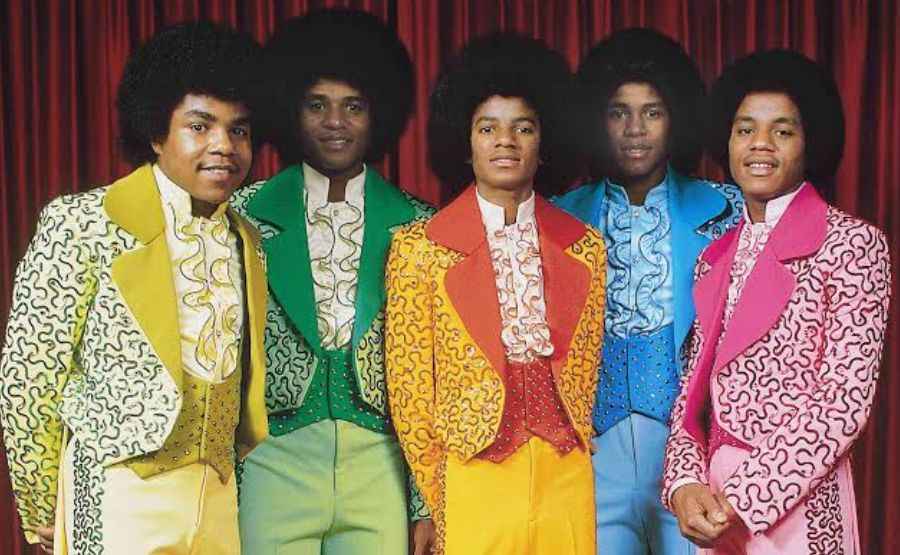
When the Jackson 5 made their Motown debut in 1969 with “I Want You Back,” they did something no group had done before: their first four singles all reached number one on the Billboard Hot 100. The feat remains singular in music history. The group became the first Black teen act to achieve that kind of commercial sweep, and they did it with a sound that fused bubblegum accessibility with soulful depth.
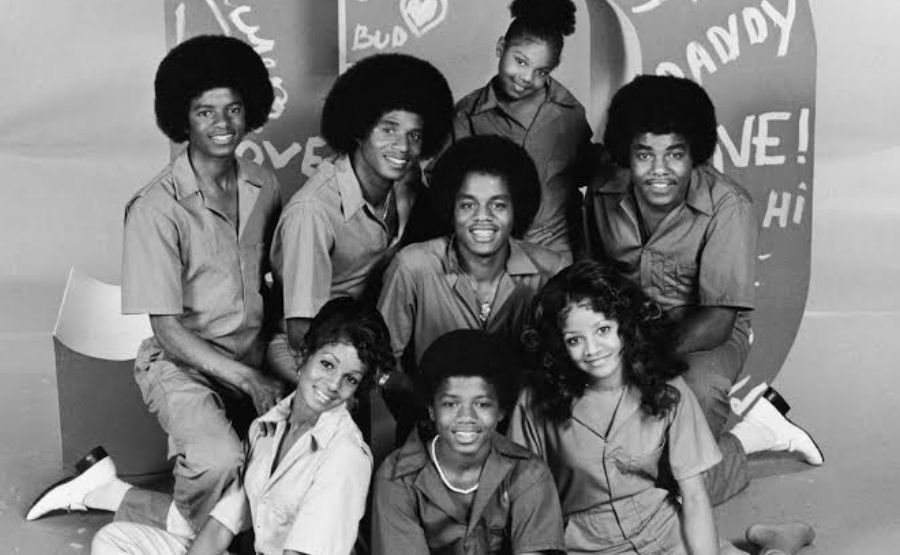
Jackie, the eldest brother, born Sigmund Esco Jackson on May 4, 1951, served as the group’s early anchor — a high-pitched tenor who had helped form the original Jackson Brothers before the younger siblings joined. Tito, born Toriano Adaryll Jackson on October 15, 1953, brought the guitar — a bluesy, grounding presence beneath the group’s shimmer. Jermaine, born December 11, 1954, commanded the bass guitar and co-lead vocals, his smooth voice weaving through the harmonies. Marlon, born March 12, 1957, was the dancer, the choreographer who gave the group its physical dimension alongside Michael.
And then there was Michael. Born August 29, 1958, the eighth of the Jackson children, he stepped forward as the lead vocalist while still a child — possessed of an instinctive musical intelligence and a stage presence that Berry Gordy recognized immediately. The Motown founder had written in his autobiography that the boys’ work ethic was “unconditional” and that “they were willing to sweat to perfection.” But Michael was different in kind, not just degree.
The success that followed — the Motown years, the era of “ABC,” “I’ll Be There,” “The Love You Save” — was genuine and stratospheric. The group sold over 150 million records worldwide. But it was success built on a foundation of grueling rehearsals presided over by a father who sat with a belt in his hand, ready to discipline any child who faltered. Michael would later describe this arrangement plainly to Oprah Winfrey in 1993: Joe would “tear you up, really get you,” if a step or note was wrong. Jackie, Tito, Jermaine, and Marlon have offered more measured accounts of their father’s methods. The contradiction — between the joy produced and the cost incurred — runs through everything the Jackson siblings experienced as children.
The First Fracture: Jermaine’s Crossroads
When the Jackson 5 decided to leave Motown for Epic Records in 1975, citing inadequate royalties and a desire for creative control, a rupture opened in the family that would echo for years. Jermaine did not follow his brothers out the door.
His decision had a practical dimension: he had married Hazel Gordy, Berry Gordy’s daughter, in 1973, making the Motown founder his father-in-law. Whether loyalty, calculation, or love held him back depends on whose account you accept. Jermaine himself told a family reality series in 2009 that Motown was going to make the group “like the Beatles” and that the group’s name and identity were all he wanted. Gordy had trademarked the name “The Jackson Five,” so the brothers departing for Epic had to rename themselves simply The Jacksons. Randy, the youngest brother, took Jermaine’s place.
Jermaine’s solo career at Motown yielded real success. His 1972 cover of “Daddy’s Home” went gold. His 1980 single “Let’s Get Serious” earned a Grammy nomination for Best Male R&B Vocal Performance. He had a string of Billboard Hot 100 hits throughout the decade. But the separation from his brothers carried a personal weight that outlasted any chart position. He would not perform with them again until the celebrated Motown 25 television special in 1983, where the brothers reunited onstage and Michael debuted the moonwalk. Jermaine rejoined the group for the 1984 Victory album and tour — the last major collective statement the Jacksons would make with Michael.
In later years, Jermaine converted to Islam after a trip to Bahrain in 1989, changed his surname legally to Muhammad Abdul-Aziz Sharif (though he continued to be known publicly as Jackson), and authored a memoir about Michael titled You Are Not Alone: Michael Through a Brother’s Eyes. He has been married four times and has eight children, including Jaafar, who portrayed Michael in the 2026 biographical film. The loyalty that kept Jermaine from his brothers at Motown was the same quality that made him, in many observers’ eyes, Michael’s most visible public defender after his brother’s death.
The Sisters: Three Paths Through the Same House
To understand Rebbie, La Toya, and Janet Jackson is to understand how three women, raised in the same household under the same pressures, can arrive at radically different destinations.
Rebbie — born Maureen Reillette Jackson on May 29, 1950 — was the first child and in many ways the quietest rebel. She had won singing contests as a teenager, performing duets with Jackie. She had genuine talent. But she wanted a different life. Against her father’s explicit wishes, she married her childhood sweetheart Nathaniel Brown at eighteen in 1968 — Joe refused to walk her down the aisle. She stepped into the family spotlight only gradually, making her Las Vegas performing debut with her siblings in 1974 and appearing in the CBS variety series The Jacksons in 1976. The show was historic: one of the first times an African American family had headlined a television series.
Her solo recording career began at thirty-four, later than almost any of her siblings. The title track of her 1984 debut album Centipede was written for her by Michael, and it became her most successful release. She recorded two more albums before a long hiatus and a final release in 1998. Rebbie’s public life remained deliberately understated. When her husband died of cancer in 2013, she largely stepped back from public view. She represents what the Jackson family looked like when one of its members chose stability over spectacle — and paid a price in obscurity that Joe’s ambition never factored into its calculations.
La Toya, born La Toya Yvonne Jackson on May 29, 1956 — sharing a birthday with Rebbie — occupies one of the most complicated positions in American celebrity biography. Her pop career began promisingly in the early 1980s, with an album that gave France its first gold record by a Jackson sibling: “Reggae Night,” a song she co-wrote for Jimmy Cliff, earned her that distinction. But her story is inseparable from the story of Jack Gordon.
Gordon became her manager in the late 1980s. He orchestrated what can only be described as a systematic dismantling of La Toya’s agency. He forcibly married her at a Las Vegas chapel in September 1989, restraining her when she tried to run from the ceremony three times. Over the eight years that followed, Gordon controlled her finances, isolated her from her family, dictated her public statements, and subjected her to routine violence. The black eyes paparazzi photographed were explained away as the work of an intruder.
During this period, La Toya made statements damaging to her family — including accusations against her father and allegations about her brother Michael — that she has since attributed entirely to Gordon’s coercion. With her brother Randy’s help, she escaped during one of Gordon’s absences, filing for divorce in 1997 and later suing Gordon successfully under the Violence Against Women Act. Michael, understanding the context of what she had been made to say, forgave her entirely. The two reconciled fully before his death.
La Toya’s story is not primarily one of celebrity dysfunction. It is one of domestic abuse and survival, framed in a public setting that made every act of coercion a headline.
Randy and Marlon: The Understated Brothers
Randy, born Steven Randall Jackson on October 29, 1961, was too young to join the original Jackson 5, but stepped in formally when the group left Motown in 1975 — eventually replacing Jermaine as the group’s youngest performing member. He played congas as early as 1971 on tour and became an official member when The Jacksons rebranded for Epic. His contributions to the group’s Triumph and Destiny era were real, if less documented than Michael’s.
His post-Jacksons career moved toward business and production. He co-founded Total Multi-Media Inc. in 1990, focused on education and entertainment technology. Today he is a partner at his sister Janet’s record label, Rhythm Nation Records. Randy’s personal life has been marked by turbulence — legal disputes, allegations of battery, a complicated romantic history that includes a relationship with Alejandra Oaziaza, who later married his brother Jermaine. But Randy is also the sibling who flew to rescue La Toya from Gordon in 1997, helping her escape in secret. That act of loyalty says something essential about his character.
Marlon, born on March 12, 1957, has a grief that is rarely discussed by the general population. His twin brother Brandon died within twenty-four hours of their birth, too premature to survive. Marlon grew up treating Michael as his substitute twin — “we were the jokers of the family,” he said. In the Jackson 5 years, Marlon worked harder than almost any of his siblings to achieve what came naturally to Michael. He was not a natural singer early on, but through persistence he became the group’s primary choreographer, the architect of signature moves like the Funk Shovel.
His solo album Baby Tonight (1987) reached number 22 on the R&B charts. It remains his only solo release. When Michael died in June 2009, Marlon delivered his eulogy at the Staples Center in Los Angeles. His words — “Maybe now, Michael, they will leave you alone” — landed as both a benediction and an indictment of the media that had shadowed his brother. Then, composing himself, he asked the audience to relay a message to the brother he had never stopped grieving: “I would like for you to give our brother, my twin brother, Brandon, a hug for me.” The loss of Brandon and the loss of Michael — separated by fifty-two years — folded into each other in that single, precise sentence.
Tito Jackson: The Guitarist Who Outlasted the Era
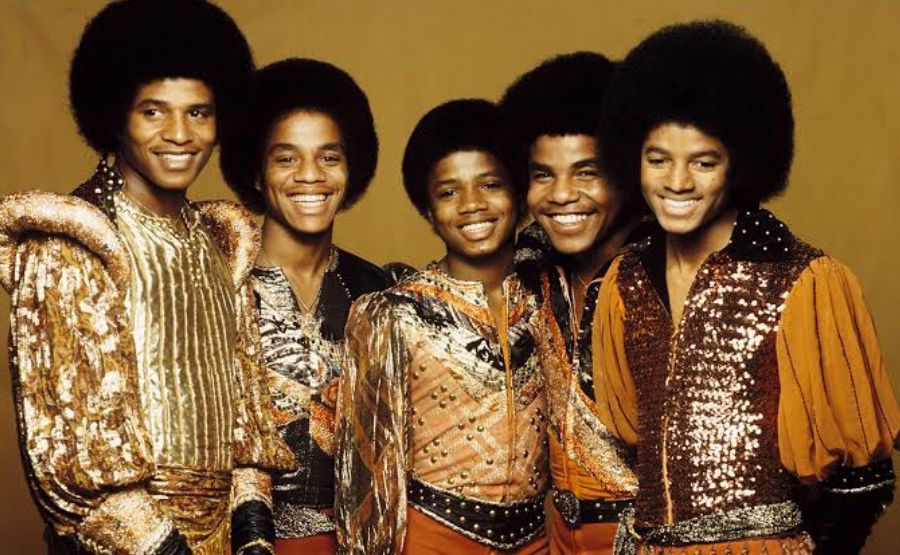
Tito Jackson’s story has a particular shape: decades of faithfulness to a craft, modest public profile, and then a final chapter cut short. Born October 15, 1953, he was the catalyst — the one Joe caught playing the forbidden guitar — the one whose talent convinced a frustrated ex-boxer that his children were worth betting on.
In the Jackson 5 years, Tito’s guitar work gave the group’s Motown sound its structural warmth. He was not the front man. He was not the soloist. He was the anchor, and an anchor’s value is felt most in rough water. When the group rebranded as The Jacksons and began writing and producing their own material on Destiny (1978) and Triumph (1980), Tito’s musicianship came into its own.
His three sons — Taj, Taryll, and TJ, who perform together as 3T — represent the most visible third-generation extension of the Jackson musical lineage, though their success has been largely confined to markets outside the United States. Tito’s marriage to Delores “Dee Dee” Martes ended in divorce in 1988; in 1994, Dee Dee was found dead in a swimming pool. Her death was initially ruled accidental, but in 1998, businessman Donald Bohana was convicted of her murder. The tragedy cast a long shadow over Tito’s life.
He released his debut solo album in 2003 and continued recording and performing with his brothers through 2024. In September 2024, Tito and The Jacksons were on tour in Europe when he visited a memorial to Michael in Munich. He posted about it publicly, expressing gratitude for the place that honored his brother’s memory and their shared history. Less than two weeks later, on September 15, 2024, Tito Jackson died of an apparent heart attack at age seventy. His sons announced his death with the words: “We are shocked, saddened and heartbroken.”
Jackie Jackson: The Original Lead
Sigmund Esco “Jackie” Jackson, born May 4, 1951, was the eldest of the performing brothers and one of the group’s founding singers. His high tenor voice shaped the early Jackson Brothers sound before Michael’s extraordinary ability reshaped everything. Jackie released two solo albums — a self-titled debut in 1973 and Be The One in 1989 — neither of which charted significantly. He also produced film soundtracks, including for The Running Man, and continued working as a producer through his record label Critically Amused.
He has been married three times and has four children. His most recent marriage, in 2012, produced twins born the following year. In 2013, Jackie and brothers Jermaine, Tito, and Marlon went on a Unity Tour, performing the Jackson 5’s catalog and confronting the emotional weight of doing so without Michael. Jackie described the experience to reporters: the Michael songs brought tears, then a dance number would lift the crowd, creating what he called a bittersweet rhythm — grief and joy alternating in the space of a few songs. In 2025, Jackie and Marlon performed together at the Reform UK Party Conference in Birmingham, and in August 2025, both returned to Gary for a block party organized around the 67th anniversary of Michael’s birth.
Janet Jackson: The Only Sibling Who Matched the King
If the story of Michael’s siblings is a story about proximity to an impossible star, Janet Jackson is the single exception — the one sibling who did not merely survive the proximity but built an equal orbit of her own.
Born Janet Damita Jo Jackson on May 16, 1966, the youngest of the ten children, Janet appeared on the family’s CBS variety show as a child and made her recording debut in 1982 under her father’s management. Her first two albums were pleasant but unremarkable. Joe Jackson produced them with the same controlling hand he had applied to his sons. Janet did something none of the brothers had dared: she fired her father.
In 1985, she annulled her brief marriage to singer James DeBarge, moved to Minneapolis, and placed herself entirely in the hands of producers Jimmy Jam and Terry Lewis. The collaboration was unlike anything in her career to that point. Jam and Lewis did not hand her songs and tell her to sing. They asked her what she wanted to write about. They learned about her life before they wrote a note. The result was Control, released February 4, 1986 — an album that took its title from the simple, radical fact of a young Black woman deciding what happened in her own life.
Control produced six top-40 hits on the Billboard Hot 100, a record for a female artist. It knocked her brother Michael’s Thriller from the Billboard Hot 100 record books for consecutive charting singles — sixty-five weeks to his sixty-four. Critics placed her alongside Madonna as a defining pop presence of the decade. The album entered the permanent collection of the National Museum of African American History and Culture in 2016. But the cultural argument for Control went deeper than chart numbers. As music journalist Danyel Smith observed, Janet’s influence shaped the way later artists — Beyoncé, Rihanna, Ciara — conceived of singing, dancing, and visual presentation simultaneously.
Rhythm Nation 1814 (1989) deepened her ambitions, this time toward social commentary. The album addressed poverty, racism, and illiteracy with a precision unusual in pop music. It went platinum multiple times. The Velvet Rope (1997) turned inward, a candid exploration of depression and identity.
While the world celebrated her, she carried a private burden. She has spoken openly about struggles with depression and body image. Her relationships — a second marriage to dancer and choreographer René Elizondo Jr. (divorce finalized 2000), then a marriage to Qatari businessman Wissam Al Mana — played out under relentless scrutiny. In January 2017, at age fifty, she gave birth to her son Eissa Al Mana, weeks after separating from his father.
The 2004 Super Bowl halftime show — where Justin Timberlake caused a wardrobe malfunction that exposed her breast — led to an industry-wide blacklisting that NPR and other critics have since characterized as both racially and gender-coded in its severity. Timberlake’s career continued without interruption. Janet’s bookings and airplay dried up for years. The asymmetry was stark and deliberate.
In 2019, she received an induction into the Rock & Roll Hall of Fame. She was the inaugural Black female recipient of the Billboard Icon Award. Her Las Vegas residency beginning in the early 2020s and a headlining appearance at Glastonbury were received as long-overdue reckonings with her actual cultural weight.
Family Dynamics: The Private Architecture of a Public Dynasty
The Jackson siblings grew up famous but not free. Their childhood home at 2300 Jackson Street accommodated ten people in two bedrooms. Joe’s ambition filled every inch of available space. His methods — long, punishing rehearsals, physical discipline that multiple children described in graphic terms, emotional distance that made them call him “Joseph” rather than “Dad” — produced musical excellence and personal wounds in equal measure.
Janet recalled her father telling her to address him as Joseph. Michael told Oprah he was sometimes so frightened of Joe that the sight of him triggered nausea. La Toya’s 1991 memoir and subsequent public statements accused Joe of far worse. The brothers — Jackie, Tito, Jermaine, Marlon — have largely defended their father’s methods as strict but not abusive. The sisters, and Michael, told harder stories.
Katherine Jackson remained the moral center of the household — the pianist, the Jehovah’s Witness, the parent who gave the children their faith and their musical ear. Her unconditional support extended to standing by Michael during both the 1993 and 2005 molestation allegations, in which he was acquitted. After Michael’s death, she became the guardian of his three children — Prince, Paris, and Bigi — and remained in that role through legal disputes that included a contentious 2012 controversy over her guardianship.
The siblings’ relationships with one another have never been uniformly harmonious. There were legal disputes over royalties. There were public disagreements over Michael’s estate following his death. Throughout the 1990s, La Toya was forced to distance herself from her family. Randy and Jermaine shared a romantic partner, Alejandra Oaziaza, at different times. The bonds frayed, healed, and frayed again. But the throughline — the thing that held — was the music, and the childhood in Gary, and a shared understanding of what it had taken to get out of that two-bedroom house.
The Legacy of the Jackson Siblings
The Jackson family’s combined output — 27 U.S. number-one singles, induction into the Rock and Roll Hall of Fame, influence acknowledged by everyone from New Edition and Boyz II Men to BTS — represents something unprecedented in American music. No other family has produced two artists (Michael and Janet) who each fundamentally reshaped pop music as a form.
But the legacy of the siblings as a group is less about records sold than about the template they created. The Jackson 5 were the first Black teen group to achieve crossover success of that magnitude. They did it at Motown, where the machinery was calibrated for precisely that goal — but they supplied the talent, the work ethic, and the charisma. Their influence runs through every boy band that followed, from New Kids on the Block to NSYNC to One Direction. Their stage choreography — which Marlon helped design — became the vocabulary of pop performance.
Janet’s Control gave Black women in music a new framework for self-determination. La Toya’s survival of domestic abuse, conducted under a public spotlight that turned her trauma into tabloid content, has taken on different meaning in an era more attuned to the realities of intimate partner violence. Jermaine’s memoir, Marlon’s Study Peace Foundation, Randy’s business work — each represents a different form of contribution that extends beyond the charts.
Tito Jackson died in September 2024. Michael died in June 2009. Brandon never lived past a day. Rebbie has largely withdrawn from public life. The family that once crowded a two-bedroom house on Jackson Street has grown smaller. But the work they produced — together, in the basement rehearsal space in Gary, in Motown’s studios, in Epic’s suites, in Minneapolis with Jimmy Jam and Terry Lewis — remains fully audible, half a century on.
Final Thoughts
The Jackson siblings are not a cautionary tale about fame, though their story contains every element of one. They are something more complicated: nine individuals who were shaped by extraordinary talent, extraordinary circumstances, and a father whose methods produced both prodigies and wounds.
The instinct to reduce them to supporting characters in Michael’s story is understandable but inaccurate. Janet Jackson built an empire every bit as culturally significant as her brother’s, and has been consistently undervalued for it. Jermaine’s decision at Motown, for all its complexity, was an act of loyalty that defined his life. Rebbie’s refusal to perform on cue — her insistence on marrying for love over her father’s ambitions — was its own form of courage. La Toya’s survival deserves more serious attention than celebrity gossip frameworks have ever given it. Marlon’s grief, worn quietly for decades, speaks to the private costs of a public life. Tito’s steady faithfulness to the guitar — the guitar that started everything — is its own kind of poetry.
What the siblings share, across every divergent path, is the Gary childhood: the two-bedroom house, the belt, the music floating through walls. They emerged from that same origin and became nine different people. That plurality is the truest measure of the Jackson family’s human richness — and its most enduring, least celebrated gift.
FAQs
1. How many siblings did Michael Jackson have?
Rebbie, Jackie, Tito, Jermaine, La Toya, Marlon, Randy, and Janet were Michael Jackson’s eight siblings. A ninth sibling, Brandon — Marlon’s twin — died within twenty-four hours of birth due to respiratory failure in March 1957.
2. Which siblings made up the original Jackson 5?
Jackie, Tito, Jermaine, Marlon, and Michael made up the original Jackson 5. When the group left Motown for Epic Records in 1975, Jermaine remained at Motown and was replaced by the youngest brother, Randy.
3. Why did Jermaine Jackson leave the Jackson 5?
Jermaine stayed at Motown Records when his brothers departed for Epic in 1975. He had married Berry Gordy’s daughter Hazel in 1973, making Motown’s founder his father-in-law. He cited loyalty to the label; others have pointed to the family connection as the deciding factor.
4. How did Janet Jackson establish herself independently?
Janet fired her father as manager and traveled to Minneapolis to work with producers Jimmy Jam and Terry Lewis. The resulting album, Control (1986), was the first where she had meaningful creative input. It produced six top-40 singles and established her as a major pop force in her own right.
5. What happened between La Toya Jackson and Jack Gordon?
Gordon became La Toya’s manager in the late 1980s and orchestrated a coercive marriage in 1989. Over the course of eight years, he isolated her from her family, controlled her income, and abused her physically and psychologically. With her brother Randy’s help, she escaped in 1997 and successfully sued Gordon under the Violence Against Women Act.
6. Who is Tito Jackson and when did he die?
Tito Jackson, born October 15, 1953, was the third Jackson child and the group’s guitarist. He died on September 15, 2024, at age seventy, of an apparent heart attack while on tour in Europe with The Jacksons.
7. What was Rebbie Jackson’s most successful song?
Rebbie’s biggest hit was “Centipede” (1984), the title track of her debut album, written and produced by her brother Michael. The song received a gold record.
8. Who in the next generation has continued the family’s music career?
Tito’s three sons — Taj, Taryll, and TJ — perform together as the R&B group 3T, achieving moderate international success. Jermaine’s son Jaafar Jackson has released solo music and portrayed his uncle Michael in the 2026 biographical film. Austin Brown, Rebbie’s son, is a pop/R&B singer-songwriter.
9. Did the Jackson siblings perform together after Michael’s death?
Yes. Jackie, Tito, Jermaine, and Marlon went on a Unity Tour in 2012–2013. In 2021, Tito released “Love One Another” featuring 3T and Stevie Wonder, with several siblings appearing in the music video including Janet, Jackie, Jermaine, La Toya, Marlon, Randy, and their mother Katherine.
10. What is the relationship between Jermaine and Randy’s love lives?
Both Jermaine and Randy were in relationships with Alejandra Oaziaza at different times. Randy began dating her in 1986; she later married Jermaine in 1995. Jermaine and Alejandra divorced in 2004.
11. How did Joe Jackson’s parenting methods affect his children?
Joe enforced grueling rehearsal schedules and used physical discipline — belts and switches — on the children. Michael described being afraid of Joe to the point of physical illness. La Toya, Janet, and Michael all described forms of abuse. Several of the brothers offered more measured accounts. Joe himself acknowledged whipping his children but denied what he described as “beating.” The children’s accounts vary significantly by individual.
12. What awards has Janet Jackson received that distinguish her among her siblings?
Janet was the first Black woman to receive the Billboard Icon Award. In 2019, she was admitted into the Rock and Roll Hall of Fame. She was also the first female artist to score six top-40 hits from a single album on the Billboard Hot 100, achieved with Control.
13. Was Katherine Jackson a significant musical influence on her children?
Yes. Katherine played piano, clarinet, and cello, and had aspirations as a country-and-western singer. She is credited as the foundational musical influence on her children. She later served as costume designer for the Jackson 5’s performances and was the primary caregiver for Michael’s three children following his death.
14. What is the significance of 2300 Jackson Street?
2300 Jackson Street was the address of the family’s two-bedroom home in Gary, Indiana, where all nine surviving siblings grew up. It was also the title of the Jacksons’ final studio album (1989), marking the group’s symbolic return to their origins.
15. What is Marlon Jackson’s connection to his twin brother Brandon?
Brandon, Marlon’s twin, died within twenty-four hours of their birth in March 1957. Marlon has said he grew especially close to Michael as a substitute for the twin he lost. At Michael’s 2009 memorial service, Marlon asked Michael to give Brandon a hug — linking both losses in his eulogy.
Empowering curious minds to explore, learn, and think deeper with Fact Aura.