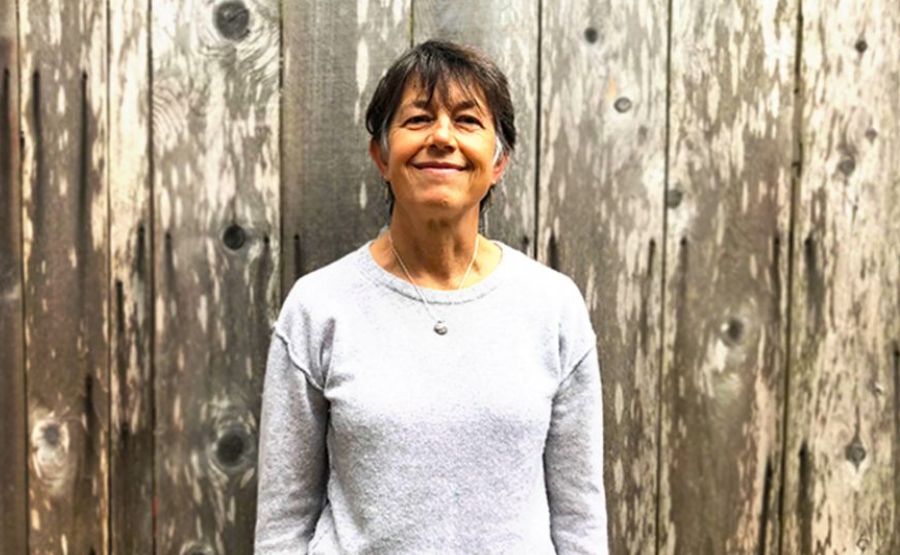
Cindy Paulson: The Witness Who Ended a Serial Killer’s Twelve-Year Reign
Cindy Paulson’s story endures not because of what was done to her, but because of what she did about it — barefoot, handcuffed, and running for her life across a gravel airfield in the Alaskan midnight.
Quick Bio
| Detail | Information |
| Born | 1966, Yakima, Washington |
| Nationality | American |
| Primary Role | Survivor, key witness in the Robert Hansen serial killer case |
| Date of Abduction | June 13, 1983 |
| Location of Escape | Merrill Field Airport, Anchorage, Alaska |
| Age at Time of Escape | 17 |
| Perpetrator Convicted | Robert Hansen (“Butcher Baker”), sentenced December 11, 1983 |
| Hansen’s Sentence | 461 years plus life without parole |
| Hansen’s Confirmed Victims | At least 17 women murdered, 1971–1983 |
| Key Investigator | Sgt. Glenn Flothe, Alaska State Troopers |
| FBI Profiler | Special Agent John Douglas |
| Formal Testimony Date | September 27, 1983 |
| Cultural Representation | The Frozen Ground (2013), played by Vanessa Hudgens; Mind of a Monster (2020); People Magazine Investigates: Surviving a Serial Killer (2024) |
| Key Relationships | Three sons; grandchildren; husband (name withheld) |
| Current Status | Sober, resides in Yakima, Washington; publicly active in sharing her story |
A Childhood Built on Secrets
The fracture that would define Cindy Paulson’s early life came not from a stranger, but from inside her own home. She grew up in Yakima, Washington, believing she had parents and four older sisters. At approximately age nine, she overheard a conversation that rearranged everything she knew about herself. The woman she called her oldest sister was actually her biological mother. The couple she had always known as her parents were her maternal grandparents. The family had arranged this deception to protect their daughter’s reputation — the social calculus of a different era, executed at a child’s expense.
The revelation broke her. She later described feeling that everyone around her had been lying for years. The sense of betrayal she carried was not abstract; it was biographical, embedded in her daily reality, in the faces at her dinner table.
Within months of learning the truth, she ran away for the first time. By the time she was twelve, she had begun the peripatetic, unmoored existence that would carry her through motels, borrowed couches, and unfamiliar cities. She also endured sexual abuse during her childhood, violations that compounded the original rupture of trust and left her without the stable ground most adolescents take for granted.
She was not a runaway in the romantic sense — free and drifting. She was a child without an anchor, doing what children without anchors do: surviving.
See also “Jackie Witte: The Woman Behind the Man Before the Legend“
Anchorage and the Economy of Survival
By the time she was fifteen, Cindy Paulson had made her way to Anchorage, Alaska. The city in the early 1980s was in the midst of an economic surge driven by North Slope oil revenue. Pipeline workers flush with cash crowded the downtown bars and nightclubs along Fourth Avenue. The money circulated quickly, and a portion of it flowed into the city’s sex trade.
Paulson entered that economy as a teenager. She was direct about its financial logic in later interviews: slow nights could net $800. The best nights brought several thousand dollars. In a city where legitimate work for a girl with no documents, no permanent address, and no adult supervision was nearly nonexistent, that arithmetic made sense.
What she did not know — what no one adequately communicated to young women working the streets in those years — was that women in her profession were disappearing. Bodies were surfacing in the wilderness outside the city, in shallow graves along the Knik River and in the Matanuska-Susitna Valley. Police were investigating, but the missing women occupied a low rung on institutional concern. Their absence was often unreported. Their names were slow to make the newspapers.
The man hunting them moved freely through the same world Cindy Paulson inhabited. He was forty-four years old, employed, married, and considered a pillar of the community.
The Night That Changed Everything
The evening of June 13, 1983, began like many others. A man pulled his car to the curb where Paulson was working and offered her $200 for oral sex. She later described him as unremarkable — an older man, someone’s grandfather. She agreed and got into the car.
What followed happened quickly. Once they had moved away from the street, Robert Hansen produced a .357 Magnum revolver and told her he would not hurt her if she complied. It was not a negotiation. He drove her to his house in the Muldoon neighborhood of Anchorage — a blue house, details she was already cataloguing.
In the basement, surrounded by the taxidermied heads of animals Hansen had shot across decades of hunting, he chained her by the neck to a support post and raped and tortured her. When he eventually fell asleep on a nearby couch, she did not scream or try to break free. She observed. She memorized. She registered the layout of the rooms, the bullet hole in the floor, the bars on the windows, the model and color of his car.
“When we were driving I observed everything,” she later said in a recorded interview. “Because this motherf***er was not getting away with it.”
After several hours, Hansen woke and drove her to Merrill Field, a small airfield in Anchorage. His Piper PA-18 Super Cub was there. He told her he was flying her to his cabin near the Knik River — accessible only by air or boat — where they would have sex and he would set her free. She understood this was a lie. Every woman he had brought to that cabin had died there.
Hansen stepped out of the car to load the cockpit. She was crouched in the back seat, wrists handcuffed in front of her body, barefoot, and bleeding. When his back turned, she pushed the driver’s side door open and ran. She sprinted across the gravel runway and reached a highway where she screamed at the driver of a passing pickup truck: This guy is trying to kill me.
The driver, Robert Yount, stopped. He drove her to a motel in the area.
She had left her blue sneakers deliberately on the floor of Hansen’s back seat — evidence, she reasoned, that could prove she had been inside his car. Even in flight, she was thinking like an investigator.
When the System Failed Her First
Paulson reported everything immediately. She gave Anchorage police a detailed account of the assault, the house, the car, the man. Officers took her to the airfield, where she identified Hansen’s plane. A security guard there confirmed he had noted the license plate of a car matching her description.
Then Hansen was brought in for questioning. He denied everything. He claimed Paulson was attempting to extort him after a consensual encounter. Two acquaintances provided alibis. The Anchorage Police Department accepted his account and closed the matter.
The logic that permitted this outcome was articulated — though never officially in writing — in a phrase that circulated through Alaskan law enforcement circles at the time: You can’t rape a prostitute. The axiom was not law. It was an atmosphere. It shaped how detectives weighed a teenager’s detailed, consistent account against the word of a respectable local businessman. The businessman won.
Paulson left Alaska. She moved to Portland, Oregon, where she was twice arrested for soliciting. She eventually returned to Anchorage. Life resumed its precarious rhythms. Meanwhile, on September 2, 1983 — just weeks after her escape — the body of seventeen-year-old Paula Goulding was discovered on the banks of the Knik River. Ballistics linked her death to the rifle that had killed Sherry Morrow months earlier. The word serial entered the investigation.
The Trooper Who Listened
Sgt. Glenn Flothe of the Alaska State Troopers had been building a parallel file. He was assigned to investigate the pattern of bodies appearing in the Alaskan wilderness, and he had become convinced the killings shared a single author. When Officer Greg Baker — who had originally investigated the Paulson complaint — delivered his own report to Flothe, connecting multiple disappearances, the two threads pulled toward each other.
Flothe went to the FBI. Special Agent John Douglas, then pioneering the discipline of criminal behavioral profiling, analyzed the evidence and constructed a psychological portrait of the likely perpetrator. The profile described a man of middle age, married, superficially integrated into his community, likely suffering from a speech impediment, with cripplingly low self-esteem rooted in rejection. It described a hunter. It described a man who kept trophies.
It described Robert Hansen in granular, uncanny detail.
But a psychological profile could not obtain a search warrant. For that, Flothe needed Cindy Paulson. He found her — she was not on employment rolls or any easy registry — through months of effort. She agreed to meet with the one investigator who had treated her as credible.
On September 27, 1983, she sat across from Flothe and a tape recorder at the Alaska State Trooper headquarters and gave a formal interview that lasted hours. She described Hansen’s stutter. The precise model and color of his car. The specific weapon. She drew a floor plan of his house from memory. Every measurement, every room, every detail she had silently catalogued while chained to his basement post.
When investigators searched that house weeks later, her blueprint was accurate in every particular.
Flothe confronted Hansen’s alibi witnesses with the threat of perjury charges. Both men broke. They admitted they had lied, assuming they were protecting a friend from what they believed was an awkward domestic situation. With the alibis dissolved, investigators moved forward.
On October 23, 1983, they searched the house on Old Harbor Road. Inside Hansen’s headboard they found an aviation map of the Alaskan wilderness. It was marked with dozens of small X’s — one for each body in the ground. In his attic: hidden firearms. In his belongings: jewelry taken from murdered women, kept as trophies. A Ruger Mini-14 rifle matched shell casings recovered from the murder sites.
Confronted with this evidence, Hansen eventually confessed to seventeen murders and more than thirty sexual assaults. He pleaded guilty to four first-degree murders. On December 11, 1983, a judge sentenced him to 461 years plus life without the possibility of parole. He died in custody at Alaska Regional Hospital in Anchorage on August 21, 2014, at age 75.
Personal Life, Private Struggles, and the Long Road Back
Cindy Paulson attended Hansen’s sentencing hearing in February 1984. She described the experience as profoundly frightening — sitting in a courtroom surrounded by strangers, reliving events that had redefined her existence. The night Hansen was convicted, Flothe and his wife took Paulson and a friend to dinner at the Corsair, a restaurant in Anchorage. The following morning, she boarded a plane and left the city.
She returned to sex work. The departure from Alaska did not bring the clean break that might be imagined. The trauma she carried had not been addressed. PTSD as a diagnosable, treatable condition was poorly understood in 1984 — particularly as it applied to civilian women. The mental health community was slow to recognize that severe trauma outside of combat contexts could produce identical neurological consequences. Paulson would not receive a formal diagnosis and treatment for PTSD until decades later.
The years between the trial and her eventual stability were difficult. She moved between states, was arrested more than once, and lived with addiction. She married and eventually settled in Yakima, Washington, where she raised three sons. The raising of those children — their presence, their need for her — was part of what reoriented her. She also spent nearly a decade living in Mexico, where she became fluent in Spanish.
When Hansen died in 2014, she experienced something she had not anticipated: relief. For decades, she had lived with the fear that he might dispatch someone to silence her. His death removed the last physical shadow he cast over her life. That disappearance of fear created a kind of internal space. She began, at that point, the formal work of processing what had happened to her.
She achieved ten years of sobriety. She speaks today as a grandmother, a woman who loves her children and describes loving her own life — a statement that took decades to become possible.
The Credibility Gap and What It Cost
The most consequential fact about Cindy Paulson’s case is not that she survived. It is that she reported — immediately, accurately, and in extraordinary detail — and was disbelieved for months while a serial killer remained free.
Hansen’s ability to walk free after her initial report was not a failure of evidence. Her account was specific, internally consistent, and corroborated by a security guard’s license plate notation. It was a failure of institutional culture — the reflexive devaluing of testimony from women in the sex trade, measured against the social capital of a married baker with a friendly reputation and a ready alibi.
Paulson was not unique in this experience. Multiple women had reported Hansen over the years. As early as 1971, he had been accused of sexual assault and faced legal consequences. The system processed those encounters and moved on, never connecting them, never treating them as evidence of an escalating pattern. The accumulated effect of those institutional failures was measured in lives — at least seventeen, and possibly more whose remains were never found.
The unidentified victim known for decades as “Eklutna Annie” was finally identified in 2021 — through DNA testing — as Robin Pelkey, a Colorado-born Alaska resident. The delay in identification was forty-one years. The erosion of urgency that permitted it began the same way Paulson’s initial report was shelved: through the quiet institutional verdict that some lives demand less accounting than others.
Legacy and the Culture She Shaped
The case of Robert Hansen became foundational in two fields that now define how America investigates violent crime. Criminal behavioral profiling — refined through Douglas and the FBI’s Behavioral Science Unit — used the Hansen investigation as a key data point in understanding organized offenders: men who appear socially integrated, manage their own schedules, and plan their crimes with precision. The Hansen case demonstrated that geographic isolation could function as an enabler, allowing a predator to commit crimes whose sheer remoteness placed them beyond ordinary investigative reach.
It also produced one of the earliest well-documented examples of the “credibility gap” in sexual violence cases — the systematic underweighting of victim testimony based on occupation, gender, and social status. That pattern, named and studied in subsequent decades, has its evidence in Paulson’s 1983 case file.
The 2013 film The Frozen Ground brought the story to a broad popular audience, with Nicolas Cage as Flothe and Vanessa Hudgens as Paulson. Paulson and Flothe both served as advisers on the production. The film sparked debate about the ethics of dramatizing real-life violence — particularly when the living survivor’s experience is at stake — but it also introduced her story to audiences who would otherwise never have encountered it. The book Butcher, Baker by Walter Gilmour and Leland Hale had provided the detailed factual record decades earlier; the film made Paulson’s name widely known.
She appeared in the Investigation Discovery documentary Mind of a Monster in 2020 — her first major public interview — and again in People Magazine Investigates: Surviving a Serial Killer in 2024. Author Leland Hale has announced a forthcoming book drawn directly from Paulson’s own account of her life.
Her words from that 2024 interview carry the weight of someone who has spent four decades integrating an impossible experience: “I just think about all the women whose lives I saved and all the women for whom I exacted retribution. Because I caught that son of a gun.”
Final Words
What Cindy Paulson accomplished on June 13, 1983, requires no embellishment. A seventeen-year-old girl, handcuffed and bleeding, with no shoes and no institutional protection, outthought a serial killer who had operated undetected for twelve years. She did it through observation, through refusal to stop calculating even while terrified, and through a sprint across an airfield at the precise moment the door opened.
But the fuller measure of her life cannot be taken from that single night alone. It must include the years of struggle that followed — the addiction, the arrests, the long postponement of healing that systems without empathy produce in survivors. It must include the delayed PTSD diagnosis, the decade in Mexico learning a new language, the raising of three children on uncertain ground. It must include the quiet that came when Hansen died and the fear finally lifted.
And it must include the uncomfortable institutional accounting: a teenager told the truth immediately, precisely, and urgently — and was sent away. The cost of that institutional failure was paid by women whose names belong on a list and whose families waited years for answers. Paulson’s story is, in part, a monument to their silence — and a corrective to the conditions that enforced it.
She is, in her own telling, someone who was meant to be here. That conviction is not naïve. It is the conclusion of a person who survived everything that might have argued against it and chose to build something durable from the remainder.
FAQs
1. Who is Cindy Paulson?
Cindy Paulson is an American survivor who, at age 17 in 1983, escaped abduction by Alaskan serial killer Robert Hansen and provided the testimony that led directly to his arrest, conviction, and life sentence.
2. Where was Cindy Paulson born?
She was born in 1966 in Yakima, Washington, where she grew up before moving to Anchorage, Alaska as a teenager.
3. What happened to Cindy Paulson on June 13, 1983?
Robert Hansen abducted her at gunpoint, took her to his Anchorage home, chained her in his basement, and sexually assaulted her. He then drove her to Merrill Field Airport with the intention of flying her to a remote cabin to hunt her. She escaped through the car door while he loaded his plane.
4. How did she escape?
She waited until Hansen had his back turned while loading his Piper PA-18 Super Cub at Merrill Field. Still handcuffed and barefoot, she opened the car door and sprinted to a nearby highway, where a passing driver, Robert Yount, stopped and took her to safety.
5. Did police initially believe her?
No. Anchorage police accepted Hansen’s denial and the alibi provided by two of his acquaintances. Her report was shelved. The institutional bias against the testimony of sex workers played a documented role in this outcome.
6. How did her testimony eventually lead to Hansen’s arrest?
Sgt. Glenn Flothe of the Alaska State Troopers connected her account to a pattern of murders he was independently investigating. On September 27, 1983, she gave a detailed formal interview so precise — including a hand-drawn floor plan of Hansen’s home from memory — that it provided the evidentiary foundation for search warrants. The October 27 search discovered the aviation map, hidden weapons, and victims’ jewelry that broke the case.
7. How many women did Robert Hansen kill?
Hansen confessed to killing 17 women. He also admitted to sexually assaulting over 30 women. Law enforcement suspects the true murder count may be higher; not all marks on his aviation map have been accounted for.
8. What sentence did Hansen receive?
He was sentenced on December 11, 1983, to 461 years plus life in prison without the possibility of parole. He died at Alaska Regional Hospital in Anchorage on August 21, 2014, at age 75.
9. What is The Frozen Ground and how does it relate to her story?
The Frozen Ground (2013) is a crime thriller dramatizing the Hansen investigation. Nicolas Cage plays a character based on Sgt. Flothe; Vanessa Hudgens plays Paulson. Both Paulson and Flothe served as advisers on the film.
10. When was Cindy Paulson first diagnosed with PTSD?
She was not formally diagnosed and treated until decades after the 1983 assault. She has noted that Hansen’s death in 2014 created a turning point that allowed her to begin the healing process. The delay reflected both personal barriers and the mental health field’s slow recognition of civilian trauma in women.
11. Does Cindy Paulson have a family?
Yes. She married, settled in Yakima, Washington, and raised three sons. By the time of her 2024 People Magazine interview, she had grandchildren. She describes her relationship with her children and grandchildren as central to her life.
12. What is Cindy Paulson’s current status?
As of her most recent public interviews, she is sober (ten years clean as of the interviews), living in Yakima, Washington, and engaged in sharing her story through documentary appearances and an in-progress book with author Leland Hale.
13. How does her case affect law enforcement more broadly?
The Hansen investigation became foundational to criminal behavioral profiling methodology at the FBI. It also stands as one of the most thoroughly documented examples of the institutional credibility gap that reduces the investigative weight given to testimony from marginalized witnesses — a pattern now central to academic and policy discussions about sexual violence response.
14. Who was the FBI profiler involved in the Hansen case?
Special Agent John Douglas of the FBI’s Behavioral Science Unit constructed the criminal profile that matched Hansen’s characteristics and helped convince investigators they had identified the right suspect. Roy Hazelwood also provided profiling input.
15. Was Cindy Paulson ever able to confront or address her abuse publicly?
Yes. Over forty years after the assault, she gave her most expansive public account in the 2024 episode of People Magazine Investigates: Surviving a Serial Killer on Investigation Discovery, as well as in the earlier Mind of a Monster documentary in 2020. She has framed her decision to speak openly as purposeful — a deliberate choice to make her experience mean something for others who cannot speak.
Empowering curious minds to explore, learn, and think deeper with Fact Aura.