Jackie Witte: The Woman Behind the Man Before the Legend
Jackie Witte matters in the twenty-first century not because of what she achieved in the public record — she left almost none — but because her life illuminates something the mythology of Hollywood routinely obscures: that behind the famous marriages are the forgotten ones, and behind the famous men are the women who carried the household while ambition was still being assembled.
Quick Bio
| Detail | Information |
| Full Name | Jacqueline Emily Witte |
| Born | September 15, 1929, Cook County, Illinois, USA |
| Died | May 19, 1994, New York City, New York, USA (age 64) |
| Nationality | American |
| Parents | Frank Theophilus Witte (meat market owner) and Irene Elizabeth Telgman Witte |
| Education | Beloit High School (graduated 1947); some college education |
| Early Career | Aspiring actress and model; community theater, Beloit, Wisconsin |
| Married | Paul Leonard Newman, December 27, 1949, St. Paul’s Episcopal Church, Beloit, Wisconsin |
| Divorced | January 28, 1958, New York City |
| Children | Scott Alan Newman (1950–1978); Susan Kendall Newman (1953–2025); Stephanie Newman (b. 1954) |
| Key Relationship | Joanne Woodward, Newman’s second wife, and Paul Newman, his first husband |
| Notable Milestones | Nine-year marriage during Newman’s formative career years; divorce finalized the same year Newman won his first Academy Award nomination (Cat on a Hot Tin Roof, 1958) |
| Post-Divorce Life | Private life in New York City; no public appearances; no recorded interviews |
| Death | Cause undisclosed; private, with no public obituary |
A Beloit Childhood and a Stage-Struck Teenager
The town of Beloit, Wisconsin, sits at the southern edge of the state on the Rock River, a middling agricultural city with a modest civic character and no particular celebrity in its history.
Jackie Witte grew up there. The 1940 Federal Census places her family plainly: her father Frank, fifty-one, ran a meat market; her mother Irene, forty-five, kept the home; and eleven-year-old Jackie was in the fifth grade. It is a portrait of solid, unremarkable midwestern stability — the kind of upbringing that produces either lifelong contentment or a deep hunger for something larger.
Jackie showed the latter. By her teenage years she had found the local theater scene, performing with Beloit’s Court Theatre group under director Kirk Denmark. She graduated from Beloit High School in 1947, two years before the summer that changed everything. She was pursuing some college education and modeling work when she crossed paths with Paul Newman in the summer of 1949.
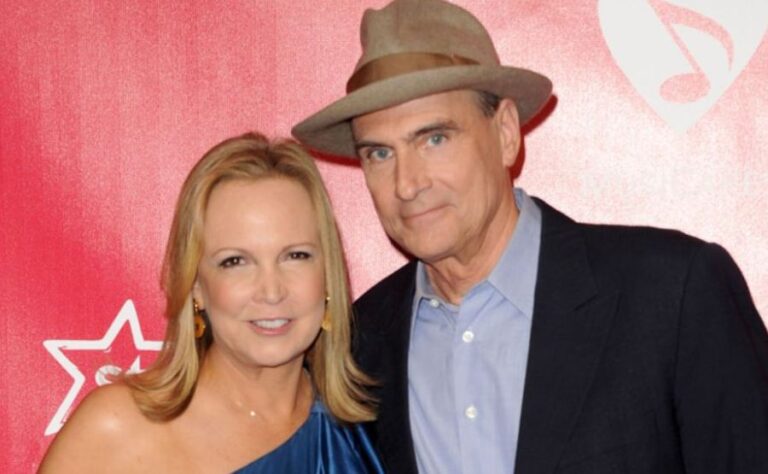
See also “Caroline Smedvig: The Quiet Architecture of a Life in the Arts“
The Meeting: Two Actors in a Summer Company
The summer of 1949 placed two people on the same small stage at the same small moment. Newman was twenty-four, recently discharged from the U.S. Navy, and recently graduated from Kenyon College in Gambier, Ohio, with a degree in drama and economics. Jackie was nineteen, still in college, still forming herself.
Both were working summer stock — the circuit of regional, warm-weather theatrical companies that served as the first professional rung for generations of American actors. They met through the Belfry Players in Wisconsin before moving together to the Woodstock Players in Woodstock, Illinois. A contemporary newspaper notice from The Daily Sentinel, dated February 11, 1950, captures one of their early shared performances: it mentions “Paul Newman and Jacqueline Witte” playing Dr. Bradman and his wife, doing “a workmanlike job of creating the middle-aged couple.” Two actors, side by side, already performing domesticity on stage.
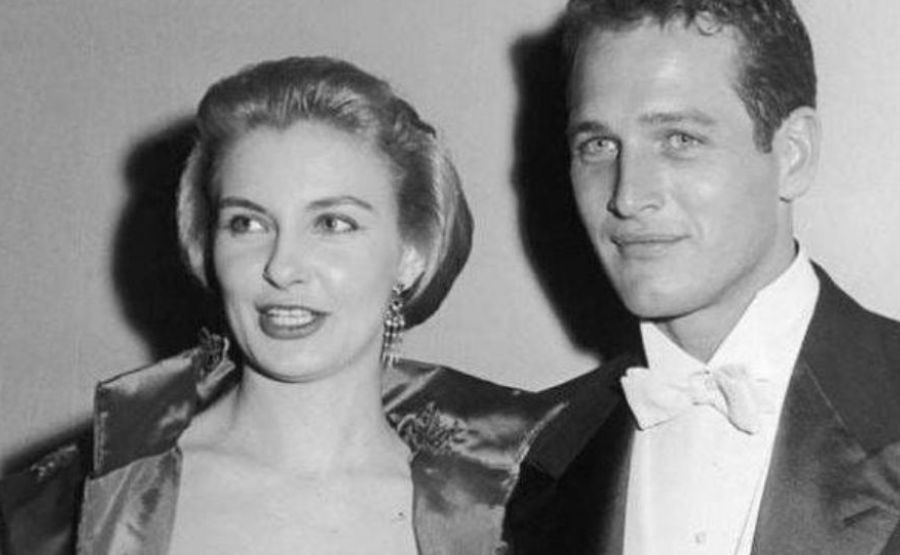
They did not wait long. On December 27, 1949, Jacqueline Witte married Paul Leonard Newman at St. Paul’s Episcopal Church in Beloit. The reception followed at the Beloit Country Club. The announcement ran in the Lake Geneva Regional News: “Miss Jacqueline Witte, daughter of Mr. and Mrs. F.T. Paul Newman of Shaker Heights, Ohio, was the spouse of Witte, Beloit, and Pleasant Lake.She was nineteen. He was twenty-four. Neither of them had any professional career worth speaking of yet.
The Architecture of a Marriage Under Construction
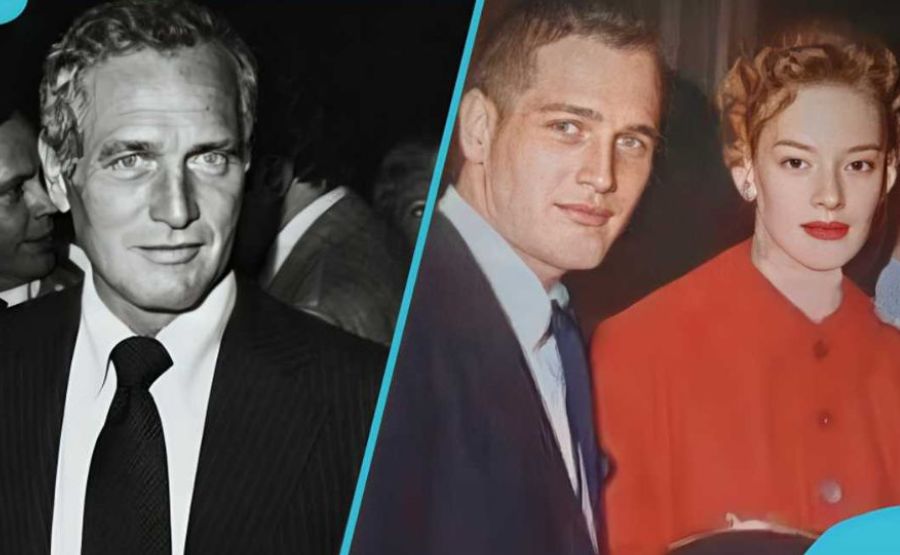
The early years of the Newman marriage were defined not by glamour but by a series of unglamorous relocations driven almost entirely by his ambitions and their circumstances.
When Jackie became pregnant with their first child, Newman faced a crossroads. His father, Arthur Newman, died around this time, and the family business in Cleveland demanded attention. The couple moved to Cleveland, Ohio, where Scott Alan Newman was born on September 23, 1950. For a year or more, it appeared Paul Newman might become a Cleveland businessman who had briefly flirted with the stage.
He could not let it go. Newman enrolled at the Yale School of Drama in New Haven, Connecticut, burning through his savings, selling encyclopedias door-to-door to supplement their income. Jackie occasionally commuted to New York City seeking modeling work while her husband studied. Jackie then informed Newman that she was pregnant once more after he left Yale to devote himself entirely to a one-year try at an acting career in New York. They moved to New York anyway.
Susan Kendall Newman arrived on February 21, 1953, born in New York City. Stephanie followed in 1954. Three children in four years, in three cities, while their father — living on determination and borrowed time — was building something in Manhattan that Jackie was not quite part of.
While he chased his one-year trial at acting and it stretched into something larger, she managed the household in Staten Island. She had given up any serious pursuit of her own acting aspirations. A friend, quoted in Newman’s posthumous memoir The Extraordinary Life of an Ordinary Man (published by Knopf in October 2022), noted that this appeared to be a genuine frustration — that Jackie had wanted the stage as well, and had stepped back from it, and that her husband’s accelerating success made the distance between what she had once wanted and what she had become increasingly difficult to ignore.
Broadway, Picnic, and the Beginning of the End
In 1953, Paul Newman made his Broadway debut in William Inge’s Picnic — a play that would become a landmark of mid-century American drama. Newman had initially been cast in a smaller supporting role and worked his way to the lead.
Among the cast was a twenty-two-year-old actress from Thomasville, Georgia, named Joanne Woodward. She was playing an understudy. Newman was married, with two children and a third on the way. He was twenty-eight years old and, for the first time in his professional life, exactly where he wanted to be. Woodward was strikingly different from Jackie — gregarious where Jackie was reserved, intellectually matched with Newman’s own restlessness, and unencumbered by household obligation.
Newman’s own memoir — assembled from recordings made with screenwriter Stewart Stern, who conducted extensive interviews with Newman, Woodward, and their circle across the 1980s and 1990s — confirms that an affair began. It lasted five years before the marriage formally ended. According to Nicki Swift‘s reporting on the memoir, Newman at one point wanted to stop the affair and repair the marriage. He went back. But the pull toward Woodward was not something the marriage could absorb.
While Newman navigated his guilt and his desire from Manhattan, Jackie managed three small children, an often-absent husband, and a domestic life that had consumed her twenties and her ambitions alike. A friend described the household dynamic to biographers with notable bluntness: Jackie had given up the stage, while her husband spent his evenings exactly where she might have wanted to be — in the company of writers, actors, and people who talked about art.
The Divorce and Its Drawn-Out Terms
Jackie Witte did not quickly accept the dissolution of the marriage. According to reporting drawing on Shawn Levy’s biography Paul Newman: A Life, Jackie initially refused to agree to divorce. Newman wanted out; she resisted.
The timeline is documented in public records. The marriage lasted nine years and almost one month, from December 27, 1949, until January 28, 1958. The divorce was finalized in New York City. According to multiple accounts, Jackie ultimately agreed to sign the divorce papers when Joanne Woodward became pregnant with her and Newman’s child. The facts of who drove the timeline, and at what cost, belong to private history that neither party chose to make public.
Newman was measured on this subject for the rest of his life. He gave two public statements about the first marriage that have been widely quoted. First: “Neither Jackie nor Joanne would be treated fairly.” But I was probably too immature to make a success of my first marriage.” The second, also quoted from Paul Newman: A Life: “Talking about it wouldn’t be helpful to anyone — and it’s simply nobody’s business.” Both statements foreground his own immaturity, deflect scrutiny from the mechanics of the affair, and protect Jackie’s privacy simultaneously. They are the remarks of a man trying to do right by a situation that could not, in retrospect, be made right.
Newman married Joanne Woodward in 1958, the same year his performance in Cat on a Hot Tin Roof earned him his first Academy Award nomination. The timing is worth holding — the year his first marriage legally ended, his career announced itself to the world.
Personal Life: Domesticity, Loss, and Silence After 1958
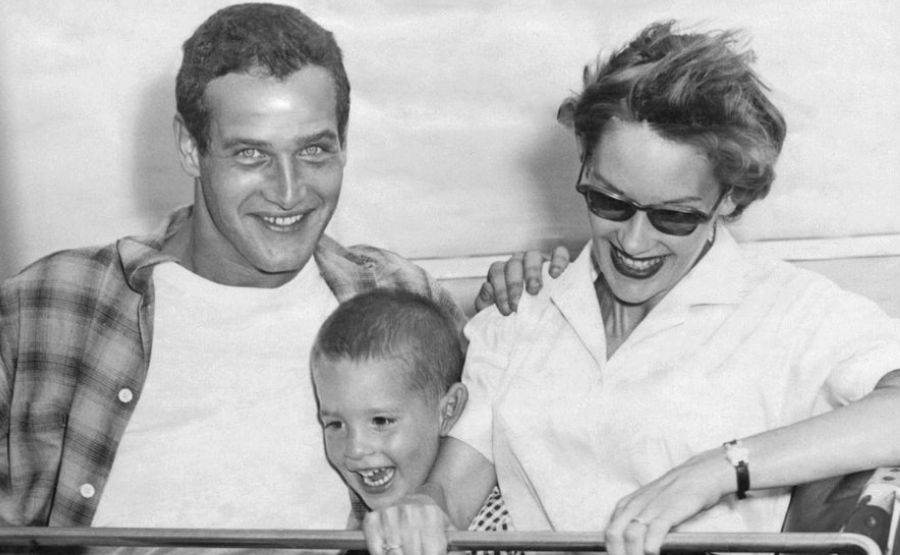
Following the divorce, Jackie Witte disappeared from the public record with a thoroughness that can only have been intentional.
She remained in New York City. She did not remarry, at least not in any documented way. No interview exists in which she spoke about the marriage or its end. No journalist obtained a quote. No magazine ran her photograph. No television program featured her perspective. While Paul Newman became one of the most scrutinized figures in American cultural life — his blue eyes analyzed, his marriage to Woodward celebrated as the gold standard of Hollywood fidelity, his philanthropic work catalogued at length — his first wife remained entirely outside the frame.
What is documented is the grief that came later. Scott Alan Newman, her only son, struggled from his adolescence onward. He had grown up with divorced parents, spending time between his mother’s household in New York and his father’s in Westport, Connecticut. He was expelled from several expensive private schools. He took stunt work in his father’s productions, performed in nightclubs under the name William Scott, and was reportedly unwilling to accept financial help from Paul. He was taking painkillers following a motorcycle accident in the fall of 1978. On the night of November 19, 1978, in a Los Angeles motel room, Scott took a fatal combination of alcohol, Valium, and other drugs. He was twenty-eight years old.
Scott’s death was ruled accidental. It was reported in the Ottawa Journal on November 30, 1978: “Allan Scott Newman, 28, son of actor Paul Newman, died Monday morning in a Los Angeles motel room of an unintentional overdose of alcohol and a medication used to treat depression.He was identified as “one of the actor’s three children born to Jackie, his first wife.” Witte.”
What Jackie experienced in the weeks and months that followed is not recorded anywhere. Paul Newman’s grief was public, channeled eventually into the founding of the Scott Newman Center for drug abuse prevention at the University of Southern California. He said to A.E. Hotchner, his friend and biographer: “There’s nothing you can say that will repair my guilt about Scott. It will be with me as long as I live.” He knelt and asked for Scott’s forgiveness, he wrote. He asked what he could have done differently. He wondered whether Scott had felt pressure to be like him, to do “macho things” when perhaps Scott only wanted to be himself.
Jackie’s grief had no such outlet. There was no foundation to build, no celebrity platform to absorb the sorrow, no decade of public acknowledgment in which to process what it means to lose a son at twenty-eight.
Her daughter Susan Kendall Newman became a documentary filmmaker, a philanthropist, and an executive director of the Scott Newman Foundation — ultimately devoting much of her professional life to the cause that emerged from her brother’s death. Susan died on August 2, 2025, at age seventy-two, of complications from chronic health conditions.Perhaps the most genuine homage to their mother’s example is that her youngest sister, Stephanie, has lived completely out of the spotlight.
Jackie Witte herself died on May 19, 1994, in New York City. She was sixty-four years old. The cause of her death was never disclosed publicly. No obituary ran. Her passing was handled with the same studied privacy that characterized the thirty-six years she had lived after the divorce. She predeceased her son Scott’s death by sixteen years — no, she survived him; she died in 1994, sixteen years after Scott’s death in 1978.
The Memoir That Spoke for Itself
In October 2022, Knopf published Paul Newman: The Extraordinary Life of an Ordinary Man — a posthumous memoir assembled by editor David Rosenthal from thousands of pages of transcripts of the recordings Newman had made with screenwriter Stewart Stern beginning in 1986. Newman had burned the tapes when he felt the project had gone too far into his private life, not knowing that Stern had retained written transcripts. Newman’s daughters Clea and Melissa worked on the final book.
The memoir addressed the first marriage more directly than Newman had done in any prior public statement. He acknowledged the affair. He acknowledged guilt about how the marriage ended. He said he had not known how to relate to his children — a confession about his own emotional unavailability that echoes across the whole story of his first family. A friend’s voice in the memoir noted that Jackie’s unfulfilled acting ambitions had been a genuine source of frustration for her, particularly as Newman’s trajectory accelerated.
What the memoir could not provide was Jackie’s voice. She was fourteen years dead by the time the book appeared. The tapes that might have included perspectives from her circle — Stewart Stern’s original interviews ranged across Newman’s whole inner world — were burned. The transcripts that survive contain Newman’s account, Woodward’s account, and the accounts of collaborators and friends. Jackie Witte’s account of nine years of marriage, three children, and a divorce conducted on terms she did not set is not in the record.
That absence is a type of information in and of itself..
Legacy and Contemporary Influence
Jackie Witte does not have a legacy in the conventional sense. She produced no body of work, delivered no speeches, built no institutions, and left no public record of her inner life.
What she left are her children, and what her children built. Susan Kendall Newman spent decades as executive director of the Scott Newman Foundation, collaborating with the California Department of Education on drug-prevention materials, speaking at the Betty Ford Center and the Annenberg Complex, touring the country and Australia and Canada and Mexico with a message that originated in the death of a young man who had grown up between two households. The foundation’s existence is, indirectly, a monument to everyone in that first family — to Scott’s struggles, to Paul’s guilt, and to Jackie’s years of raising three children largely alone while their father’s name grew larger in the culture.
Contemporary interest in Jackie Witte has grown in recent years, driven partly by Ethan Hawke’s 2022 HBO Max documentary series The Last Movie Stars and the publication of Newman’s memoir. Both projects reopened the question of what the first marriage actually was — and what it cost the person who was most affected by its ending and least able to shape the narrative around it.
In an era increasingly attentive to the women whose labor and sacrifice enabled famous men’s careers, Jackie Witte has become a quiet emblem of a particular kind of erasure. She appears in exactly one contemporaneous newspaper notice as a performer in her own right — the February 1950 Daily Sentinel mention of her and Newman playing a middle-aged couple in community theater. After that, she exists in the record primarily as his wife, and then as his ex-wife, and then as a footnote to the famous marriage that followed.
That she chose silence does not mean she had nothing to say. It means she decided that whatever she had to say was not for public consumption. In a media culture that treats reticence as suspicious and privacy as something to be overcome, the choice she made for thirty-six years after 1958 is worth acknowledging as a genuine exercise of agency. She declined to be defined by what had been done to her. She built a life that no one else has a record of.
Final Words
The figure of Jackie Witte is always partially obscured by the larger figure of the story she is attached to. Every account of her life is organized by someone else’s narrative: she is the first wife, the forgotten wife, the one who came before Joanne. That framing is both precise and constrictive.
What the documented facts actually show is a woman of early theatrical ambition who made a practical choice — the choice to marry young and build a family around a man whose talent she had recognized when he had not yet recognized it himself. Alongside him, she relocated to Cleveland, New Haven, and finally New York. She commuted to modeling work while he studied. She raised three children in three cities while he spent his nights in Manhattan becoming someone. She did not agree to the divorce until the terms had already been decided by someone else’s pregnancy.
None of that is a story of pure victimhood. People make choices, and choices carry weight in both directions. Newman’s guilt was real and documented across his whole life. His shame about the marriage — acknowledged in his memoir, evident in his fifty years of public reticence on the subject — suggests that he understood what he had taken without adequate return.
Jackie Witte died at sixty-four, in New York, in private, having lived the last thirty-six years of her life entirely on her own terms. Her son was gone. Her daughter Susan was building something from the wreckage of his death. Her youngest daughter Stephanie had followed her mother’s model of quiet dignity. Paul Newman was alive, famous, married to a woman who would outlive him, still occasionally asked about the first marriage by journalists who received the same careful non-answer he had always given.
She had outlived the story everyone else told about her. That is no small thing.
FAQs
1. Who was Jackie Witte?
Jacqueline Emily Witte was an American aspiring actress and model, born September 15, 1929, in Cook County, Illinois. She is primarily known as the first wife of actor Paul Newman, whom she married on December 27, 1949, in Beloit, Wisconsin.
2. Where did Jackie Witte grow up?
She grew up in Beloit, Wisconsin, where her father Frank Theophilus Witte ran a meat market. The 1940 Federal Census confirms the family there when Jackie was eleven. She graduated from Beloit High School in 1947 and participated in local theater before college.
3. How did Paul Newman and Jackie Witte become together?
They met in the summer of 1949 during summer stock theater work. Both were performing with regional companies — Newman with the Belfry Players in Wisconsin, and later both joined the Woodstock Players in Woodstock, Illinois. They married within months.
4. When and where did they marry?
They married on December 27, 1949, at St. Paul’s Episcopal Church in Beloit, Wisconsin. The reception followed at the Beloit Country Club. The announcement appeared in the Lake Geneva Regional News.
5. How many children did Jackie Witte and Paul Newman have?
Three: Scott Alan Newman, born September 23, 1950, in Cleveland, Ohio; Susan Kendall Newman, born February 21, 1953, in New York City; and Stephanie Newman, born 1954.
6. Why did Jackie and Paul Newman divorce?
Newman began an affair with actress Joanne Woodward during the 1953 Broadway production of Picnic, where they first met. The affair lasted approximately five years. Jackie initially refused to agree to the divorce. Several accounts state that when Woodward became pregnant with Newman’s child, she finally consented. The divorce was finalized on January 28, 1958, in New York City.
7. What did Paul Newman say about the first marriage?
He maintained deliberate public restraint throughout his career. He said: “It wouldn’t be fair to either Jackie or Joanne. But I was probably too immature to make a success of my first marriage.” His posthumous memoir, The Extraordinary Life of an Ordinary Man (Knopf, 2022), addressed the marriage and the affair more directly than he had done in life, acknowledging guilt.
8. What happened to Scott Newman?
Scott Alan Newman died on November 20, 1978, in a Los Angeles motel room from an accidental overdose of alcohol and tranquilizers. He was twenty-eight years old and had been taking painkillers following a motorcycle accident. Paul Newman established the Scott Newman Center for drug-abuse prevention in his son’s memory.
9. What happened to Susan Kendall Newman?
Susan Kendall Newman became a documentary filmmaker, philanthropist, and long-serving executive director of the Scott Newman Foundation. She produced Paul Newman’s 1980 telefilm The Shadow Box, earning a Golden Globe win and Emmy, Peabody, and Grammy nominations for her work as co-producer. She died on August 2, 2025, at age seventy-two, from complications of chronic health conditions.
10. Did Jackie Witte ever speak publicly after the divorce?
No documented interview, public statement, or media appearance by Jackie Witte after 1958 exists. She maintained total privacy for the remaining thirty-six years of her life.
11. Did Jackie Witte remarry?
There is no public or genealogical record that confirms a remarriage.She appears to have retained the Witte surname and lived privately in New York City.
12. When did Jackie Witte die?
On May 19, 1994, Jackie Witte passed away in New York City. She was sixty-four years old. The cause of her death was never publicly disclosed, and no obituary was published.
13. How is Jackie Witte depicted in The Last Movie Stars (2022)?
Director Ethan Hawke’s HBO Max documentary series drew on Stewart Stern’s transcripts of interviews with Newman, Woodward, and their circle. Newman’s daughter Clea Newman participated. The series acknowledged the first marriage and Newman’s sustained guilt about ending it. Jackie’s own perspective, having no recorded form, is absent.
14. What is the source of information about Jackie’s acting frustrations?
Newman’s posthumous memoir The Extraordinary Life of an Ordinary Man contains a friend’s observation that Jackie’s unfulfilled acting ambitions were a source of frustration, particularly as Newman’s career rose. The specific friend is not named in available reporting.
15. Why is Jackie Witte considered a “forgotten” figure?
Jackie Witte chose absolute privacy after 1958, gave no interviews, and was largely absent from the enormous volume of coverage surrounding Paul Newman’s second marriage, career, and philanthropy. Her story emerges only through genealogical records, the one contemporaneous newspaper notice naming her as a performer, Newman’s memoir, and secondary reporting. The combination of her own reticence and the cultural tendency to organize women’s stories around famous husbands has produced near-total historical erasure.
Empowering curious minds to explore, learn, and think deeper with Fact Aura.