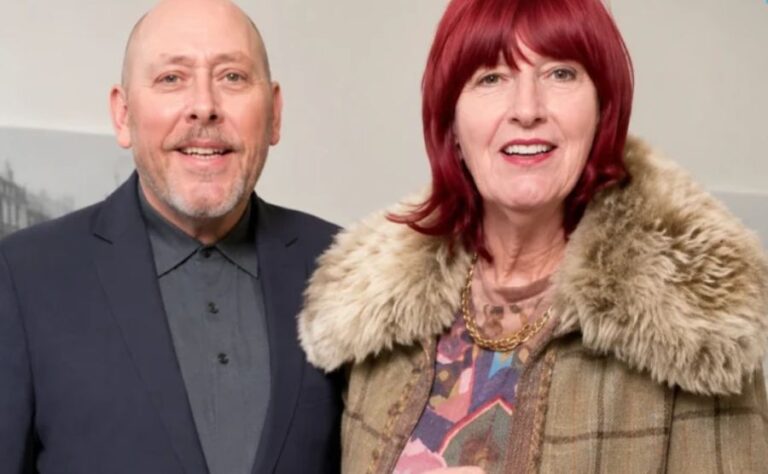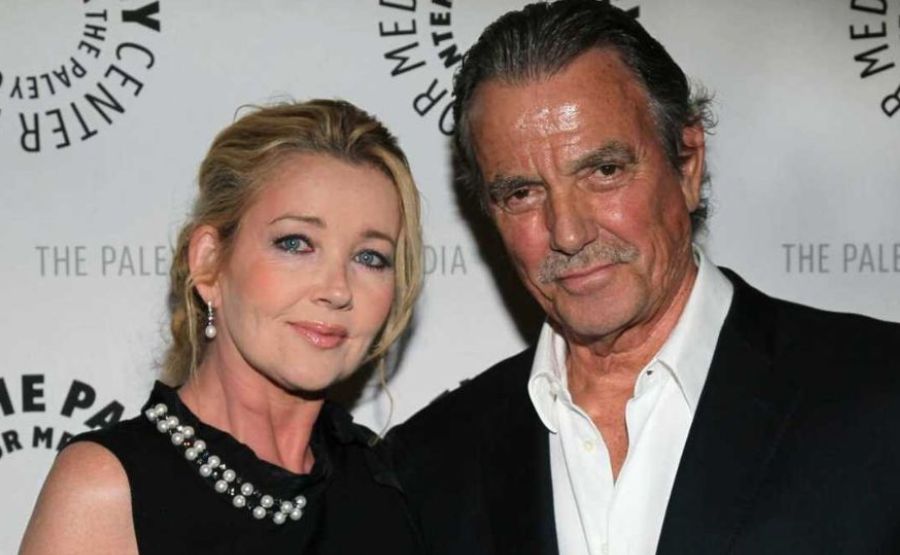
Dale Russell Gudegast: The Woman Behind the Name
In an industry where fame consumes everything it touches, Dale Russell Gudegast’s deliberate choice of invisibility reads less like a limitation and more like a philosophy — and after six decades, that philosophy has produced something Hollywood almost never does: a lasting, documented, mutually admiring partnership.
Quick Bio
| Category | Detail |
| Full birth name | Dale Suzanne Russell |
| Born | Disputed: IMDb lists June 21, 1942; most celebrity sources list November 17, 1941 — the discrepancy is unresolved |
| Birthplace | Los Angeles, California (some sources say Bakersfield, CA) |
| Nationality | American |
| Primary roles | Actress, interior designer, pillow designer, wife and family anchor |
| Sister | Sigrid Valdis (born Patricia Annette Olson, September 21, 1935 — October 14, 2007), actress on Hogan’s Heroes |
| Husband | Eric Braeden (born Hans-Jörg Gudegast), actor |
| Married | October 8, 1966, Brentwood, Los Angeles |
| Son | Christian Gudegast (born February 9, 1970), screenwriter-director |
| Granddaughters | Tatiana, Oksana, Angelika |
| Film credit | Holiday in the Sun (2001), dir. Steve Purcell — played a chauffeur |
| Family home lost | January 2025 Palisades wildfire, Pacific Palisades — couple had lived there 45 years |
| Forthcoming project | A memoir about her marriage and personal life (in progress) |
| Net worth (estimated) | Personal: approximately $100,000–$800,000 (widely disputed); household: tied to Eric Braeden’s estimated $20–25 million |
A California Childhood, a Family Already Brushed by the Stage
Long before Dale Russell Gudegast became known as “Eric Braeden‘s wife,” she was a California girl growing up in a household where the entertainment world was not distant or abstract. Her older sister, Patricia Annette Olson, born six years earlier in Bakersfield, would eventually take the stage name Sigrid Valdis and become a recognizable face on American television during the 1960s.
That context matters. Dale did not stumble accidentally into a world of actors, set designers, and Hollywood social circles. She was raised adjacent to it, formed by it, even if she would ultimately choose her own path through it.
The family’s roots were in California, and Dale attended private school there, completing her secondary education without continuing to university. That decision — choosing life over degrees — was not unusual for young women of her era, but it would not define the extent of her intellectual curiosity. Eric Braeden later described her, unprompted, as “well-educated, very steeped in European literature.” The label fits someone self-taught and widely read far more than it fits a credentialed academic.
See also “Jerome Jesse Berry: A Portrait of Absence, Addiction, and the Forgiveness That Outlasted Both“
The Sister Who Lit the Stage Before Her
No biography of Dale Russell Gudegast can move far without pausing on Sigrid Valdis. The two sisters were close, and the arc of Sigrid’s life — brilliant, turbulent, and finally quiet — cast a long shadow over Dale’s own.
Sigrid landed the role of “Hilda,” Colonel Klink’s secretary, on CBS’s Hogan’s Heroes in 1966, replacing Cynthia Lynn in the part. She held it until 1971, becoming one of the show’s most remembered supporting players. On the set, she fell in love with the show’s star, Bob Crane, and married him on October 16, 1970 — on the Hogan’s Heroes soundstage itself, with co-star Richard Dawson serving as best man.
The years that followed were hard. Crane’s behavior grew increasingly erratic, their marriage deteriorated, and in June 1978, he was found murdered in a Scottsdale, Arizona hotel room. The case was never officially solved. Sigrid, left to raise their son Scott alone, gave one television interview — to ABC’s 20/20 — found it harrowing, and never spoke publicly again.
She moved to Seattle in 1980, then returned to Los Angeles in 2004 after a terminal lung cancer diagnosis. She died on October 14, 2007, in Anaheim, California, at 72. Dale survived her by years. The loss of her only sibling — someone who had navigated far more of life’s extremes than Dale had — must have registered deeply. Neither woman spoke about it in the public record, which is itself a kind of statement about the family’s approach to grief.
Santa Monica College and the Meeting That Changed Everything
Dale enrolled at Santa Monica College as an art major — precise, visual, attentive to form. Eric Braeden, then still going by his German birth name Hans-Jörg Gudegast, had enrolled studying economics and philosophy. The two were separated by discipline but drawn together by something harder to name.
By Braeden’s own account, what initially attracted him was her mind. She was grounded in European literature. She read seriously. She engaged ideas rather than deflecting them. For a young German immigrant still finding his footing in California, still translating himself into someone who could work in American film and television, that intellectual seriousness was magnetic.
Before they developed into anything more, they became friends. That sequence — friendship preceding romance, slow trust preceding commitment — would become the template of a marriage that lasted longer than most Hollywood careers.
The Wedding, the Bargain, the Bet on Each Other
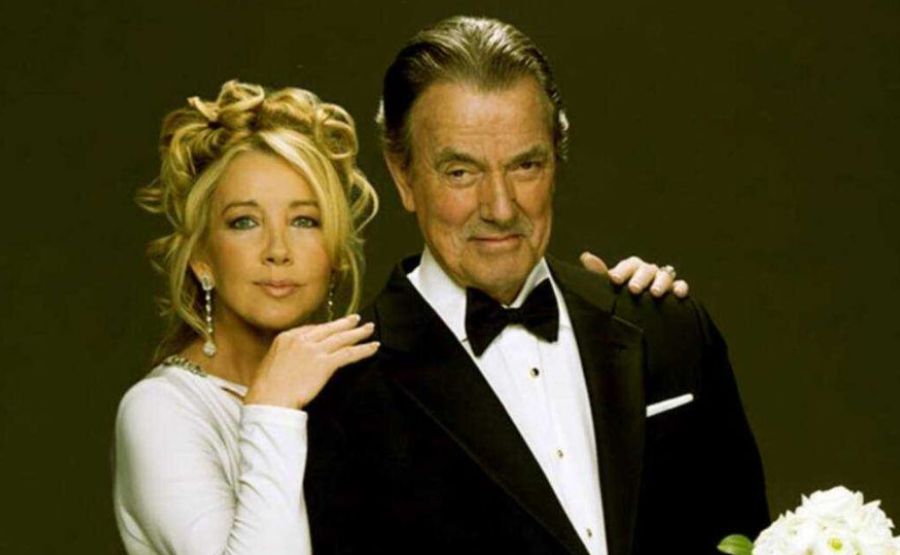
They married on October 8, 1966, in Brentwood, Los Angeles. The ceremony was small. Only close family and friends attended. At a moment when Hollywood weddings could be elaborate publicity exercises, Dale and Eric’s was notable for being neither.
Eric was not yet famous. He was working in television, still using his birth name for some projects, building slowly. Dale was 24 years old. She was marrying a German immigrant actor with ambition and talent but no guarantee of either stability or stardom.
Whatever calculation she made in 1966 — and she clearly made one — it proved correct. But the correctness only became visible decades later. It was just a wager on a person at the time of the wedding.
Who Dale Russell Gudegast Actually Is: The Career Nobody Talks About
Most biographical profiles of Dale Russell Gudegast treat her professional life as essentially blank — a brief acting credit in 2001, then nothing. That framing is both technically accurate and quietly misleading.
Dale worked for years as a pillow designer and later as an interior designer. Neither field is glamorous enough to generate celebrity coverage, which is precisely why she chose them. She had a creative sensibility shaped by her art major training at Santa Monica College, and she applied it not to screen performance but to physical space and material aesthetics.
Eric confirmed this in an interview, noting that when they bought a home, he wrote the check while Dale transformed the building into something that felt inhabited. The distinction between house and home, in the Gudegast household, was entirely her contribution.
In 2001, she stepped briefly in front of a camera for Holiday in the Sun, a family film directed by Steve Purcell and starring Mary-Kate and Ashley Olsen. She played a chauffeur. It was her only screen role. The film also featured a then-unknown Megan Fox in an early appearance. Dale did not pursue further acting work, and the role reads less like a career attempt than like a favor accepted or an experiment completed.
She has been working on a memoir. Details remain sparse. She has not publicized it, set no release date, and granted no interviews about its contents. That restraint, consistent with every other aspect of her public posture, suggests the book will appear when she’s ready — or perhaps not at all.
The Architecture of a Long Marriage
Eric Braeden joined the cast of CBS’s The Young and the Restless in 1980, playing ruthless tycoon Victor Newman. The role became one of the longest continuous character portrayals in American soap opera history. By the time he won a Daytime Emmy Award for Outstanding Lead Actor in 1998 — and received a star on the Hollywood Walk of Fame in 2007 — he had been with Dale for over three decades.
Fame arrived slowly, then permanently. The fame did not change the marriage’s structure because Dale had built no part of her life on Eric’s celebrity. She had been there before it arrived and appeared unmoved by its magnitude.
Eric has spoken about her influence with a specificity that feels unscripted. On his official website, he wrote that because Dale is so private, people consistently underestimate how often he consults her before making major decisions. He describes her as a calming force. In a 2011 interview with Coming of Age magazine, he said that her support predated his fame and that this created in him a “deep sense of loyalty” he feels to this day.
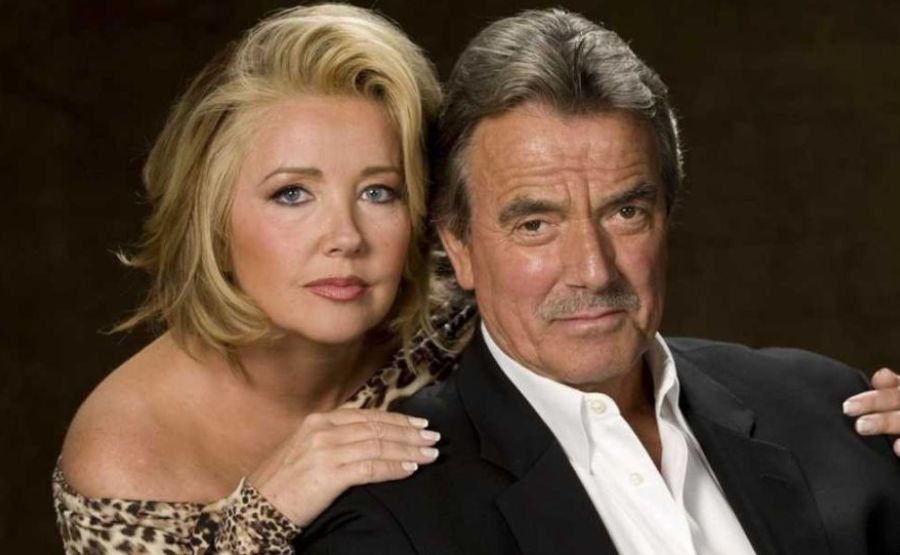
The architecture of their arrangement — his public life, her private one; his vocal opinions on social media, her studied silence — works because it was designed, not imposed. Dale chose this configuration. She did not retire from a public life she once had. She never pursued one.
In 1997, when she spoke to People magazine — one of her very few documented quotes — she described Eric as “endearing as no one else can be.” That sentence, rare in its brevity and warmth, captures her approach to everything: say what’s true, say it simply, and stop.
Christian Gudegast: The Son Who Inherited Both Parents
Christian Gudegast was born on February 9, 1970, four years into the marriage. He grew up in the Pacific Palisades home his parents had built together, in a household where one parent was famous and the other was pointedly not.
He graduated from UCLA Film School in 1992, finishing at the top of his class. The career that followed was slow-built and serious. He wrote A Man Apart in 2003. He wrote London Has Fallen in 2016. Then came Den of Thieves in 2018, which he also directed and produced — a lean, kinetic heist thriller starring Gerard Butler and O’Shea Jackson Jr. that earned more than $80 million at the global box office against a $30 million budget.
The sequel, Den of Thieves 2: Pantera, arrived in January 2025 and was a hit. Eric, returning to the ashes of his home from the Palisades fire that same month, found in his son’s success a point of pride amid the devastation. He told reporters he could see the corner of the house where Christian used to sit and write his scripts.
Christian married Natasha, a jewelry designer, in 2009. They have two daughters together: Oksana and Angelika. Christian also has a daughter named Tatiana from a previous relationship. Dale became a grandmother three times over, and by multiple accounts, that role suits her. Tatiana’s travels, college, and horseback riding are all regularly featured on Eric’s social media. The grandmother who never wanted cameras in her life gets to watch the next generation through her husband’s lens.
Personal Life, Private Grief, and the Weight of Staying Grounded
The loss of her sister in 2007 was the most documented private grief of Dale’s adult life, though she said nothing about it publicly. Sigrid Valdis had navigated widowhood, murder, public speculation about her husband, media scrutiny, and illness over three decades. Dale watched all of it from a different distance — close enough to understand, removed enough to avoid the worst of it.
The murder of Bob Crane in 1978 made Dale the sister-in-law of a victim in an unsolved homicide. The case remained a source of tabloid fascination for decades. A 2002 film, Auto Focus, dramatized Crane’s life with actor Greg Kinnear. Sigrid found the portrayal upsetting. Dale said nothing on record.
That pattern — bearing witness without performing grief or opinion — is consistent across every dimension of Dale’s documented life. Whether it reflects temperament, strategic privacy, or some deeper conviction about where dignity lies is impossible to know from the outside. Perhaps she knows. Perhaps she will say, eventually, in the book she is writing.
The Fire That Took Forty-Five Years of Home
In early January 2025, the Palisades wildfire swept through the Pacific Palisades neighborhood of Los Angeles with unprecedented speed. The Gudegast family home — the house they had lived in for 45 years, the house Dale had decorated and maintained, the house where Christian wrote scripts and grandchildren visited for Christmas — burned to the ground.
Eric posted video as he evacuated, standing at the pool’s edge watching flames move toward a structure that held the entire physical record of his adult life. “We will need to leave our home,” he declared. “It’s unbelievable to watch this lovely area burn up in flames.”
Days later, he returned with an Entertainment Tonight crew to walk through the rubble. He broke down. “Forty-five years, man,” he said. “I’m devastated.” He described standing in the ashes and thinking of Dale and their granddaughter sitting on the couch there weeks earlier, talking about the future.
Dale, characteristically, said nothing publicly. She did not grant interviews. She did not post on social media. Eric spoke for both of them, which has always been the arrangement. And then, true to form, he announced they would rebuild.
Legacy: What It Means to Be Influential Without Being Famous
The conventional framework for assessing a person’s legacy asks about output — films made, offices held, books published, records broken. By that framework, Dale Russell Gudegast’s legacy is sparse: one film credit, one career in design, one memoir in progress.
The more interesting question is the one her husband has been raising for decades in interviews: what does it mean to be the person who shapes someone else’s decisions from a position of deliberate privacy?
Eric Braeden has played Victor Newman — one of the most powerful fictional patriarchs in American soap opera history — for over four decades. He has appeared in more than 120 films and television productions. He held his career together through decades of industry volatility, personal challenge, and the grinding physical demands of daily television production. And across all of it, he has credited one constant source of stability.
Dale did not appear on the show. She did not negotiate his contracts, manage his public image, or co-write his memoir I’ll Be Damned (2017). What she did was harder to quantify and harder to replace: she remained. She built a home. She raised a son who became a filmmaker his father describes as the greatest gift of his life. She chose, deliberately and consistently, to be the person her husband trusted above all others.
That kind of influence — patient, structural, not visible in any credits roll — is the kind history routinely overlooks and people closest to the situation never forget.
Final Words
Dale Russell Gudegast’s story resists the usual biographical framework because it refuses the usual biographical ambitions. She did not chase fame, cultivate a public persona, or leverage her position for exposure. She made choices — to study art, to marry an ambitious immigrant actor with an unpronounceable German name, to raise a son with a filmmaker’s eye, to live in one house for 45 years, to grieve privately, to design interiors, to watch her sister’s tragedy from a careful distance — and then she let those choices compound.
The result is a life that is genuinely difficult to assess from the outside, and that difficulty is, unmistakably, by design.
What we can say with confidence: she shaped a marriage that lasted nearly 60 years in an industry that routinely dissolves them. She fathered a son who became one of Hollywood’s more original genre filmmakers. She outlasted the noise around her famous sister. She built and then lost and then planned to rebuild a home. She carried, with consistent dignity, the particular weight of being attached to a famous person while refusing to become one.
Her memoir, when it arrives, may reframe all of this. Or it may not. Either way, life is already written.
FAQs
1. Who is Dale Russell Gudegast?
Dale Russell Gudegast is an American actress, interior designer, and the wife of Emmy Award-winning actor Eric Braeden, known for playing Victor Newman on CBS’s The Young and the Restless since 1980.
2. When and where was Dale Russell Gudegast born?
Her birth date is genuinely disputed. IMDb lists June 21, 1942, in Los Angeles, California. Most celebrity biography sites cite November 17, 1941. Her birthplace is given as either Los Angeles or Bakersfield, California. Publicly, the disparity has not been settled.
3. What was Dale Russell Gudegast’s acting career?
She had one screen credit: a chauffeur role in the 2001 family comedy Holiday in the Sun, directed by Steve Purcell and starring Mary-Kate and Ashley Olsen. The film also featured a young Megan Fox. Dale did not pursue further acting work after this appearance.
4. How did Dale Russell Gudegast meet Eric Braeden?
The two met at Santa Monica College in the early 1960s, where she was enrolled as an art major and he was studying economics and philosophy. They became friends before their relationship progressed, and married on October 8, 1966.
5. Who was Sigrid Valdis, and how is she connected to Dale?
Sigrid Valdis (birth name Patricia Annette Olson, 1935–2007) was Dale’s older sister and a working actress best remembered for playing “Hilda” in Hogan’s Heroes from 1966 to 1971. She married the show’s star, Bob Crane, in 1970. Crane was murdered in 1978 in an unsolved case. Sigrid died of lung cancer on October 14, 2007, in Anaheim, California.
6. What are Dale Russell Gudegast’s other career interests besides acting?
She worked as a pillow designer and later as an interior designer. Eric Braeden has credited her with creating the lived-in warmth of their family home. She is also reportedly writing a memoir about her marriage and personal life.
7. How many children does Dale Russell Gudegast have?
One: Christian Gudegast, born February 9, 1970. Christian graduated from UCLA Film School in 1992 and became a screenwriter, director, and producer. His credits include A Man Apart (2003), London Has Fallen (2016), and Den of Thieves (2018), which he also directed.
8. How many grandchildren does Dale Russell Gudegast have?
Three granddaughters: Tatiana (from Christian’s previous relationship), and Oksana and Angelika (with Christian’s wife Natasha, a jewelry designer).
9. What happened to their home in the 2025 Los Angeles wildfires?
The Gudegasts’ Pacific Palisades home, where they had lived for approximately 45 years, burned down in the January 2025 Palisades wildfire. Eric posted video during the evacuation and later returned with a film crew to document the devastation. He stated publicly they intended to rebuild.
10. What is Eric Braeden’s estimated net worth, and does Dale share in it?
Eric Braeden’s decades-long tenure on The Young and the Restless and his roles in movies have contributed to his estimated net worth of $20–25 million. Dale’s personal net worth is independently estimated between $100,000 and $800,000, though as a married couple their financial lives are substantially intertwined.
11. Has Dale Russell Gudegast appeared at any major public events?
She makes rare but documented public appearances. She attended Eric’s 25th anniversary celebration on The Young and the Restless in 2005, joined him when he received his Hollywood Walk of Fame star in 2007, and attended his I’ll Be Damned book signing at Barnes & Noble’s The Grove location in February 2017.
12. Why does Eric Braeden credit Dale so heavily in interviews?
Eric has stated explicitly that Dale influences many of his professional and personal decisions, that she is the person he consults before major choices, and that she has been his primary source of calm and stability throughout his career. On his website he wrote: “Because Dale is so private, people don’t realize how much she influences what I do or don’t do.”
13. What is the secret to their long marriage, according to Eric Braeden?
In multiple interviews, Eric has said the key is not only loving but genuinely liking the other person — enjoying their company, sharing their interests, and wanting to have conversations with them. He told people: “You obviously share the most extraordinary things in life with them.”
14. Is Dale Russell Gudegast active on social media?
No. Dale maintains no known public social media presence. Eric Braeden is active on Instagram (@ericbraedengudegast) and has used the platform to share family news, including updates about their granddaughter Tatiana.
15. Is there a Wikipedia page for Dale Russell Gudegast?
No dedicated Wikipedia page exists for her. She appears briefly in the IMDb entry under the actress name “Dale Russell” and in references within her husband’s and sister’s biographical pages.
Empowering curious minds to explore, learn, and think deeper with Fact Aura.