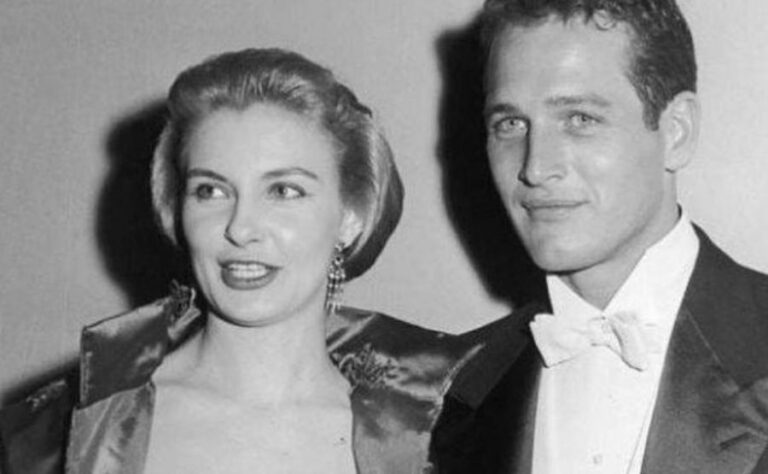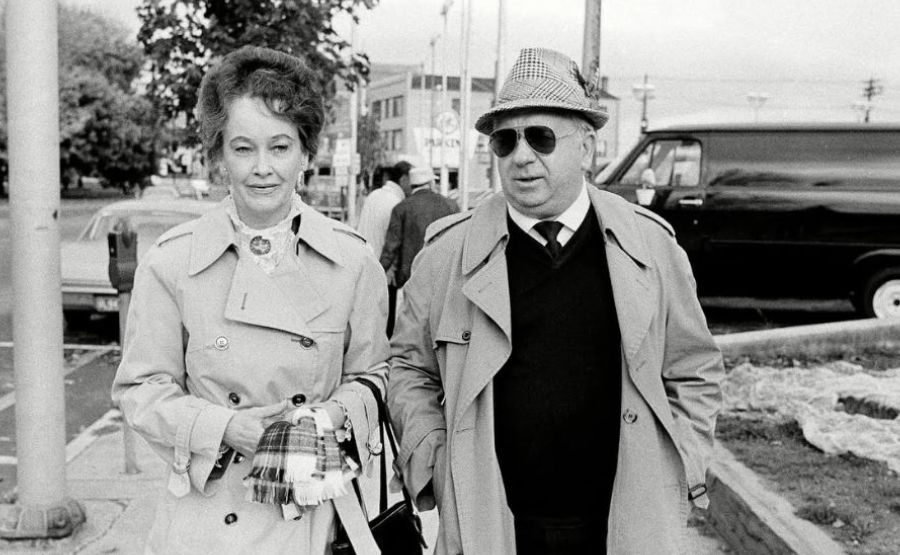
Ed and Lorraine Warren: Believers at the Edge of the Dark
Quick Bio
| Detail | Information |
| Edward Warren Miney | Born September 7, 1926, Bridgeport, Connecticut · Died August 23, 2006, Monroe, Connecticut (age 79) |
| Lorraine Rita Warren (née Moran) | Born January 31, 1927, Bridgeport, Connecticut · Died April 18, 2019, Monroe, Connecticut (age 92) |
| Nationality | American |
| Primary Roles | Paranormal Investigators · Authors · Lecturers · Demonologist (Ed) · Clairvoyant/Trance Medium (Lorraine) |
| Religion | Roman Catholic (lifelong, practicing) |
| Marriage | May 22, 1945 (Ed’s WWII Survivor’s Leave); 61 years together |
| Children | One daughter: Judy Warren (b. January 11, 1946); married Tony Spera |
| Organization Founded | New England Society for Psychic Research (NESPR), 1952 — oldest ghost-hunting group in New England |
| Museum | Warren Occult Museum, Monroe, Connecticut (attached to family home; closed to public after Lorraine’s death) |
| Major Cases | Annabelle doll (1970) · Perron Family haunting, Rhode Island (1971) · Amityville, New York (1976) · Enfield Poltergeist, London (1977) · Smurl Family haunting, Pennsylvania (1986) · Snedeker Family haunting, Connecticut (1986) |
| Books Authored/Co-authored | The Demonologist (1980) · Ghost Hunters (1989) · The Haunted (1988) · In a Dark Place (1992) · Werewolf (1991) · Satan’s Harvest (1990), and others |
| Film Franchise | The Conjuring Universe (2013–present); inspired by their case files |
| Notable Distinction | Ed was recognized as one of approximately seven active demonologists in the United States — and the only layperson (non-clergy) among them |
| Buried | Stepney Cemetery, Monroe, Connecticut |
| Key Successor | Tony Spera (son-in-law), current director of NESPR |
Introduction: Why the Warrens Still Matter
More than two decades after Ed Warren’s death and several years after Lorraine’s, their names generate more cultural conversation than they ever did while they lived — a fact that reveals something essential about American anxiety, the enduring hunger for belief in something beyond the visible, and the peculiar alchemy that transforms a couple from Bridgeport, Connecticut, into the architects of a billion-dollar horror franchise.
The Warrens were not scientists. They did not pretend to be. They were devoted Catholics who spent more than fifty years going through the paranormal with a religious perspective, viewing it as a struggle between good and evil. into the homes of terrified families and telling them, with absolute conviction, that what they feared was real. Whether that conviction was genuine, calculated, or some unresolvable mixture of both remains the central question of their legacy.
See also “Elmer Heinrich: The Man Who Listened to the Soil“
Two Children, Three Blocks Apart: Origins in Bridgeport
Both Ed and Lorraine grew up in the same neighborhood in Bridgeport, Connecticut, and their proximity was the accidental precondition for everything that followed.
Edward Warren Miney was born on September 7, 1926, the son of a Connecticut state trooper. His father was a rational man, predisposed to explanations. But the house Ed grew up in defied his father’s rationalism. At age five, Ed reported seeing an apparition — a dot of light that expanded until it became the recognizable figure of the family’s recently deceased landlady, standing in his bedroom closet. His father dismissed it. Ed never did.
A visionary childhood left marks that couldn’t be explained away. Among the experiences Ed later described was a spectral nun who reportedly told him he would work alongside priests one day — a prophecy that, by any accounting of his later life, landed with uncomfortable accuracy.
Lorraine Rita Moran was born on January 31, 1927, three blocks from Ed’s home, to an Irish Catholic family. Her unusual relationship with the world announced itself early. At twelve, on an otherwise ordinary Arbor Day at her all-girls school, Lauralton Hall, she looked at a freshly planted sapling and saw it as a fully grown tree in full leaf. When a nun pressed her about where she was looking, Lorraine admitted she was seeing the future. The nun called the ability sinful and sent her on a silent prayer retreat — perhaps the most counterproductive spiritual intervention imaginable. Lorraine kept her gifts and carried them forward.
What these two children shared, growing up three blocks apart in a mid-century New England city, was the experience of a world that did not behave the way adults insisted it should. That shared perception — that the unseen was real and worth taking seriously — became the foundation of a 61-year marriage and a career like no other.
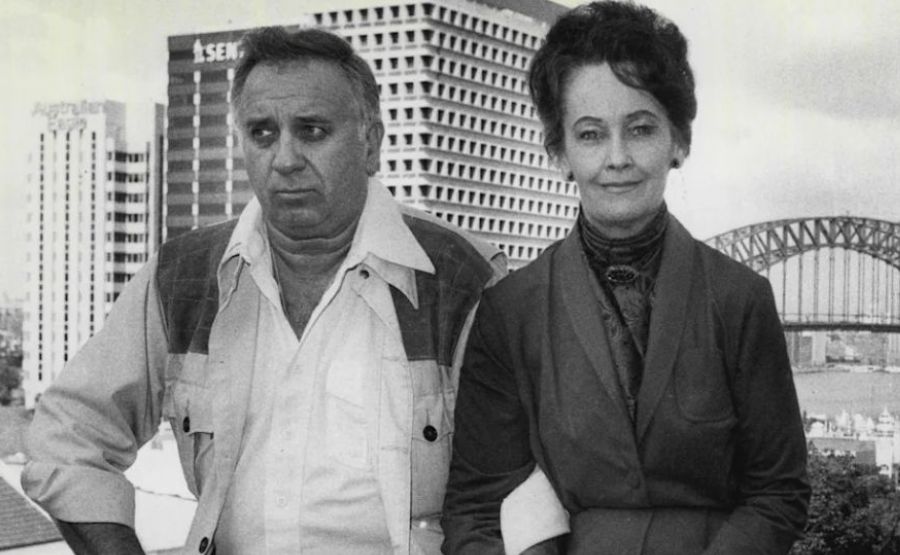
The Movie Theater, the Navy, and a Marriage at Eighteen
They met in 1944, when both were sixteen. Ed worked as an usher at the Colonial Theater in Bridgeport, Connecticut. Lorraine came with her mother to watch films. It was a chance encounter made remarkable by what Lorraine later said she experienced in that moment: a vision of Ed as an old man, and a certainty, arriving without warning, that she would spend her entire life with him.
Within a year, Ed had enlisted in the U.S. Navy at age seventeen. He deployed to the North Atlantic, and within four months, his ship was sunk. He survived. The Navy granted him a thirty-day Survivor’s Leave, and he came home to Connecticut. On May 22, 1945, he and Lorraine tied the knot. They were eighteen years old, united by circumstance, faith, and what Lorraine described as something she had already seen coming.
After the war ended, Ed returned to civilian life and enrolled at the Perry Art School, a subsidiary of Yale University. He had a genuine gift for painting and pursued it seriously, but left after two years. He and Lorraine set up impromptu art stands throughout coastal New England — Maine, Vermont, Rhode Island, Massachusetts — selling Ed’s work to tourists.
The pivot that changed everything arrived not from ambition or design but from Ed’s developing method of acquiring painting subjects. He began sketching allegedly haunted houses from newspaper accounts, painting them, and then knocking on the owners’ doors with the sketch in hand as a friendly overture. It worked. People invited him in. And once inside, Ed and Lorraine listened — to stories of unexplained sounds, moving objects, presences felt in empty rooms, darkness that seemed to have a quality beyond the absence of light. They spent roughly five years doing this, accumulating case experience before anyone called it that.
Their daughter Judy was born on January 11, 1946. By 1952, the Warrens had formalized their activity by founding the New England Society for Psychic Research — the NESPR — which remains, by its own reckoning, the oldest ghost-hunting organization in New England.
The Partnership: Two Roles, One Method
Ed and Lorraine divided their work along lines that reflected their personalities as precisely as they reflected their claimed gifts.
Ed approached each case as an investigator first and a theologian second. He had spent years in self-directed study of demonology — reading church texts, historical case records, and theological frameworks for understanding malevolent spiritual entities. He ultimately earned recognition as one of approximately seven active demonologists in the United States, and the only layperson among them. The Roman Catholic Church acknowledged him as a lay demonologist, a distinction genuinely unusual for a non-clergyman. Ed’s interviews with affected families were methodical. He documented cases in detail, gathered witness accounts, and built files that grew over decades into one of the most extensive private archives of paranormal testimony in the country.
Lorraine’s role was categorically different. She described herself as a clairvoyant and light trance medium — someone capable of perceiving spiritual presences through what she called an extrasensory sensitivity to the energies and auras surrounding people and spaces. Interestingly, Lorraine remained skeptical of ghosts and hauntings long after she began accompanying Ed on investigations. She has said in interviews that in the early years, she suspected many of the people they visited were simply suffering from overactive imaginations.
Her skepticism was itself a kind of credential. It meant that when Lorraine eventually did experience something she could not dismiss — when she felt what she described as an overwhelming evil presence in a room — she took it seriously. Lorraine agreed to be tested by Dr. Thelma Moss, a researcher and parapsychologist at UCLA who studied extrasensory perception. Dr. Moss concluded that Lorraine’s clairvoyant abilities tested as significantly above average. The result gave the Warrens a layer of scientific legitimacy that they would rely on for years in defending their credibility.
Together, their dynamic was a studied complementarity. Ed spoke; Lorraine sensed. Ed documented; Lorraine perceived. Whether that division reflected genuine supernatural ability or a highly effective performance of belief is the question that follows them everywhere.
The Cases That Made Them: From Annabelle to Amityville
The Warrens claimed to have investigated over 10,000 cases during their careers. Most of those cases were private, regional, and left no public record. A handful, however, became the scaffolding for their public identity — and, later, for an entire Hollywood franchise.
The Warrens were called in 1970 by Donna and her roommate, two nursing students, regarding a Raggedy Ann doll that had reportedly started moving on its own and left handwritten notes. and causing physical harm. A medium had told the women that the doll harbored the spirit of a seven-year-old girl named Annabelle Higgins who simply wanted to be loved. The Warrens saw it differently. They concluded the entity was not a child’s spirit but a demonic presence using the guise of innocence to gain trust and access to a human host. They took the doll. They sealed it in a blessed glass case in their home. They placed a warning sign on the enclosure. Annabelle — a plain, worn Raggedy Ann — became the most famous artifact in the Warrens’ Occult Museum, and later the inspiration for a porcelain nightmare across three Hollywood films.
In 1971, the Warrens investigated the Perron family home in Harrisville, Rhode Island — a sprawling farmhouse where Roger and Carolyn Perron and their five daughters reported escalating terror: strange smells, moving objects, physical assaults, and a presence the Warrens identified as Bathsheba Sherman, an alleged nineteenth-century witch whose spirit they believed had attached itself to the land. The Perron case became the foundational case for the 2013 film The Conjuring, which director James Wan would make the centerpiece of a nine-film universe that has earned over $2 billion worldwide.
In January 1976, the Warrens participated in a televised séance at 112 Ocean Avenue in Amityville, New York — the house where Ronald DeFeo Jr. had shot and killed his parents and four siblings in November 1974. The Lutz family, who had purchased the home and fled after 28 days claiming overwhelming supernatural activity, had become the subject of Jay Anson’s 1977 book The Amityville Horror, which sold over 10 million copies. The Warrens declared the Amityville haunting genuine. Lorraine said of the house, in a remark widely quoted ever since, that she hoped it was as close to hell as she would ever get.
In 1977, they traveled to Enfield, in north London, where eleven-year-old Janet Hodgson and her family reported being tormented by a poltergeist — strange voices, flying objects, and alleged levitation. It was deemed a case of demonic possession by the Warren family. Independent investigators who reviewed the same evidence concluded the children were staging events for attention. The Enfield case became the basis for The Conjuring 2 in 2016, though critics noted the Warrens’ actual involvement in the Enfield case was considerably more peripheral than the film depicted.
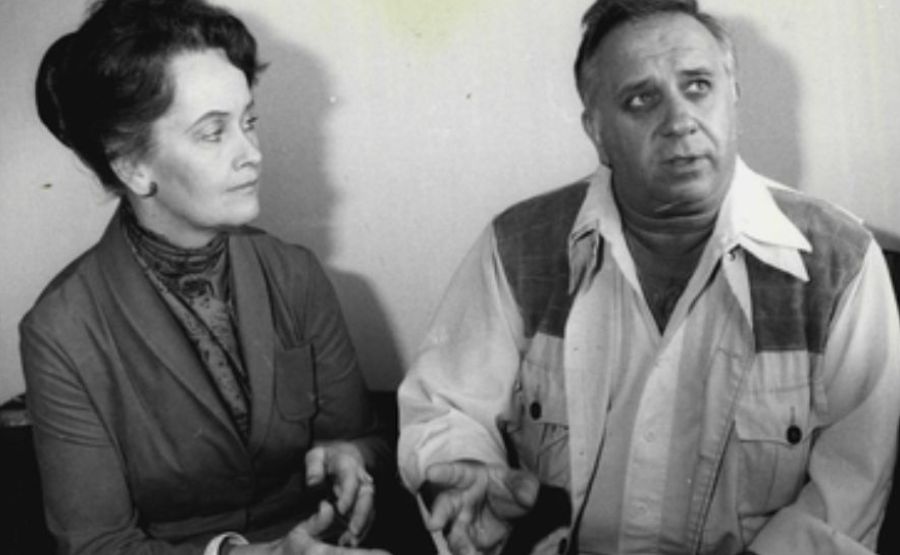
The Occult Museum: A Cabinet of Conviction
The Warrens’ home in Monroe, Connecticut, eventually became something stranger than a residence. It became a repository for every object they believed carried a supernatural charge — items collected from decades of investigations, each with an attached story of misfortune, possession, or malevolence.
The Occult Museum occupied the basement and an adjoining space. It held alleged vampire coffins, masks used in satanic rituals, a child’s tombstone repurposed as a dark altar, psychic photographs, death curses, and dozens of dolls and toys associated with reported hauntings. The atmosphere, by visitor accounts, was dense — part museum, part warning, part theater of belief.
At its center: Annabelle, in her locked glass case, blessed three times weekly by a Catholic priest, watched over with what the Warrens described as vigilant caution. The doll received her own warning placard. Visitors were advised never to touch the glass.
The museum charged admission — $13 per tour — and drew a steady stream of believers, skeptics, and curiosity-seekers for years. Its closure was ultimately logistical rather than spiritual: the residential property was not zoned for public visitation, and the crowds generated by the Conjuring films overwhelmed the neighborhood’s tolerance. After Lorraine’s death in 2019, public access ended. In August 2025, the property was purchased by comedian Matt Rife and YouTuber Elton Castee, who became legal guardians of the 750 artifacts — including Annabelle — and announced plans to reopen the collection in some form.
Faith as Method: The Catholic Framework
To understand the Warrens without understanding their Catholicism is to misread them entirely.
Both grew up in Catholic households. Both remained practicing members of the Church throughout their lives. Their theology was not ornamental — it was operational. Ed believed that faith was the primary protection against demonic forces, and that a lack of faith made a person vulnerable to possession. He stated this explicitly in interviews and in his books. “The fairy tale is true,” reads the NESPR’s statement of purpose. “The devil exists. God exists. And for us, as people, our very destiny hinges upon which one we elect to follow.”
Their investigations were conducted within this theological structure. They did not perform exorcisms — that authority rested with ordained clergy. Instead, they prepared the ground: documenting the case, assessing the severity of the spiritual disturbance, and bringing in Catholic priests when the evidence, by their judgment, met the threshold for formal intervention. They worked alongside clergy regularly. They prayed the Rosary before entering difficult situations. They invoked Saint Michael.
Whether the Church reciprocated this partnership officially is a more complicated question. Individual priests worked with the Warrens on specific cases. The institution as a whole never formally endorsed their investigations. The Vatican’s process for validating possession claims is painstaking and demanding precisely because of how readily the concept is misapplied. The Warrens operated in the space between private faith and institutional religion — devout enough to be credible to believers, unofficial enough to remain free of institutional oversight.
A Marriage, A Life, and the Shadows Between Them
The Warrens’ marriage was almost inextricably linked to their public image. They were presented — and presented themselves — as a deeply devoted Catholic couple: a demonologist and his gifted wife, united against darkness, their personal life as wholesome as their professional life was harrowing.
That portrait has cracked in the years since Ed’s death.
In 2017, a woman named Judith Penney publicly alleged that she had maintained a sexual relationship with Ed Warren for approximately forty years, a relationship that began when she was fifteen and Ed was in his mid-thirties — around 1957. Penney stated that when she became pregnant by Ed, Lorraine Warren pressed her to obtain an abortion, fearing the scandal would destroy the Warrens’ professional reputation and public image. Penney also alleged she witnessed instances of physical abuse between the couple.
These are serious allegations. They remain unverified in any legal proceeding. Ed died in 2006 and cannot respond. Lorraine, who died in 2019, denied the accusations through representatives. The claims stand in documented tension with the Warrens’ public persona as faithful, loving, and morally upright.
Within the household, a quieter complexity existed. The Warrens’ daughter Judy grew up with her grandparents for significant portions of her childhood — a biographical detail mentioned in passing in official accounts, without explanation. Judy herself has described being frightened by the stories her father told. She possesses, reportedly, some degree of psychic ability of her own but has deliberately chosen not to develop it, finding the terrain her parents inhabited more disturbing than clarifying. She married Tony Spera, who became the family’s public face after Ed’s death and now directs the NESPR.
At the age of 79, Ed Warren passed away in Monroe, Connecticut, on August 23, 2006. He had collapsed several years earlier after returning from Japan, where he had traveled to study Buddhist exorcism practices — a final act of inquiry from a man who spent his life crossing the boundaries of other people’s belief systems. Lorraine continued working after his death — lecturing, consulting on film projects, investigating cases with Tony Spera — for more than a decade. At the age of 92, she passed away on April 18, 2019. Both are interred in Monroe, Connecticut’s Stepney Cemetery.
The Case Against: Skeptics and the Limits of Belief
No honest accounting of the Warrens can omit the sustained, credible challenge to their credibility from within both the scientific and paranormal research communities.
Perry DeAngelis and Dr. Steven Novella of the New England Skeptical Society paid thirteen dollars for the Warrens’ museum tour in 1997 and examined what they described as the totality of the available evidence. They concluded, in a Connecticut Post interview, that the Warrens were “at best, tellers of meaningless ghost stories, and at worst, dangerous frauds.” Novella’s specific criticism was methodological: the Warrens began each investigation with a predetermined conclusion and worked backward from it. “They’re not doing a good scientific investigation,” he said. “They have a predetermined conclusion which they adhere to, literally and religiously.”
Joe Nickell, a longtime investigator at the Skeptical Inquirer, examined multiple Warren cases and concluded that the major hauntings the Warrens authenticated — including Amityville and the Snedeker family haunting in Connecticut, adapted as The Haunting in Connecticut — were not genuine paranormal events. Benjamin Radford, another skeptical investigator, reviewed the Amityville evidence and described it as having been “refuted by eyewitnesses, investigations, and forensic evidence.” The attorney who had represented Ronald DeFeo Jr. William Weber acknowledged that he, the Lutz family, and writer Jay Anson had constructed the haunting narrative together over wine, intending it partly as support for a possession defense in DeFeo’s case.
Ray Garton, who co-wrote In a Dark Place about the Warrens’ investigation of the Snedeker family, described being told by Ed to simply make the book as scary as possible regardless of what the evidence showed. The family, Garton said, could not maintain a consistent account of events. He later made a remark about Lorraine Warren that has become one of the most frequently cited critiques of the pair: if she told him the sun would rise tomorrow, he said, he would want a second opinion.
The magician and professional skeptic James Randi, who devoted much of his career to debunking what he characterized as fraudulent paranormal claims, included the Warrens in his list of individuals he considered predatory figures who exploited vulnerable believers.
Perhaps most damaging from within the Warrens’ own circle: in 2007, Carl Glatzel — the older brother of David Glatzel, whose alleged possession became the basis for the film The Lorraine Warren and co-author Gerald Brittle were sued in Conjuring: The Devil Made Me Do It, alleging the Warrens had “concocted a bogus fiction about demons in an attempt to gain rich and famous” at his family’s expense.
None of these critics achieved legal judgments against the Warrens. But collectively, they assembled a picture of a couple whose belief in their own enterprise may have been genuine while their relationship to evidentiary standards was, at minimum, deeply elastic.
The Conjuring Universe: When a Life Becomes a Franchise
The 2013 film The Conjuring, directed by James Wan and starring Patrick Wilson as Ed and Vera Farmiga as Lorraine, changed the scale of the Warrens’ cultural presence permanently and irreversibly.
The film earned $319.5 million worldwide against a $20 million production budget. It depicted the Perron family haunting in Rhode Island with dramatic intensity, framing the Warrens as heroic, spiritually armored figures doing battle against genuine evil. It was marketed with the phrase “based on the true case files of Ed and Lorraine Warren.” That phrase did considerable work. The Conjuring universe now encompasses nine films as of this writing — including Annabelle (2014), The Conjuring 2 (2016), The Nun (2018), and The Conjuring: The Devil Made Me Do It (2021) — and has earned over $2 billion at the global box office.
Lorraine Warren served as a consultant on the early films. She appeared briefly in The Conjuring as an older woman in the background of a lecture scene, casting herself as a witness to her own myth. Her presence gave the franchise a quality of authentication it could not otherwise have claimed.
The films are not the Warrens’ story. They are a Hollywood interpretation of selected chapters of the Warrens’ story, dramatically compressed, emotionally heightened, and structurally arranged to produce maximum terror. The real Annabelle is a plain Raggedy Ann doll. The cinematic Annabelle is a cracked porcelain figure of considerable menace. The difference between those two objects captures, in miniature, the distance between what the Warrens did and what their mythos eventually became.
What the franchise undeniably did was introduce an entirely new generation to the Warrens’ actual cases. Millions of people who had never heard of Harrisville, Rhode Island, or 112 Ocean Avenue in Amityville, or the Enfield council house, came away from these films knowing those addresses and their associated stories. Whether they knew how contested those stories were is a separate question.
Legacy and Lasting Influence
The Warrens left behind something more durable than any individual case: a template for how paranormal investigation could be conducted, communicated, and marketed in the modern era.
Before the Warrens, ghost-hunting was a disorganized collection of local traditions and amateur enthusiasms. The NESPR gave the field an institutional structure. Their case documentation — meticulous files of audio recordings, photographs, witness testimony, and written accounts — established a model that subsequent investigators adopted and expanded. They trained a generation of demonologists and paranormal researchers, including their nephew John Zaffis, who founded the Paranormal Research Society of New England, and investigators Dave Considine and Lou Gentile.
The television programs that became staples of cable schedules — Ghost Adventures, Paranormal State, A Haunting — drew directly from the investigative template the Warrens refined across decades. Lorraine appeared on Paranormal State as a guest investigator and was featured across multiple episodes of A Haunting. Their credibility on television created an audience for the entire genre.
Their influence on American religious culture is harder to quantify but equally real. The Warrens operated at the intersection of popular Catholicism and folklore, insisting that the demonic was not metaphor but literal reality. For the substantial portion of the American public that already believed that — and polling consistently shows it to be large — the Warrens provided confirmation and framework. For those who doubted, they provided a compelling dramatic narrative with enough ambiguity to sustain decades of argument.
Whether any of the major cases the Warrens authenticated were genuine paranormal events, available evidence does not confirm. What the evidence does confirm is that real families experienced real distress, that the Warrens were present for those experiences, and that the stories those families told — mediated through the Warrens’ interpretation — became some of the most influential cultural documents in the history of American fear.
Final Words
Ed and Lorraine Warren were, at their most sympathetic reading, two faithful people from Bridgeport, Connecticut, who walked into the darkest rooms of other people’s lives and refused to look away. For many of the families they worked with, their belief, regardless of its epistemological reality, offered true solace and order in an environment where others brought skepticism.the middle of genuine crisis.
At their most critical reading, they were skilled narrators who understood that fear sells, who never allowed evidentiary inconvenience to disrupt a compelling story, and whose financial interests aligned so precisely with their spiritual convictions that distinguishing the two became impossible from the outside.
The truth, as it usually does, probably lives somewhere between these poles — and may live in different places for different cases. Some families they helped may have been experiencing real psychological distress or domestic dysfunction that the Warrens misidentified as supernatural. Others may have experienced events that no available explanation, natural or otherwise, fully accounts for.
What is not in dispute is the scale of their impact. Ed and Lorraine Warren built an institution, defined a vocabulary, trained successors, and — with some Hollywood assistance — embedded their names permanently in the cultural record of the twentieth and twenty-first centuries. The Conjuring universe will continue to produce films. The NESPR continues to operate. Annabelle sits in her glass case, guarded and blessed, waiting for whatever comes next.
Two children from the same Bridgeport neighborhood who married at eighteen and spent sixty years walking into haunted houses together: the details of their biography, stripped of the supernatural framing, are already unusual enough to deserve telling. That they built one of the most recognizable brands in American horror, from faith and a sketchbook and an absolute refusal to be dismissed, is something between remarkable and unsettling.
Which is, perhaps, exactly what they would have wanted.
FAQs
1. Who were Ed and Lorraine Warren?
They were American paranormal investigators, authors, and lecturers from Bridgeport, Connecticut, who spent more than fifty years investigating reported hauntings, demonic possessions, and poltergeist activity. Ed was a self-taught demonologist and devout Catholic; Lorraine was a professed clairvoyant and light trance medium.
2. When did Ed and Lorraine Warren die?
Ed Warren died on August 23, 2006, in Monroe, Connecticut, at age 79. Lorraine Warren died on April 18, 2019, in Monroe, Connecticut, at age 92. Both are buried at Stepney Cemetery in Monroe.
3. What was the New England Society for Psychic Research?
The NESPR is the organization the Warrens founded in 1952, regarded as the oldest ghost-hunting group in New England. It uses a multidisciplinary team including doctors, researchers, police officers, and clergy. Tony Spera, Ed and Lorraine’s son-in-law, now directs it.
4. Is the real Annabelle doll different from the movie version?
Significantly. The real Annabelle is a large Raggedy Ann doll, not the cracked-porcelain figure depicted in the films. The film adaptation was an artistic creation. The actual doll is housed in a blessed glass case, held in the Warren family’s custody by Tony Spera.
5. What was the most well-known case involving the Warrens?
Their most well-known case is the Amityville haunting in Long Island, New York. The Warrens investigated the home of the Lutz family in 1976 and declared it genuinely haunted by demonic forces. The case has since been disputed extensively, with Ronald DeFeo Jr.’s attorney admitting the haunting narrative was partially constructed.
6. Did the Catholic Church officially endorse the Warrens?
No. Ed was recognized as a lay demonologist — an unusual distinction for a non-clergyman — and individual priests worked with the Warrens on specific cases. The institution as a whole never formally sanctioned their investigations. The Vatican maintains strict protocols for validating possession claims that the Warrens’ work did not formally engage.
7. What do skeptics say about the Warrens?
Skeptical investigators including Steven Novella, Joe Nickell, and Benjamin Radford concluded that the Warrens’ major authenticated hauntings were not genuine paranormal events. Their principal methodological criticism was that the Warrens began investigations with predetermined conclusions and worked backward from them, rather than following evidence wherever it led. James Randi called them charlatans.
8. What were the allegations against Ed Warren regarding Judith Penney?
In 2017, Judith Penney publicly alleged that she and Ed maintained a sexual relationship for approximately forty years, beginning when she was fifteen and he was in his mid-thirties. She also claimed Lorraine Warren pressured her to obtain an abortion to prevent a public scandal. The allegations have not been adjudicated and Ed, who died in 2006, cannot respond.
9. What is The Conjuring franchise’s relationship to the real Warrens?
The franchise, beginning with the 2013 film directed by James Wan, is based on selected Warren case files and presents the Warrens as heroic paranormal investigators. Lorraine served as a consultant on early films. The films take significant creative liberties — most notably with the Annabelle doll — and have been criticized for overstating the Warrens’ involvement in cases like the Enfield Poltergeist.
10. What was the Warren Occult Museum?
It was a collection of artifacts gathered during their investigations, housed in the basement and adjoining space of the Warrens’ home in Monroe, Connecticut. Its most famous exhibit was the Annabelle doll. After Lorraine’s death in 2019, the museum closed to the public due to zoning regulations. The property was sold in August 2025, and the new owners have announced plans to reopen the museum.
11. Did the Warrens train other investigators?
Yes. They trained several demonologists and investigators, including Dave Considine, Lou Gentile, and their nephew John Zaffis, who founded the Paranormal Research Society of New England in 1998 and continues to work in the field.
12. What criticism came from within the Warrens’ own orbit?
Ray Garton, who co-wrote “In a Dark Place with the Warrens” about the Snedeker family haunting, later said the family could not maintain a consistent account and that Ed encouraged him to “make it scary” regardless of the evidence. Carl Glatzel sued Lorraine Warren in 2007, claiming the Warrens concocted a false demonic possession story involving his brother David for financial gain.
13. How did the Warrens get their start?
Ed began sketching reportedly haunted houses from newspaper accounts and knocking on the owners’ doors with the sketch as a friendly introduction. This gave him access to the homeowners’ accounts. He and Lorraine spent about five years traveling New England this way, accumulating informal case experience before founding the NESPR in 1952.
14. How did Lorraine Warren continue working after Ed’s death?
Lorraine lectured publicly, appeared on television programs including Paranormal State and A Haunting, consulted on the early Conjuring films, and investigated cases alongside son-in-law Tony Spera. She remained actively engaged in the family enterprise until shortly before her death in 2019.
15. Where are Ed and Lorraine Warren buried?
Both are buried at Stepney Cemetery in Monroe, Connecticut, the same town where they lived, worked, and housed their Occult Museum.
Empowering curious minds to explore, learn, and think deeper with Fact Aura.