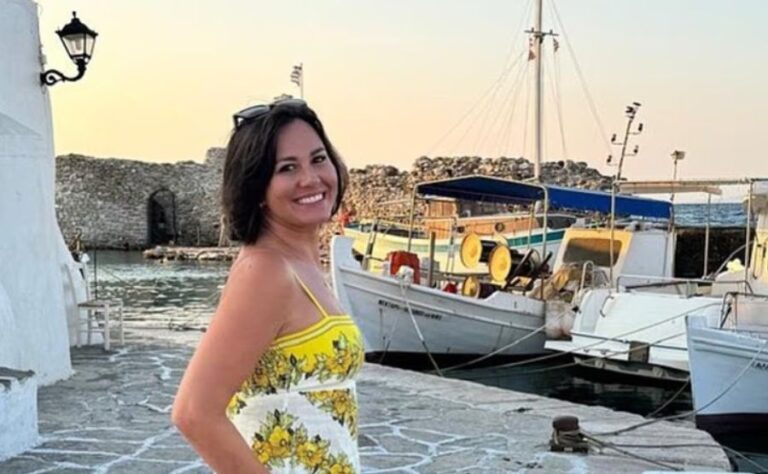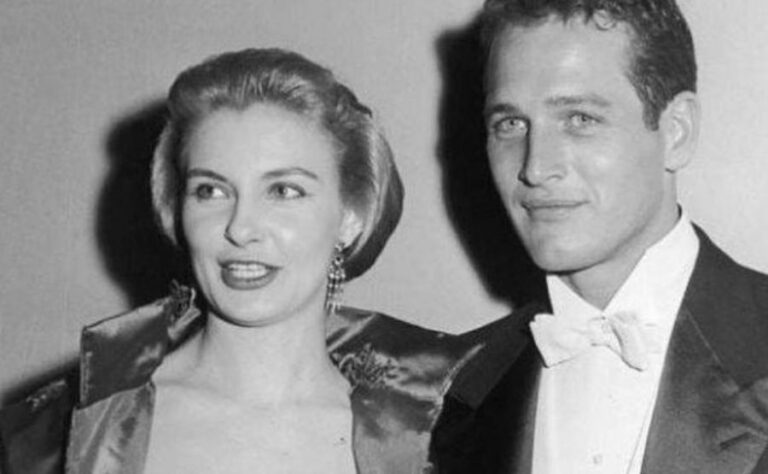
Caroline Smedvig: The Quiet Architecture of a Life in the Arts
Caroline Smedvig’s enduring relevance lies not in celebrity adjacency but in what she represents — a generation of women who built serious professional identities in cultural institutions long before anyone thought to call it remarkable.
Quick Bio
| Category | Details |
| Full Birth Name | Caroline Elisabeth Hessberg |
| Known As | Caroline Smedvig; “Kim” Smedvig; Kim Taylor |
| Date of Birth | May 31, 1953 |
| Place of Birth | Albany, New York, USA |
| Nationality | American |
| Education | Albany Academy for Girls (graduated 1971); Smith College, Northampton, MA (B.A., 1975) |
| Primary Roles | Journalist; Director of Public Relations & Marketing, Boston Symphony Orchestra; Author; BSO Trustee |
| Career Span | 1975–2004 (active career); 2007–present (BSO Trustee) |
| First Marriage | Rolf Thorstein Smedvig (December 1980 – c. early 2000s; divorced) |
| Second Marriage | James Taylor (February 18, 2001 – present) |
| Children | Twin sons Rufus and Henry Taylor (born April 2001, via surrogacy) |
| Notable Publications | Seiji: An Intimate Portrait of Seiji Ozawa (with photographer Lincoln Russell, 1998) |
| Philanthropy | Massachusetts General Hospital ($1 million, 2020; $2.6 million cancer center, 2016) |
| Current Residence | Lenox, Massachusetts |
A Foundation Built in Albany
Before music, there was law. Before the concert hall, there was a household shaped by civic accountability.
Caroline Elisabeth Hessberg grew up in Albany, New York, in a family defined by professional exactitude. Her father, Albert Hessberg II, was a Yale-educated attorney and senior partner at the law firm Hiscock & Barclay. He also served as president of the Albany County Bar Association, bringing the texture of public service directly into domestic life. Her mother, Elisabeth Fitzsimons Goold, died in 1991; her father succumbed to cancer at the Albany Medical Center in January 1995. Caroline was the only daughter in the family. She has two brothers — Albert Hessberg III and Philip — whose own lives tracked the divergent fortunes that legal Albany families sometimes produce.
Her formal schooling began at the Albany Academy for Girls, one of the oldest preparatory institutions of its kind in New York State. The all-female environment emphasized intellectual rigor and personal independence in equal measure. She graduated in 1971, well-prepared for the competitive academic culture she would encounter next.
Smith College in Northampton, Massachusetts, defined the next chapter. She graduated with a bachelor’s degree in 1975. Smith, one of the original Seven Sisters institutions, has a long history of producing women who move from study into leadership — not after years of credentialing, but immediately. Caroline absorbed that ethos. Within months of graduating, she was working in a newsroom.
See also “Jacelyn Reeves: The Woman Who Chose Silence Over the Spotlight“
The Journalist Years: Discipline Before Devotion
Most people who know Caroline Smedvig’s name know it through her association with the Boston Symphony Orchestra or with James Taylor. Fewer know she spent her early career in daily journalism — an apprenticeship that would prove foundational to everything that followed.
While still at Smith, she worked part-time as a reporter for the Knickerbocker News, Albany’s long-running daily paper. After graduation, she expanded her reach. She contributed to the Springfield Daily News, an afternoon publication known for its coverage of western Massachusetts, and later gained experience at both The Associated Press and The New York Times in an intern capacity. These were not vanity placements. Daily journalism in the mid-1970s demanded rigorous attention to language under deadline pressure, precise source management, and the capacity to translate complex institutional workings into plain speech. Caroline developed all three skills. They would define her career long after she stopped covering stories.
The pivot from reporter to arts communicator came in 1980, when she joined the Boston Symphony Orchestra. It was not a retreat from the demands of journalism. It was a redirection of those same faculties toward a subject she cared about deeply: the place of classical music in American cultural life.

Twenty-Five Years at the Boston Symphony Orchestra
The Boston Symphony Orchestra occupies a peculiar position in American culture. It is simultaneously elite — one of the five so-called “Big Five” orchestras, performing in the architecturally significant Symphony Hall — and aspirationally populist, particularly through its summertime Tanglewood Music Festival in the Berkshires. Managing that duality is the quiet but essential work of institutional communications. For twenty-five years, Caroline Smedvig did precisely that.
She joined the BSO in 1980 and rose to become Director of Public Relations and Marketing, a title that undersells the scope of the role. At an institution of the BSO’s scale — managing two distinct seasonal identities, serving a sophisticated subscriber base, competing for media attention against popular music, and seeking to develop younger and more diverse audiences — the communications director is part diplomat, part editor, part brand steward, and part cultural translator. Smedvig held that post until 2004, when she stepped down following her marriage to James Taylor and the birth of her sons.
Her tenure overlapped with the long conductorship of Seiji Ozawa, who led the BSO from 1973 to 2002. Ozawa was one of the most internationally celebrated conductors of the twentieth century and brought a charismatic, globally oriented vision to the orchestra. Navigating the public narrative around a figure of Ozawa’s stature — amplifying his artistry, managing the perceptions of a Japanese conductor leading a storied New England institution, and sustaining audience engagement through a period of significant cultural change — required sustained institutional knowledge and sophisticated judgment. Smedvig worked closely alongside Ozawa’s tenure, contributing not only through daily communications work but through a more personal literary project: the 1998 publication Seiji: An Intimate Portrait of Seiji Ozawa, produced in collaboration with photographer Lincoln Russell. The book stands as a documentary tribute to one of the orchestra’s defining eras.
Beyond administration, Smedvig cultivated a performer’s relationship with the BSO’s wider musical community. She sang with the Tanglewood Festival Chorus, the distinguished amateur vocal ensemble affiliated with the orchestra. This was not ceremonial participation. The Tanglewood chorus performs alongside the BSO’s professional musicians at the summer festival, requiring genuine musicianship. Her involvement there signals something important about her character: she was not content to talk about music from the institutional remove. She wanted to make it.
After her formal retirement in 2004, she did not sever ties with the organization. She joined the BSO’s Board of Overseers in 2007 and became a full trustee in September of the same year. Her continued governance role suggests that the BSO regards her institutional knowledge as a lasting asset — not a relic of her employment, but an ongoing contribution to the organization’s direction.
First Marriage: A Life Woven into Musical Boston
The name she has carried since 1980 belongs to her first husband, and understanding that marriage illuminates the world she inhabited long before James Taylor entered it.
Rolf Thorstein Smedvig — born in Seattle on September 23, 1952, to parents of Norwegian and Icelandic heritage — was, by any measure, an extraordinary musician. He joined the Boston Symphony Orchestra as its assistant principal trumpet at age nineteen, becoming the youngest member of that ensemble at the time. By 1979, he held the principal trumpet chair. He also co-founded the Empire Brass Quintet in 1971 — the same year he joined the BSO — a group that would become one of the most celebrated chamber ensembles in the classical world. The Empire Brass won the first Walter W. Naumburg Foundation award ever given to a brass quintet, toured more than thirty-five countries, and recorded prolifically across labels including Angel, EMI, and Telarc.
Caroline Hessberg and Rolf Smedvig married in December 1980. The symmetry of the timing is striking: she joined the BSO the same year she married its principal trumpeter. Their lives were, for a period, fully braided into the world of Boston’s classical music establishment. Rolf left the BSO in 1981 to concentrate on solo and chamber music. Caroline remained in the communications office, carving out an identity wholly distinct from her husband’s performing career.
The marriage ended in divorce. According to Rolf Smedvig’s Wikipedia entry, Caroline’s relationship with James Taylor was a contributing factor in the marriage’s dissolution. Whatever the precise circumstances, the break was handled with the privacy that has characterized most of Caroline’s personal life. She retained the Smedvig name — a choice that underscores her own relationship with that identity, independent of the marriage itself. Rolf Smedvig went on to marry Kelly Holub in 1992 and had four children with her. He died suddenly of a heart attack on April 27, 2015, at his home in West Stockbridge, Massachusetts, at the age of sixty-two. The Empire Brass, which had been his life’s great project, continued under new membership.
Meeting James Taylor: A Convergence at Symphony Hall
The meeting that would change both their lives happened at a concert rather than through any deliberate arrangement.
In 1993, James Taylor performed at Symphony Hall in Boston with John Williams and the Boston Pops Orchestra. Caroline Smedvig, then Director of Public Relations and Marketing for the BSO, was present in her professional capacity. Taylor noticed her — but nothing romantic followed immediately. Taylor has been candid in interviews about the reason: he was still in the process of separating from his second wife, actress Kathryn Walker. He has described being drawn to Caroline from that 1993 encounter but exercising deliberate restraint. Their first date came on July 3, 1995.
That particular date mattered enough to Taylor that he encoded it in his music. The song “On the 4th of July,” from his 2002 album October Road, centers on the emotional weight of that first summer evening. The album also contains “Caroline I See You,” a direct musical dedication that captures something of the wonder Taylor has described feeling when he first recognized how naturally their sensibilities aligned. He has spoken publicly about the experience of meeting her as a sense of encountering someone already familiar — a bond that felt recovered rather than newly formed, and which he memorialized again in the 2015 song “You and I Again.”
They dated for approximately six years before marrying on February 18, 2001, at Emmanuel Episcopal Church in Boston. The ceremony was small and private. Caroline became Taylor’s third wife. For a man whose earlier marriages — to Carly Simon and to Kathryn Walker — had played out partly in public, this quieter union represented a deliberate recalibration.

Personal Life: The Architecture of a Private Marriage
The distinguishing feature of Caroline Smedvig’s life, as a public figure who is not quite a public figure, is the consistency of her privacy. She doesn’t have an active social media presence. She grants no interviews. She appears at concerts, charity galas, and public events alongside her husband, but she does not perform as a celebrity. This is not shyness, the available evidence suggests. It is conviction.
The question of children added a layer of difficulty to their early married life. Taylor has spoken openly about his initial reluctance to become a father again — he already had two adult children, Sally and Ben, from his marriage to Carly Simon. But his feelings shifted as the marriage deepened. When the couple sought to start a family together, they discovered that Caroline could not conceive naturally. Rather than accept that limitation, they pursued surrogacy. A family friend agreed to carry the pregnancy. In April 2001 — just weeks after the February wedding — twin sons were born. They named them Rufus and Henry.
The compressed timeline of the marriage and the birth suggests extraordinary things were happening simultaneously in the couple’s life during those months of early 2001. Becoming a wife and a mother within the same spring — through a medical process requiring significant planning and emotional investment — represents a profound set of transitions compacted into a short period. Taylor has described the experience of fatherhood at this later stage of life as qualitatively richer than he anticipated. The boys grew up in the Berkshires, in Lenox, Massachusetts, on a hundred-acre property the couple purchased in 1999 and renovated over the following years. They settled there fully by 2006. Both sons attended Milton Academy. Henry has followed his father’s footsteps most visibly: he performs as a backing vocalist on his father’s tours and has appeared on stage with him since at least 2021. Rufus, who graduated from Amherst College in 2024, maintains a lower profile.
While the world has continued to associate Caroline primarily with her husband, those who know the family describe a household in which music is lived, not merely displayed. She has appeared on stage with Taylor on occasion, contributing backing vocals during performances — a natural extension of the choral work she did for years with the Tanglewood Festival Chorus. The couple’s philanthropic collaboration also points to shared values rather than celebrity philanthropy: in 2020, they donated $1 million to Massachusetts General Hospital in support of frontline health workers during the COVID-19 pandemic. The hospital’s oncology center received $2.6 million from its fundraising efforts in 2016.
The 1998 Book: A Document of Aesthetic Partnership
One of the least-discussed dimensions of Caroline Smedvig’s career is her authorship. The 1998 publication Seiji: An Intimate Portrait of Seiji Ozawa, produced with photographer Lincoln Russell, is a documentary volume dedicated to the long-tenured BSO music director whose career she had helped communicate to the public for nearly two decades.
The book’s existence says several things simultaneously. It says she understood Ozawa’s significance well enough to want to preserve it in a form more permanent than press releases. It says she had both the editorial authority and the institutional access to produce such a project. And it says she regarded storytelling as a form of cultural stewardship — a value she had absorbed, perhaps, from the journalism years, when the careful documentation of public life was the explicit job.
Ozawa himself would go on to international renown: he eventually led the Vienna State Opera and remained one of the most recognizable conductors of his era until his death in February 2024. The portrait Caroline helped create stands as an early document of a career that would continue to grow for another twenty-five years after the book’s publication.
Legacy: The Quiet Institutional Record
Legacy in arts administration is, by definition, difficult to see. It accumulates in the subscription bases that don’t erode, in the press coverage that consistently treats an institution with seriousness, in the younger audiences who find their way in because someone translated the art into accessible language without condescending. It does not arrive with trophies or curtain calls.
Caroline Smedvig spent twenty-five years doing that work for one of America’s most significant cultural institutions. She shaped how the Boston Symphony Orchestra communicated its identity during a period of significant cultural competition — when classical music was losing audience share to popular formats and the BSO needed both to defend its prestige and expand its reach. The institution’s continued prominence, its successful summer seasons at Tanglewood, and its ability to navigate leadership transitions speaks partly to the communications infrastructure that Smedvig helped build and maintain. She continued to contribute to that infrastructure as a trustee after her formal career ended.
What she leaves outside the institution is subtler but perhaps more durable: a model of professional life in which personal privacy and public contribution coexist without contradiction. She did not leverage her marriage to James Taylor into a platform. She did not attempt to extend her career into media appearances or branded cultural commentary. She married, raised two sons, remained connected to the BSO, gave to causes she believed in, and occasionally stood on a stage and sang alongside her husband.
Her son Henry’s career as a performing musician suggests that at least part of the musical inheritance was transmitted domestically — not only through James Taylor’s fame, but through a household in which music was taken seriously at every level, from concert hall to chorus.
Final Words
Caroline Smedvig’s life resists easy summary precisely because she has resisted the conventions by which public lives are ordinarily narrated.
She is not the most famous person in any room she enters, and she appears to prefer it that way. Yet the substance of what she built — two decades of institutional communications work at a first-tier American orchestra, a co-authored book that documented one of the great conductors of the twentieth century, a continued trusteeship that keeps her connected to the BSO’s governance — represents genuine accomplishment, not supplementary biography.
What makes her story worth telling in 2026 is its implicit argument: that a meaningful professional life in the arts can be constructed with discipline, affection, and privacy as primary tools. That cultural institutions are sustained not only by their performers and conductors but by the people who translate their work for the world. And that the decision to live quietly, in the Berkshires, raising children who love music and appearing occasionally on stage to sing beside a legendary husband, is not a retreat from ambition. It is, for some people, the fullest possible expression of it.
She was born Caroline Elisabeth Hessberg in Albany, New York. She became Caroline Smedvig in a December ceremony in 1980. She kept that name through everything that followed. That continuity is a kind of statement — one that requires no press release to communicate.
FAQs
1. What is Caroline Smedvig’s full birth name?
Her full birth name is Caroline Elisabeth Hessberg. She took the name Smedvig upon marrying trumpeter Rolf Smedvig in December 1980 and has retained it since, even after her marriage to James Taylor in 2001.
2. Caroline Smedvig was born where and when?
She was born on May 31, 1953, in Albany, New York. Among primary sources, including her father’s obituary records, the most consistent birth year is 1953.
3. What did Caroline Smedvig do before joining the Boston Symphony Orchestra?
After graduating from Smith College in 1975, she worked as a reporter — first at the Knickerbocker News in Albany during her college years, then at the Springfield Daily News. She also gained experience at The Associated Press and interned at The New York Times before transitioning into arts administration in 1980.
4. What was her role at the Boston Symphony Orchestra?
She joined the BSO in 1980 and eventually became Director of Public Relations and Marketing, a position she held for approximately twenty-five years until her retirement in 2004. In 2007, she was appointed to the Board of Overseers, and later that year became a full trustee.
5. Who was Rolf Smedvig?
Rolf Thorstein Smedvig (1952–2015) was an American classical trumpeter, the co-founder of the internationally acclaimed Empire Brass quintet, and a former principal trumpet of the Boston Symphony Orchestra. He and Caroline Hessberg married in December 1980. The marriage ended in divorce. Rolf Smedvig died of a heart attack at his home in West Stockbridge, Massachusetts, on April 27, 2015, at age sixty-two.
6. How did Caroline Smedvig meet James Taylor?
They first met in 1993 when Taylor performed at Symphony Hall with John Williams and the Boston Pops Orchestra. Caroline was working in her capacity as BSO Director of Public Relations and Marketing. Their first date was on July 3, 1995, after Taylor’s separation from his second wife, Kathryn Walker.
7. When did Caroline and James Taylor marry?
They married on February 18, 2001, at Emmanuel Episcopal Church in Boston. The ceremony was small and private.
8. Do Caroline Smedvig and James Taylor have children?
Yes. Their twin sons, Rufus and Henry Taylor, were born in April 2001 via surrogacy. A family friend of Taylor’s served as the surrogate. The twins grew up in Lenox, Massachusetts, and both attended Milton Academy.
9. What is Henry Taylor doing today?
Henry Taylor is an active musician who performs as a backing vocalist with his father’s touring band. He has appeared on stage with James Taylor since at least 2021. Rufus Taylor graduated from Amherst College in 2024 and maintains a private life outside the entertainment industry.
10. What songs did James Taylor write about Caroline?
Taylor wrote “On the 4th of July” in reference to their first date on July 3, 1995 (the following day having the emotional resonance he captured in the lyric). He also wrote “Caroline I See You” from the 2002 album October Road as a direct tribute, and “You and I Again” from the 2015 album Before This World draws on his sense of recognition upon first meeting her.
11. What book did Caroline Smedvig co-author?
In 1998, she collaborated with photographer Lincoln Russell on Seiji: An Intimate Portrait of Seiji Ozawa, a documentary portrait of the long-serving BSO music director Seiji Ozawa. The book was published during Ozawa’s final years with the orchestra, preceding his departure in 2002.
12. Did Caroline Smedvig have any personal connection to music beyond administration?
Yes. She sang as a member of the Tanglewood Festival Chorus, the distinguished amateur chorus affiliated with the Boston Symphony Orchestra that performs at the BSO’s summer season in the Berkshires. She has also contributed backup vocals during James Taylor’s live performances on multiple occasions.
13. What philanthropic causes do Caroline and James Taylor support?
Their most documented philanthropic work centers on Massachusetts General Hospital. In 2020, they donated $1 million to support frontline healthcare workers during the COVID-19 pandemic. In 2016, fundraising efforts they were part of contributed $2.6 million to MGH’s cancer center. They also support arts education and cultural preservation organizations.
14. Why is Caroline Smedvig sometimes referred to as “Kim”?
The nickname “Kim” — a shortening sometimes derived from middle or informal names within families — appears to be how she is known to close friends and family. She is publicly listed as “Kim” Taylor in certain formal event records and social contexts involving James Taylor. The origin of the nickname is not formally documented in public sources.
15. Where do Caroline Smedvig and James Taylor live?
The couple has lived in Lenox, Massachusetts, in the Berkshires region, since settling fully into their home in 2006. They purchased the property — a hundred-acre estate — in 1999 and completed renovations before moving in. The Berkshires location places them near Tanglewood, maintaining Caroline’s longstanding geographic and cultural connection to the BSO’s summer community.
Empowering curious minds to explore, learn, and think deeper with Fact Aura.