Twin Bed Measurements: Everything You Actually Need to Know
Let me tell you something that surprises almost everyone the first time they go shopping for a twin bed. The mattress itself is just the beginning. By the time you factor in the bed frame, the mattress height, the room around it, and the bedding you plan to use, the simple act of buying a “twin bed” turns into a surprisingly layered decision.
I want to walk you through all of it, calmly and clearly, so you never have to drag a tape measure back to the store with you.
Key Facts
| Detail | Measurement |
| Standard Twin Mattress Width | 38 inches (96.5 cm) |
| Standard Twin Mattress Length | 75 inches (190.5 cm) |
| Twin XL Mattress Width | 38 inches (96.5 cm) |
| Twin XL Mattress Length | 80 inches (203 cm) |
| Standard Twin Sheet Size | 66 × 96 inches |
| Twin XL Sheet Size | 66 × 102 inches |
| Recommended Room Size for One Twin | At least 7 × 10 feet |
| Typical Mattress Height Range | 8 to 14 inches (though pillow-tops can reach 20+) |
| Space Recommended Around Bed | At least 24–30 inches on each accessible side |
Where the Twin Bed Comes From
The name “twin” has an interesting little origin. The term became widespread in the hotel industry, where rooms were regularly outfitted with two identical single beds sitting side by side, one for each guest. Those paired beds were called twins, since they matched each other perfectly. Over time, the word stuck as a standard size name even when only one bed was in the room at all.
Before the twin became standardized in the mid-twentieth century, bed sizing was much less consistent. Manufacturers made beds in all sorts of dimensions depending on regional customs and the materials available. The push toward standardization in the American bedding industry, especially after World War II, is largely what gave us the consistent sizing system most people take for granted today.
See also “Celsius to Fahrenheit: The Full Story Behind Two Numbers That Describe the Same World“
The Core Measurement You Need to Know
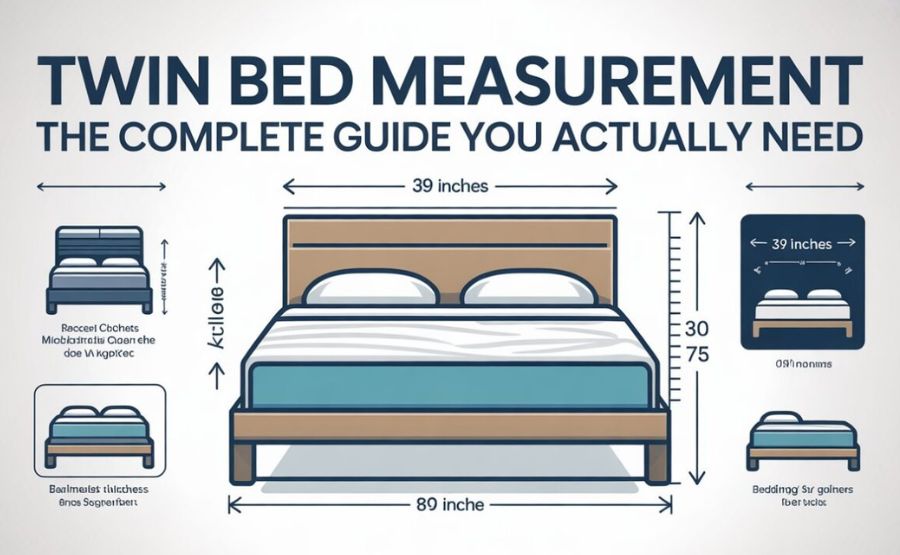
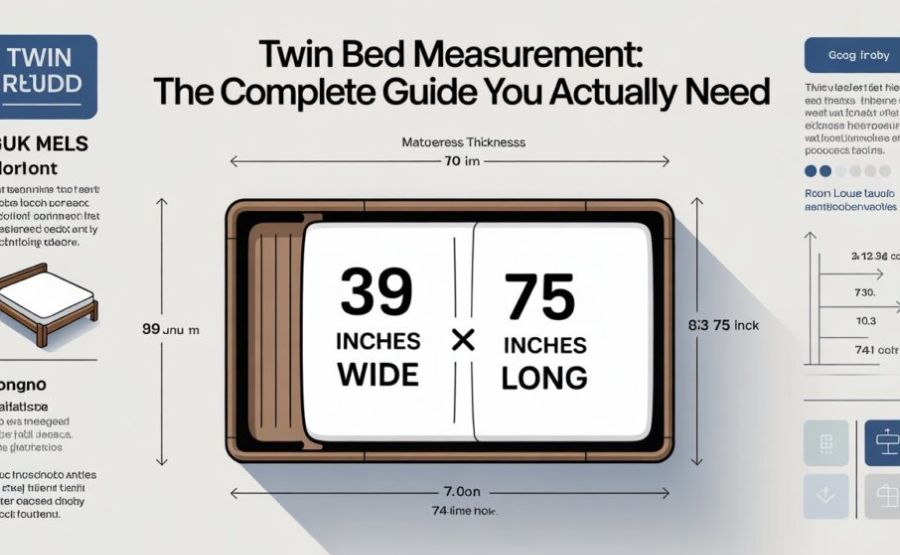
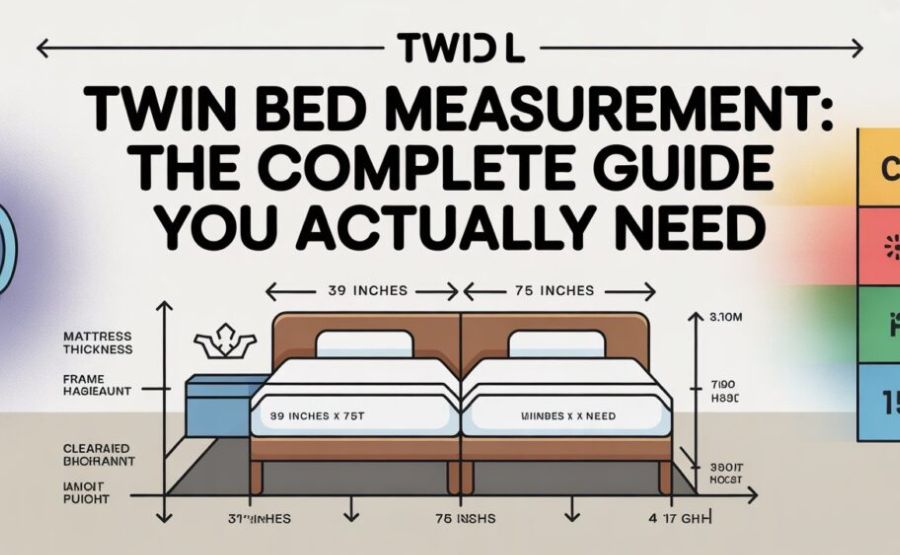
The dimensions of a typical twin mattress are 75 inches long by 38 inches wide.In centimeters, that’s roughly 96.5 cm wide and 190.5 cm long. This is the number to write down before you go shopping for anything, because every other decision, frames, sheets, bed-in-a-bag sets, mattress protectors, connects back to it.
That 38-inch width might sound generous, but in practice it gives a single sleeper comfortable space without being extravagant. An adult lying flat can have their shoulders comfortably within that width with a few inches to spare on each side. A child has even more breathing room.
The Twin XL: Why It Exists and Who Needs It
The Twin XL has exactly the same width as a standard twin, 38 inches, but it stretches the length by five additional inches to 80 inches total. That’s 203 centimeters for the metric folks.
Those five inches matter more than they sound like they should. They were added specifically to accommodate taller sleepers, the kind of person whose feet would otherwise hang over the edge of a standard 75-inch mattress. College dormitories adopted the Twin XL so enthusiastically that it became the standard dorm mattress size across most American universities, since it fits a taller-than-average student comfortably in a compact room without needing a full or queen mattress.
If you’re under around 5’10”, a standard twin works perfectly well. If you’re taller than that, or if you’re buying for a teenager who’s still growing, the Twin XL is worth the slight extra cost.
How the Mattress Measurement Differs From the Bed Frame
Here’s where people get tripped up more than anywhere else. The mattress measurement and the bed frame measurement are not the same number. A bed frame has to be slightly larger than the mattress to hold it properly. In most cases, a twin bed frame will measure somewhere between 41 and 43 inches wide and 77 to 79 inches long, leaving a small lip around the mattress so it doesn’t slide around.
The exact difference depends on the frame design. Platform frames tend to sit flush and compact. Frames with side rails and headboards add a little more overall dimension. If you’re measuring a room to see whether a twin bed fits, measure the full frame dimensions, not just the mattress, and definitely don’t forget the headboard if one is included.
Room Planning Around a Twin Bed
This part honestly deserves as much attention as the mattress size itself. A twin mattress can fit in a small room, but the room needs to be more than just barely larger than the mattress.
Most interior designers and bedroom planners recommend at least 24 to 30 inches of clear space on each side of the bed that someone needs to access. That’s enough room to walk past comfortably, get dressed, or crouch down to reach under the bed. On the wall side of a twin, the clearance can be smaller, since you don’t need to regularly access that side.
For a single twin bed in a child’s room or guest room, a minimum room size of about 7 feet by 10 feet gives you enough space for the bed, a small dresser, and a path around both. If you’re fitting two twin beds into one room, either side by side or separated, you’ll want significantly more floor space and at least 24 inches of aisle between the two beds.
Mattress Height: The Measurement People Forget
The height of the mattress is the number that gets forgotten most often, and it matters for two very practical reasons: how comfortable it is to get in and out of bed, and whether your fitted sheets will actually stay on.
A standard twin mattress typically measures somewhere between 8 and 14 inches tall. That range might sound wide, but memory foam mattresses often sit at the lower end, while pillow-top models can climb past 20 inches. Then add a platform frame or a traditional box spring underneath, and the total height from floor to top of mattress can vary by six or more inches between different setups.
For young children, a lower profile is usually safer and more accessible. For older adults or anyone with mobility considerations, a mattress height that brings the sleeping surface to around knee height, roughly 24 to 26 inches from the floor, tends to be the most comfortable for getting in and out of bed without strain.
Sheets and Bedding: Why the Fit Matters
Standard twin fitted sheets are designed to fit a mattress that’s 38 inches wide, 75 inches long, and up to about 14 inches deep. The overall sheet size runs roughly 66 inches wide by 96 inches long before it wraps around the mattress.
If you have a pillow-top mattress or a mattress that’s deeper than about 12 to 14 inches, you’ll want to look specifically for “deep pocket” fitted sheets, which have a larger pocket depth and extra elastic to keep them from popping off the corners every time someone moves. This is one of those small mismatches that drives people absolutely crazy before they realize the fix is simply a different sheet pocket depth.
Twin XL sheets have the same width as standard twin sheets but are about 6 inches longer to accommodate that extra mattress length. They’re not interchangeable with standard twin sheets, even though the width is identical. Trying to use a standard twin sheet on a Twin XL mattress will leave the fitted sheet pulling loose at the foot of the bed every single night.
A Personal Reflection on Why These Details Actually Matter
I’ve noticed that most of the real frustration people experience when buying a twin bed doesn’t come from choosing the wrong mattress. It comes from discovering, after the fact, that their fitted sheet keeps popping off, or that the bed frame is six inches wider than they expected and now the bedroom door barely clears it.
These are all preventable problems. They disappear the moment you measure everything before you buy, including the frame, the mattress height, and the path from the doorway to where the bed will sit in the room.
How Twin Compares to Other Standard Sizes
It helps to have a sense of where the twin fits within the full scale of bed sizes. A full mattress, also called a double, adds 16 inches of width, measuring 54 inches wide and 75 inches long, the same length as a standard twin but with noticeably more surface area. A queen adds another 6 inches in width, at 60 inches wide and 80 inches long, and a king jumps to 76 inches wide and 80 inches long.
A twin, by comparison, is the most compact adult mattress size available. It’s not a compromise for grown-ups, since a 38-inch-wide mattress genuinely suits a single sleeper well, but it does mean there’s very little margin if you’re a restless sleeper or someone who likes to spread out significantly.
Common Misconceptions Worth Clearing Up
A lot of people assume a twin bed is only suitable for children. That’s simply not true. Plenty of adults sleep on twin mattresses comfortably, especially in studio apartments, small guest rooms, or as part of a bunk bed setup. The size was designed for a single adult sleeper, not specifically for a child, which is part of why it endures as a standard size decades after its introduction.
Another common misconception is that a Twin XL and a standard twin use the same sheets. They don’t, even though their widths match. The five-inch difference in length is enough to make standard twin fitted sheets sit uncomfortably loose at the foot of a Twin XL mattress.
Some people also assume the mattress measurement and the bed frame measurement are the same. They’re not. Always measure the frame if that’s what you’re placing in a room, and add the headboard dimension if one is included.
The Benefits of Choosing a Twin Bed
The obvious one is space efficiency. A twin mattress takes up the least floor space of any standard adult bed size, which makes it ideal for smaller bedrooms, shared spaces, or anywhere you need to preserve floor area for other furniture or movement.
Cost is another genuine advantage. Twin mattresses, frames, and bedding sets almost universally cost less than their larger counterparts. For a child’s first big-kid bed, a guest room that rarely gets used, or a college dorm room, the savings compared to a queen or full can be meaningful.
Twin beds also work beautifully in bunk bed configurations, since their narrower width keeps the overall bunk footprint manageable even in a small room.
The Challenges and Downsides
The main limitation of a twin is simply that it works for one person. A couple sleeping in a twin bed is genuinely cramped, with 38 inches of width giving each person only 19 inches of space each, less than a standard crib mattress. This is a bed for a solo sleeper, and it works wonderfully in that context and only in that context.
Taller sleepers may find the standard 75-inch length limiting, since a person who is six feet tall or taller will have very little margin before their feet reach or pass the foot of the mattress. The Twin XL solves this, but it’s an extra consideration worth making early in the process.
Ethical Questions Hiding in Furniture
It sounds a little unusual to mention ethics in the middle of an article about bed sizes, but there’s a real question here worth naming. From old foam mattresses that are hard to recycle to discarded box springs, the bedding and mattress industry produces massive volumes of waste. Choosing a twin mattress rather than a larger size has a genuinely smaller environmental footprint, both in raw materials and in the eventual disposal question.
There’s also an interesting conversation happening in the sleep product industry about the use of synthetic materials and off-gassing from certain foam types, especially in lower-cost mattresses. When purchasing a twin for a young child whose room is small and may not have adequate ventilation, it’s important to consider the mattress’s composition rather than just its size.
Looking Ahead
The Twin XL has already shown how bed sizing can evolve to meet real needs rather than just tradition. There’s growing interest in customizable bedding dimensions, especially as people seek out beds that fit unusual room shapes or non-standard frame designs. The basic 38-inch width has stayed consistent for decades, but the mattress and bedding industry keeps refining materials, heights, and configurations in ways that make even the humble twin bed is a more considerate and adaptable product than it was in the past.
A Few Honest Thoughts to Close On
What strikes me most after thinking through all of this is how much a twin bed’s success depends on the planning that happens before it arrives in the room, not after. The mattress measurement itself, 38 by 75 inches, is just a starting point. The frame, the clearance, the sheet pocket depth, the height from the floor to the top of the sleeping surface: all of those things work together to determine whether the bed actually fits the space and the person sleeping in it.
Write down the numbers before you shop. Measure the room with the door fully open. Check the mattress height against the sheets you already own. These feel like tiny details, but they’re the ones that make the whole setup feel right from the first night.
FAQs
1. What are the exact dimensions of a standard twin mattress?
38 inches wide by 75 inches long, or approximately 96.5 cm wide by 190.5 cm long.
2. What are the dimensions of a Twin XL mattress?
Also 38 inches wide, but 80 inches long, which is 5 inches longer than a standard twin.
3 What’s the difference between a twin and a full mattress?
A full mattress is 54 inches wide and 75 inches long, giving it 16 more inches of width than a twin at the same length.
4. Can an adult sleep comfortably on a twin bed?
Yes, a 38-inch width suits a single adult sleeper well. It’s a solo bed, not a children’s-only size.
5. Are twin and Twin XL sheets interchangeable?
No. Both are the same width, but Twin XL sheets are longer. Using a standard twin fitted sheet on a Twin XL mattress will leave it loose and popping off at the foot.
6. How big should a room be to comfortably fit a twin bed?
At minimum about 7 feet by 10 feet for a single twin, with at least 24 to 30 inches of clearance on accessible sides.
7. Is a twin bed frame the same size as the mattress?
No. Bed frames are slightly larger than the mattress, typically 41 to 43 inches wide and 77 to 79 inches long, to hold the mattress securely.
8. What mattress height works best for a young child?
A lower profile mattress, closer to 8 to 10 inches, is generally safer and more accessible for younger children.
9. What sheet pocket depth do I need for a thick twin mattress?
If your mattress is deeper than about 12 to 14 inches, look specifically for “deep pocket” fitted sheets designed for higher-profile mattresses.
10. Why do college dorms use Twin XL mattresses?
To accommodate taller students more comfortably than a standard 75-inch mattress would, within the compact footprint of a small dorm room.
11. Does a twin mattress fit a standard twin bed frame?
Yes, standard twin bed frames are designed for standard twin mattresses. Always confirm the frame dimensions before purchasing if you’re working with an unusual frame design.
12. How much does a twin mattress cost compared to other sizes?
Twin mattresses are typically the least expensive adult mattress size, often costing noticeably less than a full, queen, or king of the same quality level.
13. Can two twin beds fit in one room?
Yes, but the room needs to accommodate both bed frames plus at least 24 inches of aisle between them and walkable clearance around the outside of each bed.
14. What’s the standard size of a twin fitted sheet?
Roughly 66 inches wide by 96 inches long before wrapping, designed to fit a mattress up to about 14 inches deep.
15. Why is it called a “twin” bed if there’s only one?
The name comes from the hotel industry, where two identical single beds in one room were called “twins.” The term stuck as a standard size name even when only one bed occupies a room.
Empowering curious minds to explore, learn, and think deeper with Fact Aura.