
Elmer Heinrich: The Man Who Listened to the Soil
A complete biography of America’s mineral wellness pioneer, serial entrepreneur, and self-made global industrialist
Quick Bio
| Detail | Information |
| Full Name | Elmer G. Heinrich |
| Born | March 9, 1934, Grinnell, Kansas, USA |
| Nationality | American |
| Primary Roles | Entrepreneur, Inventor, Author, Health Advocate |
| Education | Fort Hays State University (attended, 1954) |
| Key Companies | The Hotsy Corporation → Citation Manufacturing Company · S&H Drilling Company Rockland Corporation — Liquid Assets, Inc. · Exceptional Health Products · SenTraMin Minerals |
| Signature Products | SenTraMin plant-derived colloidal minerals · Immuno 150 |
| Major Awards | The Life Insurance Association of America’s National Record for Rookies (1966) The National Association of Speakers presented the Speaking Award in 1973. Marquis Who’s Who in American Inventors; Who’s Who in American Finance and Industry; Who’s Who in the South and Southwest · Featured: Fortune Small Business (February 2001) |
| Countries of Operation | 27+ countries across North America, Europe, Asia, Oceania |
| First Marriage | Verlene Louise Hoover was born on May 14, 1954, and divorced in May 1966. Her children are Patricia, Larry, Judy, and Cathy. |
| Second Marriage | Shirley Ann Tolson (November 4, 1966 – present); child: Rocky |
| Notable Associations | Joe Namath · Charlie Batch · Doug Williams · Vince Foster · Hillary Rodham Clinton (legal representatives) |
| Authored Work | Mr. H and The Untold Truth (190 pages on soil depletion and mineral nutrition) |
| Known As | “Mr. H” |
| Residence | Broken Arrow, Oklahoma (primary business base); Jupiter, Florida (reported) |
Introduction: The Man the Soil Made
In a century defined by pharmaceutical dominance and digital health fads, Elmer G. Heinrich spent more than four decades making the unfashionable argument that the ground beneath our feet — depleted, exhausted, and stripped by industrial farming — holds the central explanation for modern disease. He was not a scientist in the credentialed sense. He was something rarer: a businessman who actually believed what he sold, who built mining operations, manufacturing facilities, and a global distribution network around a single stubborn conviction — that the trace minerals vanishing from topsoil were quietly vanishing from human bodies too.
At 92, Heinrich remains active through Liquid Assets, Inc., his Oklahoma-based supplement company, which distributes products in 27 countries. That longevity in business, matched by his longevity in life, is perhaps his most persuasive advertisement.
See also “Eduardo Tamayo: The Private Man at the Edge of a Very Public Story“
The Boxcar and the Plains: Origins That Shaped Everything
Grinnell, Kansas in 1934 was a wind-scoured farming community on the high plains of western Kansas — the kind of place where drought and dust defined both the landscape and the character of those who stayed. Heinrich was born on March 9 of that year to Govel Gabriel Heinrich and Mary Katherine Engel Heinrich. He arrived as one of seven children, a family large enough that the household economics were perpetually tight.
The Heinrichs lived, for a period, in a discarded railroad boxcar repurposed into farm shelter. It was not poverty as metaphor. It was the literal condition of his early years. That beginning left a lasting impression of a strange boldness rather than bitterness. When you begin with nothing, nothing is not frightening.
The plains of western Kansas also quietly taught something else. Farming families understood soil differently than city people did. They watched it change between seasons. They noticed when yields dropped without obvious reason. For young Elmer, those early impressions never entirely left. Decades later, when an old man in Salt Lake City introduced him to the idea of prehistoric plant-derived minerals, something clicked that had been preparing to click for a very long time.
He attended school in western Kansas and later enrolled at Fort Hays State University in 1954. His time there was brief but significant enough to sharpen an already competitive mind. By that point, however, much of his education was already happening in the real world — and would continue there for the rest of his life.
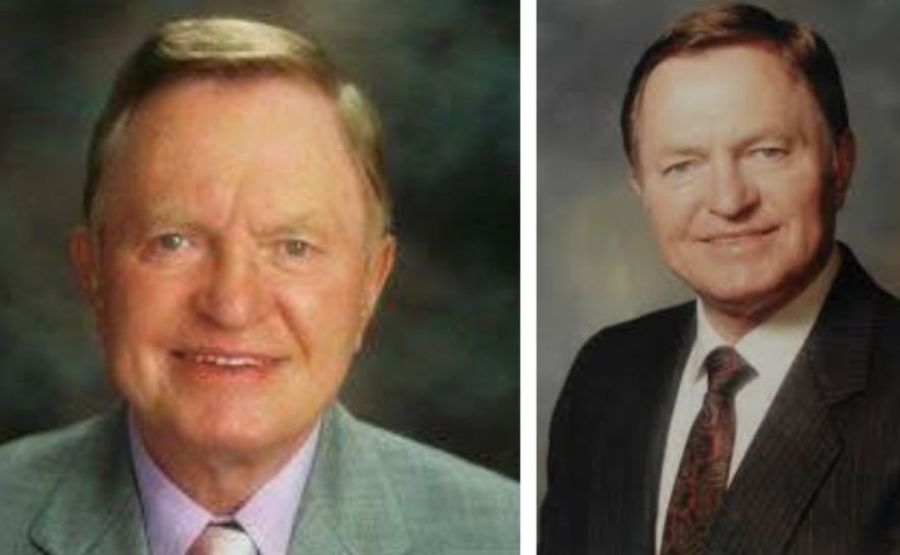
The Serial Entrepreneur: Seven Industries Before Forty
What distinguishes Heinrich from the typical self-help-circuit entrepreneur is not the scale of his eventual success but the sheer diversity of his early ventures. He did not find one industry and stayed. He moved through them like a prospector, extracting what he needed and moving on.
His first business involved no investment capital to speak of. He borrowed fifty dollars, placed it in a cash register, and opened a gasoline service station in a Kansas town of 1,200 people that already had eight competitors. Within three years, seven of those competitors had closed. He had earned most of the local business through a combination of relentless presence and a salesmanship that felt, to customers, less like selling and more like genuine enthusiasm.
The drilling years came next. While still in high school, he had worked part-time for a well driller. That experience became the capital of another kind. He and a partner purchased a bankrupt irrigation drilling company — already equipped, already operational — and drove the rigs straight to Nebraska. Within twelve days of the purchase, net profits had retired the acquisition loan entirely. He would eventually build S&H Drilling Company into one of the largest irrigation well-drilling operations in the region, with active rigs across Kansas, Colorado, Nebraska, and South Dakota. He held his share for six years before selling to his partner.
Then came the most improbable pivot: life insurance. Heinrich left a thriving industrial business to sell policies — not because he needed the money, but because he wanted to learn prospecting and presentation at the highest level. He sold a $400,000 whole-life policy on his first call. By the end of his rookie year, he had insured 412 lives and placed $7 million in coverage — a national record for the Life Insurance Association of America. The industry gave him an award in 1966. He gave it back something more valuable: a model of aggressive sales culture he would replicate in every business thereafter.
He was named Colorado state sales manager seven months after joining his insurance company. Three years later, his renewals vested, and he resigned with income flowing in perpetuity. He then formed what would become The Hotsy Corporation.
The Hotsy Years: Building and Selling an Industry Leader
The company that Heinrich formed in the late 1960s — initially unnamed, later called The Hotsy Corporation — was a manufacturer of industrial pressure washers and steam cleaning equipment. He built it from concept to market leader in roughly three years, primarily through the same sales culture and training discipline he had developed in insurance.
In 1968, he became President and Chairman of the Board of The Hotsy Corporation in Denver, a position he held until 1973. The company’s growth under his leadership was rapid enough that a wealthy Denver family — owners of Denver-Chicago Trucking and Navajo Trucking — purchased it. As part of the sale agreement, Heinrich remained as National Sales Manager for two additional years before departing.
It is worth noting that the Hotsy brand Heinrich helped build has outlasted him as an ownership entity. After going through a number of corporate owners, Hotsy was purchased by the massive German industrial cleaning company Kärcher in 2004. Today it remains the top-selling pressure washer brand in North America. Heinrich’s initial years of sales infrastructure building were foundational to that durability.
His Arkansas chapter arrived next. He purchased a majority stake in a publicly traded company that produced pressure washers and the well-known Robo automated car wash systems. The firm was, at acquisition, nearly broken — hollowed out by internal graft, management failures, and active litigation. Heinrich applied a turnaround playbook that had become instinctive: security controls first, cost discipline second, increased production efficiency third. The company recovered.
During the Arkansas period, the Rose Law Firm of Little Rock served as the company’s legal counsel. Among those attorneys: Vince Foster, Webb Hubbell, and Hillary Rodham Clinton. Heinrich directed them to defend the company against lawsuits that predated his acquisition. When conflicts arose with the firm, he resigned from the Arkansas operations and relocated to Oklahoma. He has noted the connection in his official biography matter-of-factly, without embellishment — a businessman citing the legal team he hired, noting when the relationship became untenable.
1983: The Year Everything Changed
If any single date deserves emphasis in Elmer Heinrich’s biography, it is 1983. In that year, he moved to Tulsa, Oklahoma, and formed The Rockland Corporation, building a 76,000-square-foot state-of-the-art facility designed to manufacture, process, bottle, and distribute nutritional supplements.
He also, in that year, met an elderly man in Salt Lake City named Ed Morgan.
Morgan had spent more than two decades quietly advocating for plant-derived minerals — trace elements drawn not from ground-up rock or salt beds, but from prehistoric plant deposits, compressed and preserved over millions of years in ancient Utah seabeds. The minerals in those deposits, Morgan argued, were physiologically distinct from metallic mineral supplements. The body, having evolved around plant-based nutrition, absorbed them more readily.
Heinrich was skeptical. He was also curious. He spent six months investigating — interviewing people Morgan had known, people who claimed that consuming the plant minerals had altered the course of their health. The stories were astonishing enough to strain credulity: arthritis gone, allergies resolved, blood pressure normalized, obesity reversed. He doubted many of the accounts. He doubted them, in fact, for years. But he recognized, after exhaustive inquiry, that the mineral blend was, as he later wrote, “a sleeping giant.”
He began sourcing the minerals from those who had discovered and sold them in small quantities since 1931. By 1983, Liquid Assets, Inc. was in the minerals business. In 1986, he leased mineral deposit land and opened the company’s first mining operation in Utah, achieving full vertical integration: mine the minerals, process them in Utah, ship them to the Rockland facility in Tulsa, filter, package, distribute. Competitors could not easily replicate a supply chain that the founder controlled from the ground down.
He coined the term “colloidal” to describe the particle size and solubility of plant-derived minerals — distinguishing them technically from metallic supplements. That framing gave the entire product category a vocabulary it had lacked, and it gave SenTraMin, his foundational 75-mineral blend, a marketable identity grounded in a scientific concept.
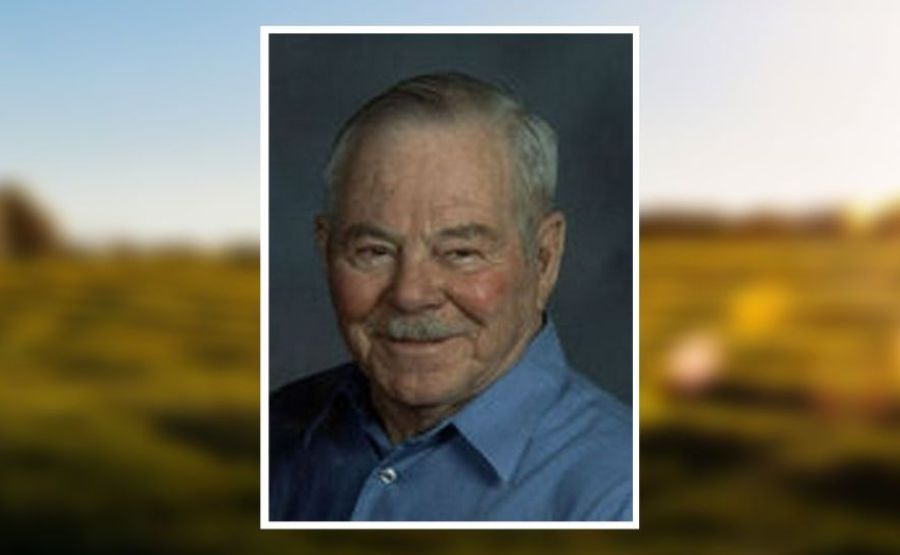
Immuno 150: The Signature Product
SenTraMin was the foundation. The structure on top of it was called Immuno 150.
Working with chemists over an extended period, Heinrich developed Immuno 150 as a comprehensive daily supplement: 70 plant-derived colloidal minerals as the base, then 9 exotic antioxidant fruits (including pomegranate, acai, and goji berry), 13 vitamins, 17 herbs, 18 amino acids, and CoQ10 — 150 nutrients in a single daily formulation. The product’s scientific underpinning drew on the research of Nobel laureate Dr. Linus Pauling, who had argued that the human body requires at least 60 minerals to function without disease.
The critical differentiator was bioavailability. Heinrich’s argument — consistent across his book, his seminars, his podcast appearances, and his corporate materials — was not merely that people were mineral-deficient. It was that the mineral supplements they were already taking, largely derived from metallic sources, were poorly absorbed. Plant-derived colloidal minerals, small enough and organically structured enough to pass readily through intestinal walls, offered what metallic alternatives could not.
Whether every health claim attached to Immuno 150 would survive rigorous clinical scrutiny is a fair question — one the supplement industry as a whole regularly faces from regulators and researchers. What is clear is that the product found a genuine and global market. By the late 1980s and early 1990s, Immuno 150 and SenTraMin were distributed across more than 25 countries. By 2026, the company reports operations in 27 countries, with customers reached through distributors, wellness networks, and direct-response marketing rather than through traditional retail.
The Private Man: Marriage, Family, and Life Beyond Business
Heinrich married Verlene Louise Hoover on May 14, 1954. They had four children together: Patricia, Larry, Judy, and Cathy. The marriage ended in divorce in May 1966 — the same year he was setting national insurance records and beginning a new chapter in Denver.
On November 4, 1966, he married Shirley Ann Tolson. That union produced one additional child, Rocky. Shirley has remained not only his wife but his business partner. Corporate materials for Exceptional Health Products identify both Elmer and Shirley as principals of Liquid Assets, Inc. Their shared investment in the company is not nominal; she is co-steward of an enterprise built across half a century.
Heinrich’s personal life outside of business has carried the same intensity as his professional one. He earned his pilot’s license after flying solo within four hours of purchasing his first aircraft in 1960 — a feat he accomplished without any prior experience aboard a plane. He then flew cross-country into Stapleton International Airport in Denver the very next day. Over the years he accumulated 1,800 flight hours and an instrument flight rating.
He captained a 70-foot, 3,000-horsepower yacht through the Bahamas and south Florida for six years. He competed in eight World Amateur golf tournaments and two Honda Classic Pro-Am events. He made his first parachute jump from 9,000 feet without a static line. He traveled to at least 40 countries, testing soil and pursuing business opportunities. He also held promotional contracts with NFL Hall of Famer Joe Namath and quarterback Charlie Batch, and maintained an association with Doug Williams — the Super Bowl-winning quarterback for the Washington Redskins — during periods when Heinrich’s supplement business intersected with sports sponsorship.
These are not incidental biographical details. They illuminate a man for whom intensity of engagement was not reserved for business hours. Whatever he did, he did without apparent hesitation and with a degree of ambition that his competitors and associates found alternately inspiring and daunting.
The Intellectual Project: The Untold Truth and the Soil Depletion Thesis
Heinrich’s 190-page book, Mr. H and The Untold Truth, is the document that most clearly reveals the man behind the products. It is part business memoir, part research compendium, and part manifesto. It does not read like a corporate brochure. It reads like someone who genuinely could not stop thinking about a problem.
The central argument is this: the topsoil of the world’s farmland has been systematically depleted of trace minerals through decades of industrial monoculture agriculture. Crops grown in that soil contain fewer minerals than crops grown in nutritionally rich soil a century ago. People consuming those crops — even people eating what they consider a healthy diet — are therefore nutritionally deficient in ways that standard blood panels rarely detect and that conventional medicine rarely addresses. Disease, in Heinrich’s framing, is often not an attack from outside; it is a slow failure from within, caused by the absence of elements the body needs to defend itself.
He draws on data from government agricultural studies, soil science research, and the testimonials of the individuals he interviewed before launching his mineral business in 1983. The book was first published in 2010 and updated in 2021, suggesting an author who continued to revise and refine his argument rather than rest on an early draft.
Medical endorsers of the book have praised its accessibility for lay readers without sacrificing factual precision. Critics of the supplement industry would reasonably question the scope of the health claims and the degree to which the book’s citations undergo independent peer review. That tension — between the genuine science of soil depletion and the expansive health claims sometimes attached to the solution — is one Heinrich navigates with more care in the book than in promotional materials.
The Tangle in Arkansas: A Business at the Edge of History
One of the most unusual passages in Heinrich’s biography involves the law firm. When he took control of the Arkansas car wash company, he hired the Rose Law Firm of Little Rock to defend it against a backlog of inherited litigation. Among the lawyers who worked on the company’s matters were Vince Foster, Webb Hubbell, and Hillary Rodham Clinton — three of the most consequential legal figures in 1990s American political history.
At the time, none of them had reached national prominence. Foster and Clinton were partners at a powerful Arkansas firm; Hubbell was a well-regarded litigator. Heinrich hired them to do a straightforward corporate legal job. He resigned from the Arkansas operations, he has stated, because of conflicts with the Rose Law Firm — not because of political considerations, and not because of anything related to the Clintons’ eventual national trajectory.
The connection has received occasional attention in political commentary circles, largely because Vince Foster’s 1993 death became the subject of extensive conspiracy speculation. Heinrich’s relationship to these figures was entirely professional, transactional, and brief — a businessman and his lawyers, briefly at odds, then no longer in contact. But it places Heinrich at a curious intersection in the documentary record of pre-Clinton-administration Arkansas, a footnote that history has preserved by accident.
The Business Architecture: Vertical Integration as Philosophy
One of Heinrich’s most durable contributions to the supplement industry was not a product but a method. He built Liquid Assets, Inc. as a vertically integrated company — controlling the mineral deposit, the mining operation, the processing, the filtering, the bottling, the packaging, and the distribution. Each link in the chain belonged to him.
This was not accidental. Heinrich understood, from his years in pressure washing and drilling, that the entrepreneur who depends on outside suppliers for critical inputs is perpetually vulnerable. By owning the Utah mineral mine outright, he insulated his supply chain against the pricing leverage that raw material suppliers routinely exercise over manufacturers.
The result was a competitive moat that most rivals in the plant-derived mineral space could not easily cross. They could formulate competing supplements. They could not easily replicate decades of proprietary access to a specific prehistoric mineral deposit in Utah, processed through systems Heinrich had designed and owned.
He also built the business outside conventional retail entirely. Immuno 150 and SenTraMin reached consumers through direct-response marketing — radio and television infomercials, independent health seminars, wellness network distributors, and later podcasts and digital channels. This distribution model, pioneered by supplement entrepreneurs of the 1980s and 1990s, kept margins higher and control over brand messaging tighter than shelf placement in retail chains would have permitted.
Legacy and Lasting Influence
At 92, Elmer Heinrich occupies an unusual position in the supplement industry. He is old enough to have predated the category, young enough (in spirit and operation) to still influence it. His company distributes products in 27 countries from its base in Broken Arrow, Oklahoma. He appears in podcast interviews and educational presentations with the clarity and persuasive conviction of someone who has been rehearsing the same argument, with increasing evidence, for four decades.
His formal recognitions include listings in Marquis Who’s Who in American Inventors and Who’s Who in American Finance and Industry, as well as a February 2001 profile in Fortune Small Business — a mainstream business publication not given to profiling fringe nutritionists. Those recognitions speak to something broader than supplement entrepreneurship. They reflect a career distinguished by genuine innovation across multiple industries.
The lasting influence is perhaps most accurately measured not in Heinrich’s net worth — variously estimated between $45 million and $75 million, all unverified because his companies are privately held — but in the vocabulary and market infrastructure he helped build. The term “colloidal,” as applied to plant-derived trace minerals, is his coinage. The direct-response distribution model for comprehensive mineral supplements is, in large part, his template. The now-mainstream understanding that soil depletion has nutritional consequences — once a fringe concern, now supported by peer-reviewed agricultural science — is the argument he spent four decades making before the consensus caught up.
He also functions, quietly, as an unlikely model of late-career vitality. A man in his early nineties who continues to run a global enterprise, conduct podcast interviews, and express genuine enthusiasm for the subject he has devoted his life to — that itself carries a kind of persuasive force that no product brochure can manufacture.
Final Words
Elmer Heinrich’s life resists simple narrative. He is neither the humble farmer who stumbled into greatness nor the visionary genius who always knew where he was going. He is something more ordinary and more interesting: a man of relentless appetite and genuine curiosity who repeatedly found the next thing before the current thing had fully peaked, and who eventually landed on a subject — the mineral biology of the soil and the human body — large enough to contain the rest of his life.
He has not been without contradictions. His health claims have sometimes outpaced the clinical evidence. His promotional instincts, honed across seven industries, occasionally shade the line between education and salesmanship. His first marriage ended while he was building one of the most professionally successful periods of his life — a common enough pattern in American entrepreneurship, though no less personally costly for that.
And yet the core of what he built holds. The science of soil depletion is real. The need for trace minerals in human physiology is established. The idea that modern industrial agriculture has disrupted the nutritional chain from soil to body is no longer controversial among researchers. Heinrich arrived at these conclusions largely through self-education, personal inquiry, and the testimony of strangers he interviewed in the early 1980s. He was forty years early to a consensus that has since, in significant respects, confirmed his suspicions.
That is a legacy worth noting — not because he deserves credit for scientific discoveries he did not make, but because he recognized their commercial and human importance before almost anyone else did, and dedicated the second half of a long and remarkable life to acting on that recognition.
FAQs
1. When and where was Elmer G. Heinrich born?
He was born on March 9, 1934, in Grinnell, Kansas, a small farming community in the western part of the state.
2. What is Elmer Heinrich’s best-known product?
Immuno 150, a comprehensive daily supplement containing 150 nutrients — including 70 plant-derived colloidal minerals drawn from prehistoric Utah deposits — is his signature product. SenTraMin, the mineral blend at its core, is equally well-known in nutritional supplement circles.
3. What does “plant-derived colloidal minerals” mean?
The term refers to trace minerals that originate from ancient compressed plant matter rather than from ground rock or salt beds. Heinrich popularized the term “colloidal” to describe their small particle size, which he and others argue makes them more bioavailable — more readily absorbed by the human body — than metallic mineral supplements.
4. How did Heinrich get into the supplement business?
In 1982–1983, an elderly Utah mineral advocate named Ed Morgan introduced him to plant-derived minerals. After six months of personal investigation and interviews, Heinrich concluded the mineral category was a genuine health opportunity. He founded Liquid Assets, Inc. in 1983 and opened his first Utah mining operation in 1986.
5. What is the central argument of his book, The Untold Truth?
The book argues that decades of industrial agriculture have depleted topsoil of trace minerals, meaning that food grown today contains fewer nutrients than food grown a century ago. This progressive nutritional decline, the book contends, is a primary root cause of modern chronic disease.
6. What companies did Heinrich found or lead before entering the supplement industry?
He founded or led S&H Drilling Company (irrigation wells), The Hotsy Corporation (industrial pressure washers), Citation Manufacturing Company in Siloam Springs, Arkansas (pressure washers and Robo car wash systems), and The Rockland Corporation (nutritional supplement manufacturing) before establishing Liquid Assets, Inc.
7. What is the current status of The Hotsy Corporation?
Hotsy, which Heinrich co-founded in the late 1960s, was sold shortly after he departed. It subsequently passed through several corporate owners and was acquired in 2004 by the German company Kärcher. Today it remains the top-selling industrial pressure washer brand in North America.
8. What is his connection to Vince Foster and Hillary Clinton?
During the early 1980s, when Heinrich owned the Arkansas car wash company, the Rose Law Firm of Little Rock served as its legal counsel. Vince Foster, Webb Hubbell, and Hillary Rodham Clinton were among the lawyers assigned to defend the company from inherited litigation. The relationship ended when Heinrich resigned over conflicts with the firm.
9. How many children does Elmer Heinrich have?
Five children in total. He and his first wife, Verlene Louise Hoover, had four children: Patricia, Larry, Judy, and Cathy. He and his second wife, Shirley Ann Tolson, have one child, Rocky.
10. In how many countries does his company currently operate?
Liquid Assets, Inc. and its division Exceptional Health Products distribute products in 27 countries, according to company materials.
11. What are Heinrich’s formal recognitions and awards?
He holds a national record for rookie life insurance sales (1966), a speaking award from the National Association of Speakers (1973), and listings in three editions of Marquis Who’s Who: American Inventors, American Finance and Industry, and Who’s Who in the South and Southwest. He was also profiled in Fortune Small Business in February 2001.
12. What notable athletes has he worked with?
He held promotional contracts with NFL Hall of Famer Joe Namath and quarterback Charlie Batch, and was associated with Doug Williams, the Super Bowl-winning quarterback of the Washington Redskins.
13. What was Heinrich’s approach to business ethics?
He has summarized his philosophy in one sentence: “I never mistreated an associate or a customer, I trusted my instincts, worked hard and was willing to take a risk while never sacrificing integrity for growth.”
14. Is Elmer Heinrich’s net worth publicly verified?
No. Because his companies are privately held, no audited financial figure has been disclosed publicly. Estimates from third-party sources range between $45 million and $75 million, but these are estimates, not verified figures.
15. Is Heinrich still active professionally?
As of 2026, at age 92, Heinrich remains President and CEO of Exceptional Health Products, a division of Liquid Assets, Inc. He continues to appear in podcast interviews, educational health content, and business correspondence from the company’s base in Broken Arrow, Oklahoma.
Empowering curious minds to explore, learn, and think deeper with Fact Aura.