John Paul Sarkisian: The Man Behind the Icon She Had to Outrun
John Paul Sarkisian matters in the 21st century because his life stands as an honest account of what addiction, absence, and unresolved inheritance cost a family — and because his daughter spent six decades building a global identity partly in answer to the silence he left behind.
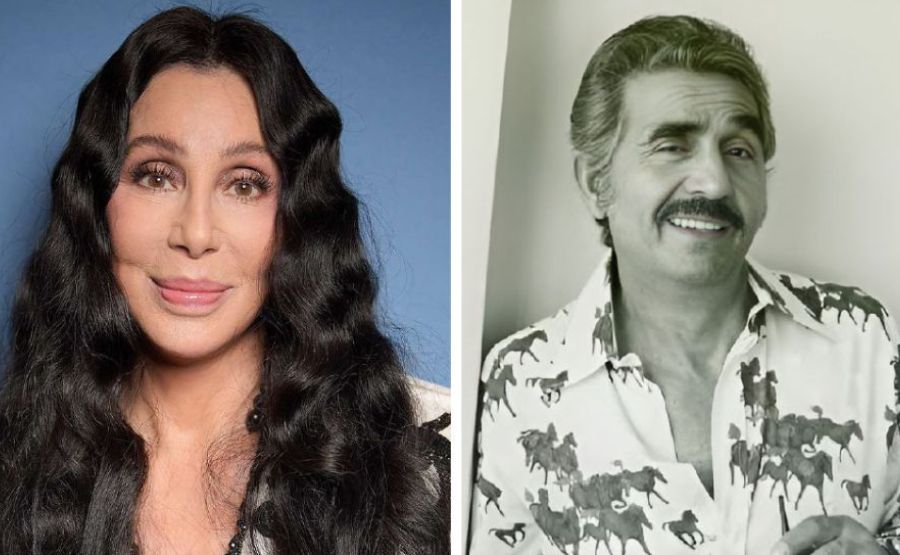
He was never famous. He never sought to be. He was a working-class Armenian-American from Oakland, California, who drove trucks, tended bar, bred horses, and failed at most of what he tried. He fathered one of the most recognizable entertainers in American history and spent the rest of his life at a distance from her — close enough to cause pain, too far away to repair it. He died on January 28, 1985, in Fresno, California, at age 58, with no headlines and no ceremony. Cher, by some accounts, was with him in those final days. By other accounts, the record simply ends.
That ambiguity is appropriate. John Paul Sarkisian was a man the world never quite knew, and he gave it very few opportunities to try.
Quick Facts
| Detail | Information |
| Full Name | John Paul Sarkisian |
| Born | March 23, 1926 |
| Birthplace | Oakland (or Berkeley), Alameda County, California, USA |
| Died | January 28, 1985 |
| Place of Death | Fresno, California, USA |
| Age at Death | 58 |
| Burial | Fresno Memorial Gardens, Fresno, California |
| Nationality | American |
| Ethnicity | Armenian-American |
| Parents | Ghiragos “George” Sarkisian; Siranousch “Blanche” Dilkian |
| Siblings | Lucy Sarkisian Mirgian; Roxanne Sarkisian Hopkins (full); Louise Voutsinas; Pearl Najimian; Harry Yegan; Elizabeth; Dick (half-siblings) |
| Primary Occupations | Truck driver, bartender, auto mechanic, hairstylist, horse breeder, produce delivery |
| Marriage | Jackie Jean Crouch (Georgia Holt) — twice: June 22, 1945 (divorced 1947); December 15, 1965 (divorced 1966) |
| Child | Cherilyn Sarkisian (Cher), born May 20, 1946, El Centro, California |
| Granddaughter | Chastity (Chaz) Bono; Elijah Blue Allman |
| Notable Legal Action | Filed $4 million defamation lawsuit against Cher and two magazines, 1975 |
| Known Struggles | Heroin addiction; compulsive gambling; check fraud; drug-related arrests |
| Cause of Death | Not publicly confirmed; one source cites heart attack |
The Roots: Armenia, Immigration, and Oakland
To understand John Paul Sarkisian, you have to understand where he came from — not just geographically, but historically.
His parents, Ghiragos “George” Sarkisian and Siranousch “Blanche” Dilkian, had fled Armenia in the aftermath of catastrophic violence. The Armenian Genocide, which began in 1915, killed an estimated 1.5 million people and scattered survivors across a dozen countries. The Sarkisians were among the refugees who chose America, arriving in California and settling into the Armenian-American communities that had formed along the West Coast.
John was born in March 1926 into that immigrant world — a world defined by cultural pride, tight community bonds, and the specific economic precariousness of families still finding their footing in a new country. His childhood coincided with the Great Depression. In a family of immigrants already navigating an unfamiliar society, those years of national economic collapse added pressure that shaped an entire generation’s relationship with money, stability, and survival.
He grew up in the Oakland and Berkeley area as the youngest son, with two full sisters, Lucy and Roxanne, and several half-siblings from his mother’s later marriage. The family was close by the standards of its community. The closeness would not protect John from what came next.
See also “Paula Profit: The Architecture of a Private Life“
A Working Life That Never Held Still
John Paul Sarkisian tried more occupations than most people attempt in a lifetime, and none of them stuck.
He drove trucks, the job he returned to most often and the one he described as his primary work. He tended bar. He worked as an auto mechanic, a hairstylist, and a seasonal produce delivery driver. He attempted horse breeding. At one point, his father made a significant material investment in his future, purchasing five trucks outright to give John the foundation of an independent trucking business. The family relocated to El Centro, California, in part to support that venture.
The business collapsed. It was the kind of failure that is both ordinary and crushing — a parent’s hope for a child, converted into a lesson about the limits of external rescue. No amount of seed capital could address what was actually wrong.
The pattern repeated across every job and every venture John attempted. He had charm. Multiple sources describe him as naturally magnetic, confident in a room, capable of making a strong first impression. But charm without stability is just performance, and the performance kept failing under the weight of what he was carrying.
Georgia Holt and the Marriage That Defined His Public Record
At a Harry James dance in the mid-1940s, John Paul Sarkisian met Jackie Jean Crouch — a young woman of eighteen who was working at a doughnut shop and who would eventually become known to the world as Georgia Holt. She was, by her own later account, not entirely sure she liked him. He was shorter than she wanted for dancing. He talked her into a Reno wedding by asking her to “try it for three months.”
They married on June 22, 1945, in Reno, Nevada. She was eighteen. He was nineteen.
Their daughter, Cherilyn Sarkisian — Cher — was born on May 20, 1946, in El Centro, California. The marriage lasted barely a year past that birth. Georgia filed for divorce in 1947, citing behavior that multiple sources describe as volatile: mood swings, financial instability, and the early signs of an addiction problem that would define the next four decades of John’s life.
Georgia left with the baby and began building a life without him. She sang in saloon bars to pay the bills. She remarried. She found a way forward. John Paul Sarkisian did not.
Almost two decades later, in December 1965, they tried again. John and Georgia remarried on December 15, 1965. It lasted eleven months. The divorce finalized in 1966. Whatever hope the reconciliation represented — for them, for Cher, who was then nineteen and had spent most of her life without a father present — it dissolved faster than the first marriage.
The Addictions That Organized His Life
At the center of John Paul Sarkisian’s story, occupying the space where ambition or stability or family might have lived, were two compulsions: heroin and gambling.
His addiction to heroin was not a secret, even when he wished it were. It led to arrests for drug possession and to periods of incarceration. When Cher was approximately eight years old, she encountered her father’s name for the first time — not through a family introduction, but through a news report announcing that he had been arrested. The discovery that her father existed, and that he existed in handcuffs, arrived simultaneously.
The gambling compulsion ran in parallel. Compulsive gambling and heroin addiction do not coexist by coincidence. Both involve cycles of chasing relief from a discomfort that only deepens as the behavior continues. Whatever anguish John was managing, he managed it badly and expensively, and the people around him paid the price alongside him.
He served time in prison for drug offenses and check fraud. He knew the inside of correctional facilities in ways that his daughter, growing up in a household shaped by Georgia’s resilience, was largely spared from knowing directly. That she learned about his incarceration through the news rather than through her parents is perhaps the most concentrated summary of what his fatherhood looked like in practice.
The Eleven-Year-Old at the Door
When Cher was eleven, Georgia asked if she wanted to meet her father. The girl said yes, though without urgency. She dressed carefully for the occasion.
What she found at the door, according to accounts she later shared in interviews and in her 2024 memoir, was a man wearing expensive alligator loafers — shoes that cost, as she noted with the precision of a child who understood scarcity, $1,100. Her first words to her biological father, a man she was meeting for the first time in conscious memory, were a comment about his shoes.
She later described looking at him and recognizing pieces of herself. The same olive skin. The same heart-shaped mouth. The same dark brows and the particular tilt of his half-smile. Across the dinner table, she noticed that he ate slowly, as she did. There was physical evidence of biological connection everywhere she looked, and emotional warmth almost nowhere.
She described him as charming. She also described him, with the directness that would later become her public signature, as having “some larceny in him.” The charm and the larceny coexisted; she saw both clearly and trusted neither.
The relationship that followed lasted approximately six months before it collapsed under the weight of his continued behavior. John Paul Sarkisian was released from prison and attempted something like recovery during the period of his second marriage to Georgia. Within the year, the marriage had ended. Whatever new leaf he had turned over, it didn’t hold.
The $4 Million Lawsuit Against His Daughter
In 1975, John Paul Sarkisian filed a $4 million defamation lawsuit against Cher and two magazines. He claimed that her public statements describing his heroin addiction and compulsive gambling had damaged his reputation.
The lawsuit is worth examining carefully, because it reveals something about John’s self-understanding that his other behaviors only suggested. During the hearings, he admitted that he had served time in prison for check fraud and drug use. However, he maintained that he had changed his life. He framed the lawsuit not as denial of who he had been, but as a protest against being permanently defined by it.
Cher had spoken honestly about her father in interviews, as she tended to speak honestly about everything. She described his absences, his addictions, his erratic behavior. From her perspective, she was telling her own story. From this, she was using her enormous public platform to damage a private man who had no equivalent platform for response.
The case was eventually dismissed. It did not reconcile them. It did the opposite. The lawsuit converted their private estrangement into a documented public record. After it, Cher vowed that she would not contact him again. She appears to have kept that vow.
There was also a separate incident — perhaps even more telling for what it reveals about John’s relationship with reality and with his own child — in which he sold a photograph of himself with Cher and her daughter to a rug dealer in order to cover a bad check. He used the image as currency. Cher learned of it and treated it as the final accounting of what her relationship with him was worth.
The Inheritance He Did Not Know He Gave
While the public celebrated Cher’s rise — the voice, the costumes, the uncompromising career built across six decades — those closest to her understood that her drive carried the specific texture of a childhood spent without a father.
Georgia Holt gave Cher her voice, her theatrical ambition, and the blueprint of a woman who survives on talent and determination. But John Paul Sarkisian gave her something harder to name: the knowledge that charm alone destroys, that absence shapes a child as surely as presence does, and that the only durable form of rescue is the one you build for yourself.
Cher’s fierce independence — the refusal to be managed, the willingness to be publicly unconventional, the sustained career that outlasted every prediction of its end — carries the fingerprints of what she did not receive from her father as much as what she did receive from her mother.
Her Armenian heritage, transmitted through John, also became part of her identity in ways she came to appreciate on her own terms. She spoke publicly about her Armenian ancestry, voiced solidarity with the Armenian community, and carried that bloodline forward through her children and her life. John Paul contributed that heritage even when he contributed nothing else.
The Final Years in Fresno
In his last years, John Paul Sarkisian lived in Fresno, in California’s Central Valley — a city associated with agricultural labor, working-class communities, and a distance from the coastal culture that had both shaped and failed him. He was not famous there. He was not Cher’s father there, in any meaningful daily sense. He was just a man who had lived a hard life and was finishing it quietly.
He died on January 28, 1985. He was fifty-eight years old. The cause of his death was not publicly disclosed; one source identifies a heart attack, though this has not been confirmed across the broader record. He was buried at Fresno Memorial Gardens.
Cher was reportedly with him in his final days. The nature of that presence — whether it was reconciliation, duty, grief, or simply the decision of a daughter who refused to let her father die alone despite everything — is not in the public record. She did not speak extensively about his death in the weeks that followed.
That silence, from a woman whose public life has included extraordinary candor about almost everything, is perhaps its own kind of answer.
Legacy: What a Peripheral Life Leaves Behind
John Paul Sarkisian’s legacy operates at two levels, and they work in opposite directions.
The first is the direct legacy: a daughter who grew up largely without him, who shaped herself in the space his absence created, who became one of the most commercially successful and culturally durable entertainers in American history. More than 100 million records have been sold by Cher. She is the only solo artist to reach number one on US Billboard charts in seven consecutive decades, from the 1960s through the 2020s. She won an Academy Award for Moonstruck in 1988 and was inducted into the Rock and Roll Hall of Fame. She began all of this with no father, a mother who sang in saloon bars to pay the rent, and a short time spent as a youngster in an orphanage when Georgia’s finances collapsed.
The second level of legacy is the one John did not intend: a reminder, embedded in Cher’s own public story, of how comprehensively addiction dismantles family. He was not a villain. Multiple sources note that people who encountered him found him charming, occasionally kind, possessed of a humor and physical presence that made him easy to like in short doses. He was a person in the grip of compulsions that he never found adequate tools to address, living in a time and in a social context that offered few resources for men like him.
His Armenian heritage — the survival his parents engineered, the cultural identity they preserved and transmitted through their children — persists in Cher’s public life and in the family she raised. That survival is not nothing. It runs through the bloodline even when the man carrying it couldn’t hold his own life together.
Final Words
John Paul Sarkisian’s story resists the easy moral that it seems to offer. He was not a monster. He was not a hero. He was a man born into displacement and hardship, raised in depression-era California, and consumed from early adulthood by addictions that were never properly treated, in an era that treated addiction primarily as a moral failing rather than a medical condition.
He had a father who believed in him enough to buy five trucks. He had a daughter who became one of the most famous people in the world. He had a wife he married twice and lost twice. He had charm, and he squandered it every time something more demanding than charm was required.
The $4 million lawsuit he filed against his own daughter is the moment that most clearly exposes the gap between his self-perception and reality. He believed he had been wronged by her honesty. She believed she had simply told the truth about her life. The distance between those two positions proved unbridgeable.
He died at fifty-eight, a relatively young death even for his era. He died in Fresno, far from Los Angeles, far from fame, far from the daughter whose last name he had given her and whose success he could never fully claim or share.
The quiet irony of his life is that his name survives only because of the woman he failed. Cher never took another name — not Bono’s, not Allman’s. She remained, professionally and biologically, Sarkisian. In that persistence of his surname, there is something that is neither redemption nor condemnation. It is simply the complicated truth of family: that the people who shape us most are not always the ones who deserve the credit for what we become.
FAQs
1. Who was John Paul Sarkisian?
He was an Armenian-American man born March 23, 1926, in Oakland, California. He is best known as the biological father of singer and actress Cher. He worked primarily as a truck driver and died January 28, 1985, in Fresno, California, at age 58.
2. What was his ethnic background?
He was Armenian-American. His parents, Ghiragos “George” Sarkisian and Siranousch “Blanche” Dilkian, were Armenian immigrants who fled to the United States following the Armenian Genocide and its aftermath.
3. When and where was Cher born?
Cher, born Cherilyn Sarkisian, arrived on May 20, 1946, in El Centro, California, during her parents’ first marriage. She is John Paul Sarkisian’s only biological child.
4. How many times did John Paul Sarkisian marry Georgia Holt?
Twice. Their first marriage took place on June 22, 1945, in Reno, Nevada, and ended in divorce in 1947. They remarried on December 15, 1965, and divorced again in 1966.
5. When did Cher first meet her father?
Cher met her father for the first time when she was approximately eleven years old, after Georgia arranged an introduction. Cher had learned of his existence through a news report about his arrest when she was around eight.
6. What was John Paul Sarkisian’s lawsuit against Cher about?
In 1975, he filed a $4 million defamation suit against Cher and two magazines, claiming her public statements describing his heroin addiction and compulsive gambling had damaged his reputation. The case was eventually dismissed.
7. Did he have other children besides Cher?
No. John Paul Sarkisian had no other known children. Cher was his only biological child.
8. What jobs did he hold during his life?
He worked as a truck driver, bartender, auto mechanic, hairstylist, horse breeder, and seasonal produce delivery driver. His father purchased five trucks to help him launch a trucking business, but that venture failed.
9. Did Cher reconcile with her father before his death?
Sources conflict on this. Some report that Cher was present with him during his final days in Fresno. No public record confirms a full reconciliation. Their relationship had been effectively severed for years before his death.
10. Where is John Paul Sarkisian buried?
He is interred at Fresno Memorial Gardens in Fresno, Fresno County, California.
11. What was the cause of his death?
The officially confirmed cause has never been publicly disclosed. One source identifies a heart attack, but this is not confirmed across multiple reliable accounts. He died January 28, 1985, at age 58.
12. Did he ever publicly respond to Cher’s descriptions of him?
Yes. Through the 1975 lawsuit, he disputed her characterizations, acknowledging past prison time for drug use and check fraud but claiming he had rebuilt his life and that her statements were damaging. He also reportedly told the press that Cher would not have succeeded without Sonny Bono — a comment that further strained their relationship.
13. What photograph incident contributed to their final estrangement?
John Paul sold a photograph of himself with Cher and her daughter to a rug dealer to cover a bad check. Cher viewed this as a fundamental betrayal and reportedly cut contact with him permanently after it became known.
14. How does Cher’s 2024 memoir address her father?
The memoir acknowledges that Cher made multiple attempts to have a relationship with her father, but that he consistently returned to destructive patterns. She describes the emotional damage his behavior caused as lasting and formative in shaping her drive and independence.
15. How does John Paul Sarkisian’s Armenian heritage connect to Cher’s identity?
Cher has spoken publicly about her Armenian ancestry on multiple occasions and expressed solidarity with the Armenian community. Though her relationship with her father was largely defined by absence and conflict, the cultural and ethnic heritage he transmitted through bloodline became a meaningful part of her public identity.
Empowering curious minds to explore, learn, and think deeper with Fact Aura.