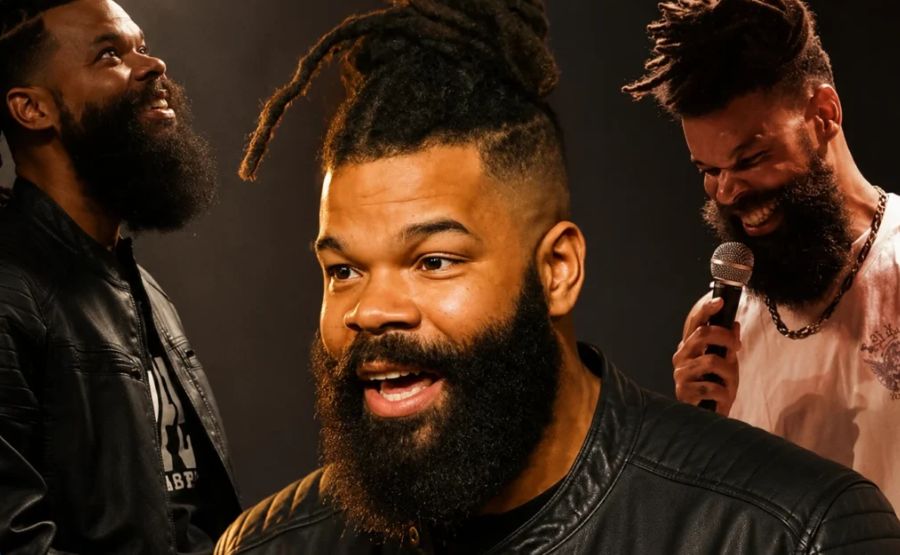
Damon Darling Net Worth: The Comedian Who Turned Rock Bottom Into a Stage
Damon Darling matters in 2025 because he represents something the American entertainment industry rarely produces organically — a working-class voice that arrived without permission, without connections, and without anything to offer an audience except the unvarnished truth of a hard life rebuilt.
He grew up in Urbana, Ohio. At the age of nineteen, he had a serious alcohol problem. He lived out of a car in San Diego. He worked oil rigs and a correctional facility to cover child support he could barely pay. A doctor told him at twenty-nine that he might not reach thirty. He chose sobriety. Then, at thirty-one, he walked into Wiley’s Comedy Club in Dayton and did an open mic for the first time in his life.
None of that backstory is performance. It is the literal foundation of everything he has built since.
Quick Bio
| Detail | Information |
| Full Name | Damon Charles Darling |
| Born | November 4, 1986 |
| Birthplace | Urbana, Ohio, USA |
| Nationality | American |
| Raised By | Single mother (nurse; raised five sons) |
| Education | Urbana schools; briefly attended Wright State University (dropped out) |
| Early Jobs | Newspaper delivery (Urbana Daily Citizen); oil rig laborer; correctional officer (Madison Correctional Institution, ~6 months); various industrial roles |
| Sobriety Date | December 2015 (10 years celebrated December 2025) |
| Comedy Debut | 2018, Wiley’s Comedy Club, Dayton/Beavercreek, Ohio |
| Breakthrough Series | “Gotta Dollar?” (TikTok, 700M+ cumulative views) |
| Platform Following (Jan 2026) | TikTok: 2.8M; Facebook: 2.7M; Instagram: 1.5M; YouTube: 500K+ |
| Major Tours | “Nobody’s Perfect Tour” (2024); “Gotta Dollar Tour” (2024–2025); “Having It Large Tour” (2026) |
| Spouse | Amanda Darling (married; ~9 years together as of May 2025) |
| Children | Three sons (details kept private) |
| Estimated Net Worth (2026) | $2 million–$5 million (unverified; no public financial disclosure) |
| Current Location | Enon, Ohio (listed on trademark filing) |
| Key Quote | “I experienced poverty growing up. My motivation comes from the necessity to support my family and offer a better life for my kids.” — Ian Bick’s podcast, Locked In, 2023 |
Urbana, Ohio: A Childhood That Built the Material
Damon Darling grew up in Urbana, Ohio, a small town in Champaign County with a population of roughly eleven thousand people. He was one of the only Black kids in his neighborhood. That experience of being conspicuously different — racially, economically — became the first laboratory where he learned that humor could disarm a room faster than almost anything else.
His mother raised five boys alone. She worked night shifts as a nurse to keep the household functioning. His father was absent; Damon reportedly did not learn the man’s identity until he turned eighteen, and discovered he had been living nearby the entire time. That particular revelation — the geography of abandonment, close enough to touch but consistently absent — gave his later comedy a specific emotional register. He didn’t mine it for sympathy. He converted it into material.
As a teenager, Damon delivered papers for the Urbana Daily Citizen. It is a detail that would complete a poetic circle decades later, when that same publication covered a sold-out Columbus stop on his 2025 national tour. He attended Wright State University briefly before alcohol and the pull of a different life ended that experiment.
See also “John Paul Sarkisian: The Man Behind the Icon She Had to Outrun“
The Lost Decade: Addiction, Homelessness, and Survival
Damon Darling’s twenties were, by his own clear-eyed account, a sustained exercise in self-destruction.
He followed his mother to San Diego when she transitioned into travel nursing. By age nineteen, he was, as he put it with characteristic directness, a “full-blown alcoholic.” The years that followed mixed hard physical labor with deepening dependency. He worked on oil rigs and in industrial settings that required the body to perform well past its complaints. He also took a position as a correctional officer at Madison Correctional Institution in Ohio, a job he held for approximately six months before being fired when he froze during an inmate altercation. He later described the job as a poor fit for his personality and admitted he was “so happy to be fired” — a line that carries both comedy and truth in equal measure.
The addiction did not pause for any of these jobs. Child support obligations accumulated during a period when he had no stable income and no stable address. He lived in his car in San Diego — not briefly, and not as an adventure, but as the actual condition of his life. This was what rock bottom looked like: no apartment, mounting debt, and the knowledge that the person most likely to destroy Damon Darling was Damon Darling himself.
At twenty-nine, a doctor told him his body couldn’t sustain the trajectory. He might not reach thirty. That sentence landed. On December 10, 2015, Damon Darling stopped drinking. He celebrated ten years of sobriety in December 2025 with an Instagram post that read: “A decade of clarity, growth, and choosing myself even on days I did not want to.”
The First Open Mic at Thirty-One
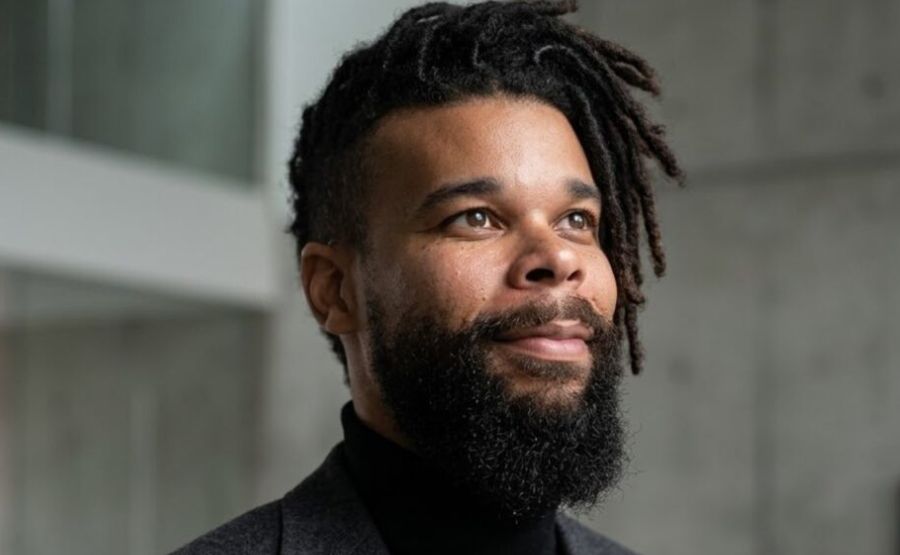
In 2018, Damon walked into Wiley’s Comedy Club — a venue in Dayton/Beavercreek, Ohio, that had hosted Dave Chappelle, Chris Rock, Jeff Foxworthy, and Steve Harvey — and took the microphone for the first time. He was thirty-one years old, with no formal training, no comedy contacts, and no plan beyond the conviction that his stories were worth telling.
He exceeded his allotted time that first night and was removed from the stage. This is not a failure story. It is a diagnostic moment: a man with too much material and no mechanism yet to manage it was discovering the instrument he’d carry for the rest of his life.
The early years were grinding and unglamorous. Empty rooms, occasional hecklers, local club dates that paid little and demanded everything. His wife Amanda, who had encouraged him to try comedy when he hit rock bottom, covered their bills while he found his footing. In May 2025, Damon marked their nine years together on Instagram with quiet gratitude: “There is no question that you love what we have. Thank you for putting up with me from the start.”
By 2022, he was opening for other national acts. The trajectory was clear by then, even if the altitude was still being determined.
The “Gotta Dollar?”Series and a Viral Idea’s Anatomy”
The concept sounds like it shouldn’t work. A man walks up to strangers in parking lots, on sidewalks, in ordinary American public spaces, and asks if they can spare a dollar. If they decline or respond with kindness, he hands them money instead. Sometimes significantly more.
What made “Gotta Dollar?” land across seven hundred million cumulative views was not the prank mechanics. It was the human texture underneath. The videos revealed something about ordinary people that most content doesn’t bother to find — their generosity, their warmth, their decency when caught off guard by a stranger. Damon Darling functioned less as a prankster and more as an accidental documentarian of human goodness.
The series began evolving from edgier drive-through pranks and public interaction videos that defined his earliest TikTok presence. A January 2021 stunt inside a Walmart that involved spilled milk produced a misdemeanor charge that was later dropped — a moment that, in retrospect, marked the last chapter of the cruder content before the pivot toward warmth. The kindness-based model proved not just more emotionally resonant but more commercially sustainable. Brands targeting working-class demographics are far more comfortable aligning with wholesome generosity than with disruptive pranks.
By January 2026, his following had grown to 2.8 million on TikTok, 2.7 million on Facebook, 1.5 million on Instagram, and more than half a million on YouTube. The numbers are large. The trust embedded in them is rarer.
The Business Architecture Behind the Numbers
Understanding Damon Darling’s financial position requires separating the verified from the speculative — a discipline that the crowded ecosystem of celebrity net worth reporting frequently abandons.
No official financial disclosure exists. He has not confirmed earnings in any public forum. Estimates circulating across the internet range from a conservative $2 million to inflated claims of $15 to $25 million that no credible evidence supports. The most defensible figure, derived from cross-referencing platform monetization data, touring economics, and brand partnership norms, places his net worth in the $2 million to $5 million range.
His income flows from several distinct channels. Social media monetization — the creator fund, ad revenue, and platform bonuses — contributes an estimated $163,000 to $224,000 annually from platforms alone, based on industry standard calculations for his engagement metrics. Brand sponsorships targeting blue-collar demographics add substantially on top; companies marketing to working-class American men aged 25 to 45 pay significant rates for an audience that trusts its source as deeply as Darling’s audience trusts him.
Live touring has become the highest-earning component. He headlined the “Nobody’s Perfect Tour” in 2024, followed by the “Gotta Dollar Tour” spanning 2024 into 2025. His “Having It Large Tour” entered 2026 with over sixteen confirmed dates at Funny Bone, Helium Comedy, and Improv locations nationally. Tickets range from $34 to $210, with most in the $50 to $89 range. A sold-out Columbus show in January 2025 received local newspaper coverage — in the Urbana Daily Citizen, the same publication where he once delivered papers as a teenager.
He sells branded merchandise through damondarling.com. He has launched a coffee brand. A trademark filing listing Enon, Ohio, as his address indicates business infrastructure beyond social media posting. These are the markers of someone building an enterprise, not just generating content.
Amanda, the Children, and the Life He Keeps Private
The same candor that defines Damon Darling’s public persona disappears completely when the subject is his family. He’ll discuss the addiction in granular detail. He’ll describe the doctor’s warning and the car in San Diego without flinching. But ask about his wife’s last name, his children’s ages, or the specifics of his domestic life, and the openness closes.
What he has shared publicly is enough to understand the structure. He is married to a woman named Amanda, who played a direct and documented role in his career by encouraging him toward comedy when he reached his lowest point and by covering their household expenses while he built an audience. That kind of support — financial, emotional, practical — is not a minor biographical detail. It is the precondition for everything that is the precondition.
He has children, most likely three sons, though sources conflict on the exact number. He keeps them out of public view by deliberate choice. For a man who built a career on transparency about his own failures, the protected space around his family is not hypocrisy. It is the careful application of the lesson his own childhood taught him: that the people closest to you deserve insulation from the forces that could use them.
Sobriety as Brand, Sobriety as Life
There is a meaningful distinction between a public figure who discusses sobriety as a marketing angle and one who actually organizes their entire life around it. Damon Darling falls clearly into the second category, and the difference is perceptible.
He does not preach. He does not build recovery content that positions him as a guide for other people’s healing. What he does is remain publicly honest about the fact that his sobriety is the load-bearing wall of everything else he has constructed. Without December 2015, there will be no Wiley’s Comedy Club in 2018. Without Wiley’s Comedy Club, there is no TikTok. Without TikTok, there is no “Gotta Dollar?” Without “Gotta Dollar?”, there is no national tour, no merchandise line, no coffee brand, no estimated two to five million dollars.
He celebrated ten years clean in December 2025 with a public post that was notable precisely for its lack of performance. It read as a private accounting made public — a man marking a private milestone because he believed the people watching him deserved to see that the work continued.
There are real tensions embedded in that sobriety. National comedy touring runs through exactly the environments that destroy recovery: late nights, alcohol-saturated venues, the social pressure of post-show industry scenes. Sources note the challenge of “balancing sobriety with the touring lifestyle” as a genuine ongoing negotiation rather than a solved problem. The fact that he has maintained his sobriety through years of national touring is an achievement whose difficulty deserves acknowledgment.
What the Creator Economy Made Possible
Damon Darling’s career is inseparable from the specific historical moment that produced it. The short-form video platforms that came to commercial maturity between 2019 and 2022 created a mechanism for working-class voices to reach massive audiences without the institutional gatekeepers that traditionally controlled access to comedy’s most lucrative spaces.
No network executive greenlighted his content. No Hollywood manager decided he was ready. No late-night booker discovered him and handed him a platform. He posted videos of himself talking to strangers in parking lots, and 2.8 million people followed him because what they saw was real.
This is the specific contribution of the creator economy to American comedy: the disintermediation of the audience relationship. Traditional comedy required a comedian to convince institutions before reaching people. Platform comedy inverted that sequence. Damon Darling built an audience first, and the touring market, the brand partnerships, and the merchandise revenue followed the audience. The infrastructure of a comedy career assembled itself around the gravitational pull of his following rather than the other way around.
He is, in this sense, as much a data point about the structural transformation of entertainment as he is an individual story.
Legacy and What Comes Next
Damon Darling has publicly stated his ambitions beyond the current footprint. He wants a Netflix special. He is interested in television shows and film roles. These are reasonable projections for a comedian with over seven hundred million content views, sold-out national tours, and an audience whose demographic profile is precisely what streaming platforms pay to access.
His legacy, even at this early stage, already contains something durable. He demonstrated that blue-collar comedy can sustain a multi-platform career of genuine commercial scale. He showed that sobriety advocacy, when lived rather than performed, generates audience loyalty that no manufactured persona can replicate. He proved that the creator economy’s promise — that authenticity could substitute for institutional backing — was true, at least in his case.
The full accounting of his impact is still being written. He will be forty years old in 2026. He is a decade sober. He is headlining national tours that sell out months in advance. The Urbana Daily Citizen, the newspaper he delivered as a teenager and that covered his arrest as a young man, is now covering his sold-out shows.
That arc doesn’t require inflation to be remarkable. It is simply the story of a person who chose, at twenty-nine, to keep living — and then spent the next decade figuring out what to do with that choice.
Final Words
Damon Darling resists the easy narrative that celebrity culture prefers. He is not a redemption story — at least not in the tidy, Hollywood-approved sense, where a character flaw is identified, conquered, and tidily resolved. His sobriety is an ongoing commitment, not a completed chapter. His career is still in formation. His net worth, whatever its precise figure, remains a fraction of what the most breathless sources claim.
What is true is more interesting than the exaggerations. A man raised without a father in a small Midwestern town where he was racially isolated discovered early that humor could build bridges nothing else could. He spent a decade destroying himself with alcohol. He chose sobriety at twenty-nine because the alternative was dying before thirty. He walked into a comedy club at thirty-one and got pulled off the stage for going too long.
Six years later, he was selling out national tours.
The contradictions in his story are real and worth holding: the man who is publicly transparent about his failures is fiercely private about his family. The comedian who turned his rock bottom into stage material is also a calculated businessperson building brand equity, merchandise lines, and trademark-filed companies. The sobriety advocate who performs in alcohol-saturated venues navigates a tension that never fully resolves.
These contradictions do not diminish him. They make him a complete person rather than a character. And the audience of millions who follow him seems to understand that — which is, finally, the most significant thing about Damon Darling’s story.
FAQs
1. Who is Damon Darling?
He is an American stand-up comedian, TikTok creator, and digital content personality from Urbana, Ohio. He is best known for his “Gotta Dollar?” series on TikTok, which accumulated over 700 million views, and for headlining national comedy tours including the “Nobody’s Perfect Tour” and the “Gotta Dollar Tour.”
2. When was Damon Darling born?
He was born on November 4, 1986, in Urbana, Ohio.
3. What is Damon Darling’s net worth?
Estimates vary widely and none are officially confirmed. The most credible figure places his net worth between $2 million and $5 million as of 2026, derived from social media monetization, brand partnerships, touring revenue, and merchandise. He has not publicly disclosed his finances.
4. What jobs did Damon Darling have before comedy?
He delivered newspapers for the Urbana Daily Citizen as a teenager, worked on oil rigs, and served as a correctional officer at Madison Correctional Institution in Ohio for approximately six months before being fired. He also worked various industrial and blue-collar jobs throughout his twenties.
5. When did Damon Darling get sober?
He got sober in December 2015, at approximately age twenty-nine, after a doctor warned him that he might not survive much longer if he continued drinking. He celebrated ten years of sobriety in December 2025.
6. When did he start doing stand-up comedy?
His first open mic performance was in 2018 at Wiley’s Comedy Club in Dayton/Beavercreek, Ohio, when he was thirty-one years old. He began building an online presence around 2019 and went viral with the “Gotta Dollar?” series starting around 2020.
7. What is the “Gotta Dollar?” series?
In this popular social media video format, Darling approaches people in public places and asks if they have a dollar to spare. If they respond with kindness or decline politely, he surprises them with money — sometimes significantly more than a dollar. The series became his signature content and accumulated over 700 million cumulative views across platforms.
8. Who is Damon Darling’s wife?
Her name is Amanda. She is credited by Darling as the person who encouraged him to pursue comedy when he was at his lowest point and who financially supported the household while he built his audience. He keeps her identity and personal details largely private.
9. How many children does Damon Darling have?
Most sources indicate three sons, though he has not confirmed this publicly. He protects his children’s privacy deliberately and keeps them out of his public content.
10. What tours has Damon Darling headlined?
He headlined the “Nobody’s Perfect Tour” in 2024, the “Gotta Dollar Tour” across 2024 and 2025, and the “Having It Large Tour” through early 2026, with confirmed dates at major comedy venues including Funny Bone, Helium Comedy Club, and Improv locations nationwide.
11. Was Damon Darling ever homeless?
Yes. During his period of active alcoholism in his mid-to-late twenties, he lived in his car in San Diego, California, while dealing with child support obligations and no stable income.
12. What was the Walmart incident?
In January 2021, Darling filmed a stunt inside a Walmart store that resulted in a misdemeanor charge, which was later dropped. It marked the final phase of his edgier prank content before he transitioned to the kindness-based format of the “Gotta Dollar?” series.
13. What are Damon Darling’s main income sources?
His income comes from social media platform monetization (TikTok, YouTube, Instagram, Facebook), brand sponsorships, live comedy touring (ticket sales, venue fees), merchandise sales through damondarling.com, and a coffee brand he has launched. Annual income from platforms alone is estimated at $163,000 to $224,000 before touring and sponsorship income.
14. Where does Damon Darling live?
He is based in Ohio. Enon, Ohio, which is close to Dayton in the southwest of the state, is listed as his address on a trademark application.
15. What are his future ambitions?
He has publicly stated goals that include a Netflix comedy special, a television show, and film roles. These are realistic aspirations for a comedian at his level of platform following and touring visibility. He has also discussed expanding his merchandise and brand operations.
Empowering curious minds to explore, learn, and think deeper with Fact Aura.