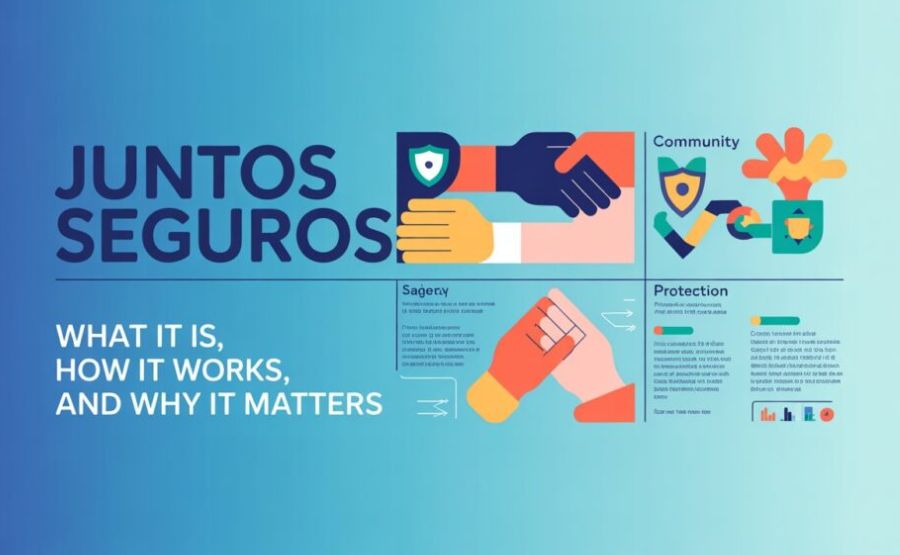
Juntos Seguros: Two Stories Behind One Powerful Phrase
Two words. Eleven letters in Spanish. And depending on where you live, they mean something completely different.
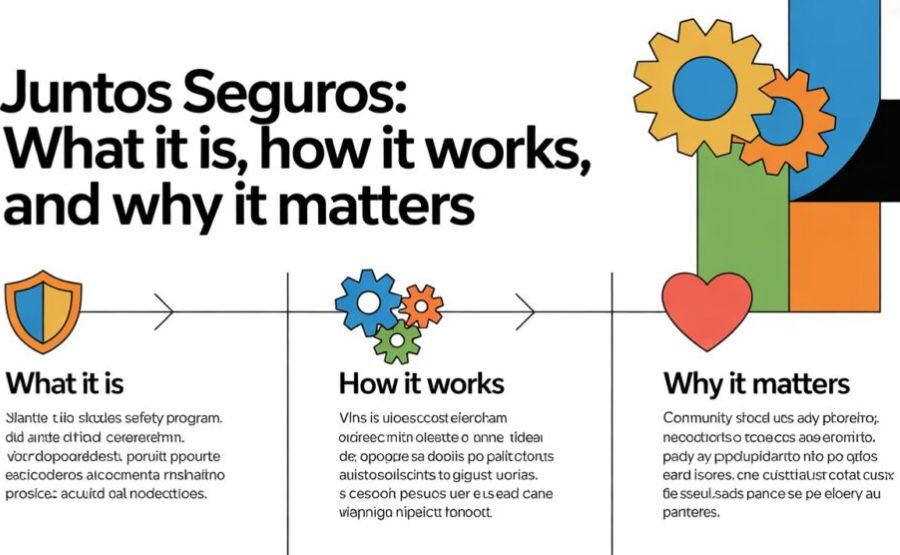
Juntos seguros. Safe together.
In Brazil, those words are stamped on one of the country’s most established insurance companies — a business that has spent over three decades helping corporations manage financial risk. In the United States, those same words became something much more personal, more urgent, and more complicated. They became the name of a grassroots digital tool that spread through Latino communities like a quiet alarm system, helping immigrant families track ICE enforcement activity in real time.
Same phrase. Two entirely separate stories. And together, they tell you something worth understanding.
Key Facts
| Fact | Detail |
| Phrase meaning | “Safe Together” in Spanish |
| Entity 1 | Junto Seguros S.A. — Brazilian insurance company, founded 1992, based in Curitiba |
| Entity 2 | Juntos Seguros (US) — grassroots immigrant safety platform, launched early 2020s |
| Are they connected? | No. Completely separate, unrelated organizations |
| Brazil company focus | Surety bonds, lease guarantees, and judicial guarantee insurance for businesses |
| US platform focus | Real-time ICE alerts, interactive safety maps, bilingual legal resources |
| Brazil: policies issued | Over 1.5 million, serving 80,000+ companies |
| US platform: users | Thousands of immigrant families, primarily Spanish-speaking |
| US platform cost | Free to use, no subscription required |
| US platform languages | English and Spanish (fully bilingual) |
| Privacy policy (US) | Anonymous reporting, no data shared with law enforcement |
| Platform shutdown | The original juntosseguros.com map shut down around January 2025 |
| Successor platforms | Multiple community tools continued using the same name and model |
| Who created the US platform | Coalition of immigration advocates, tech volunteers, safety coordinators |
The Brazilian Story: Thirty Years of Business Trust
Let’s start in Curitiba, Brazil. That’s where Junto Seguros S.A. has quietly built something genuinely impressive over three decades.
The company was originally called JMalucelli Seguradora. It launched in 1992 and spent years building expertise in a very specific type of insurance — surety bonds, known in Brazil as seguro garantia. These products guarantee that a business will fulfill its contractual obligations. A construction company bidding on a government project, a company renting commercial property, a business involved in a court case — all of these need someone to vouch for them financially. That’s where Junto Seguros comes in.
In 2018, the company rebranded. JMalucelli became Junto Seguros as part of a digital transformation push. The new name fit a new ambition: to become Brazil’s first fully digital surety bond insurer. Not just an insurance company with a website, but one where entire policies could be issued, tracked, and extended online.
By any measure, it worked. Junto Seguros has issued over 1.5 million policies. It serves more than 80,000 companies. It has offices in Curitiba, São Paulo, Rio de Janeiro, and Belo Horizonte. International credit agencies have affirmed its financial strength. It has been recognized three consecutive years as a market leader in its segment.
And — just to clear up any confusion right away — this Brazilian company has absolutely nothing to do with the community safety platform that emerged in the United States under a similar name.
See also “Do Escritor: Two Small Words That Carry a Whole Language Inside Them“
The American Story: When Communities Build Their Own Safety Net
Now shift to the United States. A very different context. A much more urgent feeling.
In the early 2020s, something became painfully clear to immigrant communities across American cities. When immigration enforcement actions happened — when ICE showed up in a neighborhood, or set up a checkpoint near a school or a workplace — information traveled slowly. Or it didn’t travel at all.
Families were relying on text message chains. Rumors spread through social media. Word passed from neighbor to neighbor, church to church. Some of it was accurate. Some of it wasn’t. And by the time accurate information reached the people who needed it most, the moment had often already passed.
A small group of immigration advocates, tech volunteers, and community safety coordinators saw this gap and decided to do something about it. What they built was modest at first — basically a shared alert network within trusted community groups. Nothing polished. Nothing corporate. Just people communicating faster.
As more people joined, something more structured emerged. The platform added a bilingual interface. Then an interactive map. Then an Android and iOS mobile app. Then legal resources, guides on immigration rights, and links to nonprofit legal aid organizations. By 2023, Juntos Seguros had grown into a full community safety ecosystem built from the ground up by people who understood what was at stake.
The name they chose said everything about the intent. Juntos seguros. Safe together. Not individually. Not through official channels. Together.
How the Platform Actually Worked
The core idea was disarmingly simple.
Someone in a neighborhood spots ICE activity — vehicles parked in a pattern, uniformed agents near a residential building, a checkpoint on a commuter route. They open the app or website. They submit a brief, anonymous report pinned to that location. Within moments, that report appears as a marker on an interactive map visible to other users nearby.
Other users can see those markers. They can see what was reported, when it was reported, and roughly where. They can adjust their own routes. They can delay a trip. They can alert a family member. They can make a calmer decision with more information than they had a few minutes before.
The platform went bilingual from early on. Whether you preferred English or Spanish, every feature was fully accessible. That detail mattered enormously. Language barriers already isolate immigrant communities from so many services. Juntos Seguros made sure language wasn’t a barrier here.
Beyond the map, the platform connected users to legal guides explaining their rights during an enforcement encounter. It pointed to local nonprofit legal aid centers. It offered templates for family emergency communication plans — documents that help families prepare for worst-case scenarios before they happen, not during the panic of one.
For many users, Juntos Seguros became part of their daily routine. A parent checking the map before the school pickup. A worker glancing at alerts before heading to their job. A community leader sharing a pin to warn neighbors on a street they knew well.
One user named Maria, speaking to a community blog, put it plainly: the app helped her family avoid stressful situations and feel safer every day. Another, Luis R., noted in a review: “It’s not about hiding. It’s about knowing what’s going on around you.”
The Moment It Reached National Attention
In January 2025, something shifted. The incoming administration signaled a significant increase in immigration enforcement. Raids and checkpoints became more frequent. Fear in immigrant communities intensified rapidly.
Juntos Seguros spread — fast. TikTok played a huge role. Videos explaining how to use the platform racked up views across the Latino community. People posted zip-code searches showing activity reports in their neighborhoods. The hashtag traveled. Within days, what had been a relatively small platform became something much larger, referenced by news outlets across the country.
WISH-TV in Indiana covered it directly, reporting that the site was showing ICE activity flags in communities including Goshen, Elkhart, Fort Wayne, and Washington. U.S. Representative André Carson from Indianapolis referenced community safety resources publicly on the same day.
The attention was intense. It also brought scrutiny.
The Honest Complications
Here’s something worth saying carefully and clearly.
The data on the map was crowdsourced. That means it was only as accurate as the people submitting reports. False alarms happened. Outdated pins stayed on the map longer than they should have. Repeated reports of the same event created confusion about the scale of activity. Tech commentators noted that users should treat the reports as signals — not confirmed facts — and always cross-check with trusted local organizations.
The platform itself acknowledged these limitations. No community-driven tool is perfect. The founders and operators were clear that Juntos Seguros was not a legal service and was not a substitute for professional legal advice. It was information sharing. A digital version of neighbors looking out for each other.
There were also concerns raised online about data privacy and storage. Some users questioned how their submissions were handled. The platform maintained that it used anonymous reporting, stored no personal identifying information, and shared nothing with law enforcement. Independent verification of those claims was difficult, as it is with many small grassroots digital platforms.
And then there was the legal pressure. By early 2025, as the platform’s visibility increased, it began facing what sources described as cybersecurity pressure and political scrutiny. The original juntosseguros.com map ceased operations around January 25, 2025, citing external pressures, legal concerns, and resource limitations. Successor tools with similar names and missions continued appearing almost immediately.
The Ethical Questions This Raises
This is where the conversation gets genuinely interesting — and a little uncomfortable in ways worth sitting with.
Is it ethical to crowdsource the location of law enforcement officers? That question gets different answers depending on who you ask.
Many immigration advocates argue yes, clearly. People have a right to know what is happening in their neighborhoods. Sharing observations about law enforcement activity in public spaces is entirely legal. This is what journalists do. This is what community organizers have always done through phone trees and radio networks. Juntos Seguros was simply doing it faster and more systematically.
Critics see it differently. They argue that a platform specifically designed to help people avoid immigration enforcement is, in effect, helping people evade lawful government actions. That framing troubles some legal experts and law enforcement officials, even those sympathetic to immigrant communities.
There’s also a subtler concern: the accuracy problem. If someone submits a false or mistaken report — or if a deliberate bad actor floods the map with misleading pins — people might make decisions based on wrong information. A family that avoids a neighborhood because of a false ICE report experiences real disruption. The costs of misinformation aren’t abstract here.
None of these questions have clean answers. What they do have is genuine weight. And the communities using these platforms knew the weight better than anyone.
What Connects Both Stories
On the surface, a Brazilian corporate insurance company and a grassroots US immigrant safety tool seem to have nothing in common except a name. But look a little closer.
Both versions of “juntos seguros” are built on the same human instinct: the belief that safety is stronger when it’s shared.
The Brazilian company makes that literal in commercial terms. When a business needs a financial guarantee, Junto Seguros steps in and says: we back you. You don’t have to face this alone. That’s a form of solidarity too, dressed in the language of finance.
The American platform made it something more immediate and personal. When a family is trying to get their child safely to school during a period of intense enforcement, and a stranger in the same city submits a map report that helps them make a safer choice — that’s the same instinct in a very different coat.
Juntos. Together. That word is doing real work in both cases.
Final Words
The original juntosseguros.com map may be offline, but the model it represented is very much alive.
Other platforms have continued under similar names. Community groups have rebuilt the model on different infrastructure. The idea of community-sourced immigration safety information has been picked up by other organizations, apps, and advocacy networks that saw what was possible.
In Brazil, Junto Seguros continues to grow. The company is expanding into new markets, investing in technology, and working to modernize insurance processes that haven’t changed much in decades. It remains one of the most respected names in Brazilian corporate insurance.
Both futures carry the same underlying question about the word juntos. What does it mean to genuinely look out for each other? Who gets to design the systems that help communities stay safe? And what does safety actually require — financial guarantees, real-time information, legal protection, or simply someone else who notices what’s happening on your street and thinks to tell you?
There’s quiet hope in the fact that people keep asking those questions. And keep building things in response to them.
FAQs
1. What does “juntos seguros” mean?
It’s Spanish for “safe together.” The phrase captures a sense of collective protection — that people are safer when they share information, resources, and support with one another.
2. Is Juntos Seguros a single organization?
No. The name refers to two completely unrelated entities: Junto Seguros S.A., a large Brazilian insurance company founded in 1992, and a grassroots US community safety platform that emerged in the early 2020s. They share a name but have no connection.
3. What does the Brazilian company Junto Seguros do?
It provides surety bond insurance — financial guarantees that businesses will fulfill their contractual, judicial, or rental obligations. It serves over 80,000 companies across Brazil and is based in Curitiba, Paraná.
4. What was the US Juntos Seguros platform?
It was a bilingual digital tool designed to help immigrant communities in the United States share and receive real-time reports of ICE enforcement activity. It included an interactive safety map, legal resources, and community alerts.
5. Is the Juntos Seguros map still active?
The original juntosseguros.com map shut down around January 2025 after facing cybersecurity pressure and operational challenges. Multiple successor tools using similar names and models have continued operating since then.
6. Is using Juntos Seguros legal?
Submitting and sharing observations about law enforcement activity in public spaces is legal in the United States. The platform’s creators maintained it was a lawful information-sharing service. However, anyone using community safety tools should be aware of their local legal context and verify information with trusted community organizations.
7. Did Juntos Seguros share user data with law enforcement?
The company made it very clear that all reports were submitted anonymously and that it did not share user data with immigration or law enforcement agencies. Independent verification of these claims was limited.
8. How accurate were the reports on the Juntos Seguros map?
The data was crowdsourced, meaning accuracy depended on user submissions. Reports could be false, outdated, or duplicated. Most advocates recommended treating map reports as a starting signal rather than confirmed fact, and cross-checking with local community organizations.
9. Who created the US Juntos Seguros platform?
It was built by a coalition of immigration advocates, community safety coordinators, and technology volunteers. It was not a corporate product. It grew from real-world community needs and informal communication networks.
10. What information could users submit?
Users could anonymously report ICE sightings, checkpoints, or enforcement actions, pinned to a location on an interactive map. The platform also offered legal rights guides and links to local nonprofit legal aid.
11. How did Juntos Seguros spread so quickly in 2025?
TikTok played a major role. Videos demonstrating how to use the platform circulated rapidly through Latino communities, reaching millions of views during a period of heightened immigration enforcement activity in early January 2025.
12. Can the platform help someone with an immigration case?
No. Juntos Seguros was an information-sharing platform, not a legal service. It connected users to resources and rights guides but explicitly stated it could not replace professional legal advice. For immigration legal help, users were directed to licensed attorneys and nonprofit legal aid centers.
13. Are there alternatives to the original Juntos Seguros map?
Yes. Following the shutdown of the original platform, multiple community organizations and grassroots tools continued similar work. Local immigrant advocacy organizations, immigrant rights networks, and apps like Notifica and others offer related services.
14. How does the Brazilian Junto Seguros differ from a typical insurance company?
It specializes almost exclusively in surety and guarantee insurance for businesses — a more specialized field than general health, auto, or life insurance. It was also the first in Brazil to fully digitize the surety bond issuance process, making it faster and more accessible for corporate clients.
15. What is the broader significance of both organizations sharing this name?
It’s largely coincidental — but the overlap reveals something worth noting. Both entities, in very different ways, operate on the idea that protection is stronger when it’s shared. One offers financial guarantees between businesses. The other offered community-sourced information between neighbors. The phrase juntos seguros — safe together — turned out to mean something real in both contexts.
Empowering curious minds to explore, learn, and think deeper with Fact Aura.