The United States Country Code: Everything You Actually Need to Know About +1
There is a single digit that sits quietly in front of every phone call made to the United States from anywhere else in the world. It does not look like much. It is just the number one. But that one digit carries seventy-five years of history, connects twenty different countries under a single numbering system, and has become one of the most recognized symbols in global telecommunications.
If you have ever tried to call an American number from another country and got confused about what to dial first — this article is for you. And if you have ever wondered why the US gets “+1” while everyone else gets longer, less-memorable codes — that story is genuinely interesting.
Let’s start at the beginning.
Key Facts
| Detail | The Answer |
| United States country code | +1 (also written as 001) |
| Full dial format from abroad | +1 + 7-digit number + 3-digit area code |
| Total digits in a US phone number (local) | 10 digits (not counting the +1) |
| Country code shared with | Canada, the Dominican Republic, Puerto Rico, Jamaica, and sixteen other Caribbean nations and territories |
| System name | North American Numbering Plan (NANP) |
| Who assigns country codes | The International Telecommunication Union (ITU) |
| NANP launched | 1947 (designed); first live call using it: November 10, 1951 |
| Countries under +1 | 20 countries and territories total |
| Population served by +1 | Approximately 400 million people (as of 2025) |
| US exit code (to call OUT of the US) | 011 |
| International standard for phone numbers | E.164 (ITU recommendation) |
| Is it possible to determine whether a +1 number is landline or mobile? | No — US numbers do not distinguish between the two |
| Number of US area codes | Over 300 active area codes as of 2026 |
| The first direct-dial long-distance call | November 10, 1951, from Englewood, NJ to Alameda, CA |
What the Country Code Actually Is
Before anything else, it helps to understand what a country code even does.
Consider it the global equivalent of a postal code. Every country has one. When you call someone across an international border, you dial the country code first so the telephone network knows which country to route the call to. Without it, the network has no way to figure out where in the world you want your call to go.
Country codes are not made up randomly. They are assigned and maintained by the International Telecommunication Union — the ITU — which is a United Nations agency based in Geneva, Switzerland. The ITU has been governing global telecommunications standards since 1865. That is older than most modern nations.
The technical standard that governs how phone numbers are structured globally is called E.164. It says that any international phone number must start with a plus sign, followed by a country code, followed by the national number. For the United States, that looks like: +1 (area code) (local number).
The plus sign itself is not actually something you dial. It is a symbol meaning “dial your international access code here.” In most of the world, that access code is 00. In the United States and Canada, it is 011. On any smartphone, you can just tap the + symbol and the phone handles the rest automatically.
See also “How much Weight of a Gallon of Water? The Full, Honest Answer“
Why the United States Gets Just “+1”
This is the question most people find surprising. Why does the US get a single digit while countries like Germany get +49, France gets +33, and China gets +86?
The short answer: the United States built the system.
In the years after World War II, the US had the largest, most technically advanced telephone network on Earth. At that time, the American Telephone and Telegraph Company, or AT&T, was essentially the foundation of international telecommunications thought. When the ITU began organizing the international numbering system in the late 1950s and early 1960s, they divided the world into numbered zones. Zone 1 was assigned to North America — specifically to the countries already operating under AT&T’s North American Numbering Plan.
Zone 1 got the shortest code because it represented the most developed, highest-traffic part of the global phone network. A shorter code also meant faster dialing on the rotary phones of that era. Every digit you did not have to spin saved time. High-traffic regions got priority for the single-digit codes.
So the United States did not exactly “choose” +1. It was awarded to the whole North American numbering region, of which the US was by far the dominant player. The prestige came from infrastructure and influence, not from lobbying.
The NANP: Why Canada and the Caribbean Also Have +1
Here is a piece of information that catches a lot of people off guard.
When you dial +1 followed by a Canadian area code, you are using the exact same country code as calling the United States. When you call Jamaica or the Dominican Republic or Bermuda, you are also starting with +1.
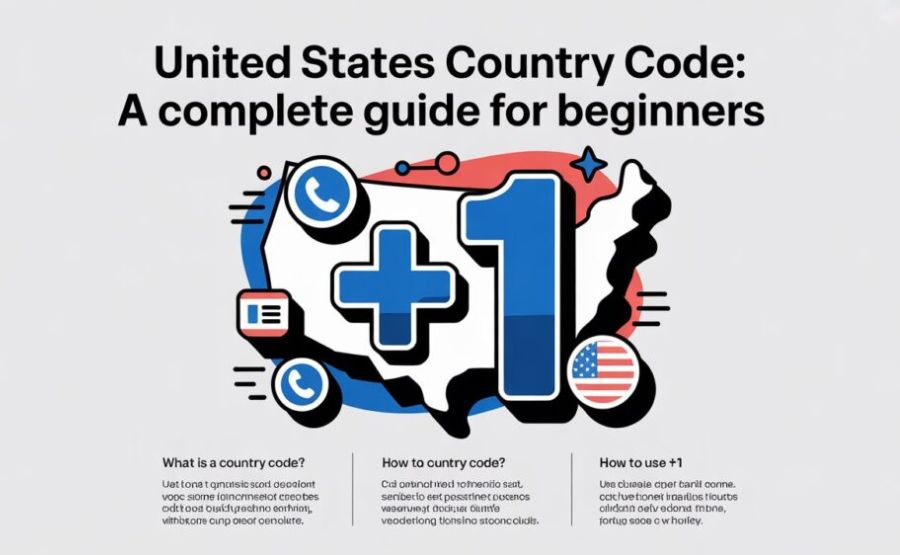
This is because the +1 code belongs not to the United States alone, but to something called the North American Numbering Plan — the NANP. It currently includes 20 countries and territories, and together they serve around 400 million people.
AT&T’s Bell System established the NANP in 1947.The idea was practical and clever. Instead of every US state or Canadian province having its own disconnected telephone system — which is what things looked like before 1947 — AT&T designed a single, unified numbering plan that divided all of North America into 86 geographic areas. Each area got a three-digit code. Those codes became what we now call area codes.
The plan was designed so that the first digit of any area code had to be between 2 and 9. The second digit had to be either a 0 or a 1. This distinction was important because it let telephone switching systems instantly tell the difference between an area code and the first digits of a local number. Smart engineering for the 1940s.
The first real test of the system came on November 10, 1951. A mayor in Englewood, New Jersey dialed directly to a city official in Alameda, California — no operator needed. The call went through. Something that had previously required a human operator sitting at a switchboard had become automatic.
Direct distance dialing gradually spread across the country through the 1950s and into the 1960s. By the time most Americans were used to it, millions of calls were being connected automatically every day.
How to Actually Dial a US Number from Abroad
Let’s make this concrete, because a lot of people get it wrong.
Say you are in the UK and you want to call your friend in New York City. Their number is (212) 555-0182.
Here is what you dial:
- The UK exit code, which is 00
- Then the US country code: 1
- Then the area code: 212
- Then the local number: 555-0182
So the full sequence is: 00-1-212-555-0182
On a smartphone, you do not need to think about exit codes at all. Just dial: +1 212 555 0182. The plus sign handles everything automatically.
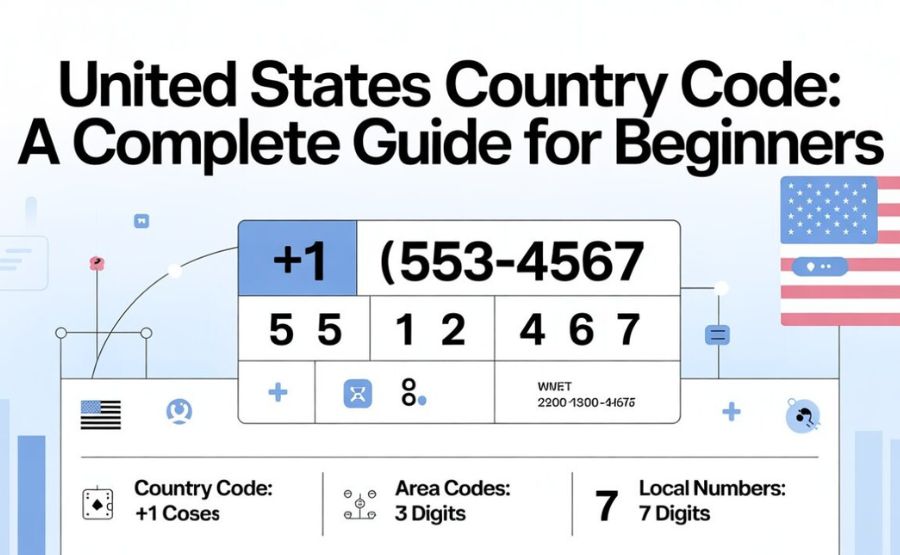
You always dial exactly ten digits in total after the +1. Three for the area code, seven for the local number. That structure has been consistent since the 1940s and has never changed.
One thing that confuses people: when calling from inside the United States, you generally do not dial +1 at all. On most landlines and mobile phones within the US, you dial 10 digits directly — the area code plus the seven-digit number. You only need the +1 when you are calling from a different country.
The Area Code Layer: The System Within the System
Once you are inside the +1 zone, the area code does the heavy lifting. It tells the network which region of the country — or which NANP territory — the call should go to.
Area codes have a history and a personality of their own.
When AT&T first designed them in 1947, they were not randomly assigned. High-population areas that would generate the most calls got the simplest, quickest-to-dial codes. This mattered because of rotary phones — the further a digit was from the 1, the longer it took to dial. New York City got 212 (short to dial). Los Angeles got 213. Chicago got 312. Higher, slower digits were obtained in rural locations with fewer callers.
This design logic created something unexpected over time: cultural cachet.
Area code 212 for Manhattan became synonymous with New York prestige. Having a 212 number today carries a certain weight — and since Manhattan’s number pool is nearly exhausted, new numbers in that area mostly get 646 or 917 overlays. A genuine 212 number is genuinely rare. Some businesses pay significant sums to acquire them.
Area code 310 in Los Angeles carries its own Hollywood association. The 650 code in Silicon Valley’s Palo Alto region has become linked to the tech industry in ways its designers never imagined. When a startup lists a 415 (San Francisco) or 512 (Austin) number, it sends a signal to the tech community before anyone even picks up the phone.
A phone number can carry meaning. That is not something Bell’s engineers planned in 1947. It just happened naturally as cities and industries grew into their codes.
The Difference Between +1 and 001
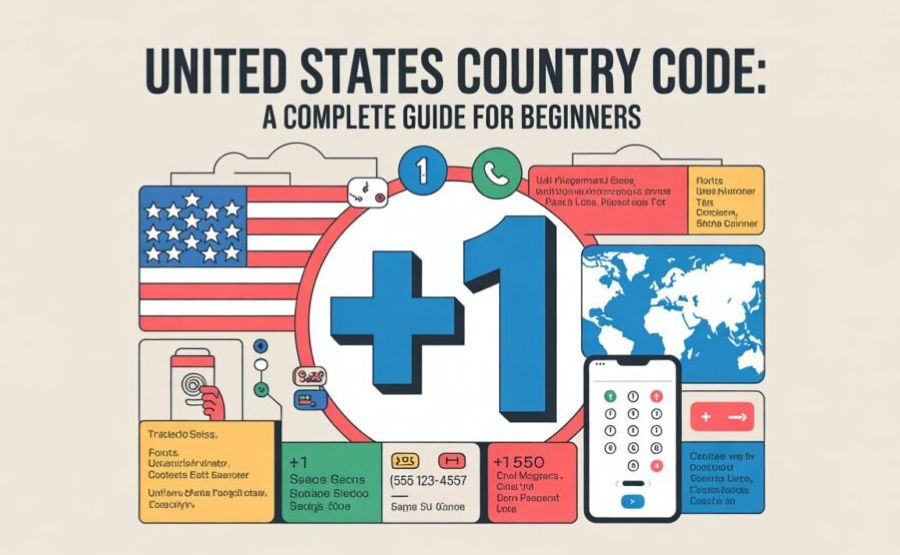
Both of these mean exactly the same thing. Zero, zero, one is simply how you write the +1 code when you are physically dialing it from a country that uses 00 as its international exit code.
Most of Europe, Australia, China, India, Japan, and dozens of other countries use 00 as their international exit code. So when someone in Germany wants to call the US, they dial 00 (Germany’s exit code) + 1 (the US/NANP country code) + the 10-digit number. Written together, that opening sequence looks like 001.
From the United States calling outward, the exit code is different: 011. So an American calling the UK would dial 011 (US exit code) + 44 (UK country code) + the British number.
The +1 notation using the plus sign is a shorthand that works universally regardless of exit code, which is why smartphones display numbers that way. Storing a number as +1-212-555-0182 means it will dial correctly whether you are in New York, London, Tokyo, or anywhere else.
When +1 Gets Complicated: Scams and Spoofing
Here is where I want to be honest with you about something that matters for your safety.
The +1 country code — and American area codes generally — have become targets for sophisticated fraud. In 2024 alone, more than 56 million Americans were affected by scam calls, with losses estimated at over $25 billion dollars by some reports.
One of the most common tricks is called the “one-ring scam.” Your phone rings once from what looks like a US number and stops. If you call back out of curiosity, you may actually be connecting to a premium-rate international line — somewhere like the Caribbean or West Africa — which can charge steep per-minute fees for as long as they keep you on the line.
This works because some Caribbean nations within the NANP share the +1 code. Their area codes look exactly like American area codes to an untrained eye. Area code 809 goes to the Dominican Republic. Code 876 goes to Jamaica. Both are legitimately part of the NANP. But scammers have used these numbers to lure Americans into expensive callbacks, knowing the +1 prefix makes the number appear domestic.
Phone number spoofing makes this worse. Scammers can display any number they choose on your caller ID — including legitimate American area codes like 212 or 312 — while actually calling from anywhere in the world. The FCC has introduced regulations requiring phone companies to verify call authenticity using a system called STIR/SHAKEN, but spoofing remains a real problem.
The practical advice is simple: if you do not recognize a number, do not call it back. The caller will leave a message if it is crucial.
The Invisible Side: What +1 Means for Businesses
For businesses operating internationally, the US country code is not just a prefix — it is a market signal.
A company based in Germany that wants to serve American customers will often get a US virtual phone number with a local American area code. The reason is trust. Studies of consumer behavior consistently show that people are significantly more likely to call a number that looks local to them. A +1 area code gives a foreign business a US presence that feels familiar to American customers, even if no one is physically sitting in that location.
Virtual phone systems now make this trivially easy. A UK company can have a New York 212 number forwarded to an office in Manchester. A startup in Lagos can have a 415 number that rings in San Francisco and simultaneously a desk in Nigeria. The +1 prefix acts as a credibility signal in the American market.
This has a flip side, of course. The same technology that lets legitimate international businesses establish US presence also lets scammers display convincing American numbers. One of the ongoing conflicts in the NANP’s development during the internet era is this.
Maintaining Your Number When You Change
One of the genuinely helpful things that happened to the US phone system was number portability.
Before 1997, if you switched phone carriers, you lost your number. You had to tell everyone your new digits. A new number was required when switching from AT&T to Sprint. People stayed with carriers partly because changing was such a hassle.
The FCC mandated that landline carriers had to support number portability by 1997 and 1998. Wireless portability for mobile phones followed in 2003. Today, you can keep your +1 number — area code, local number, the whole thing — when you switch from one carrier to another, move from a landline to a mobile, or change from traditional service to a VoIP system.
This seems small but changed a great deal. People’s phone numbers started to feel more like personal identifiers than carrier contracts. A +1 number became something you could keep for decades, through multiple providers, across different technologies.
Toll-Free Numbers and Special Codes Within +1
Inside the +1 system, there is a whole world of special-purpose numbers.
Toll-free numbers — starting with 800, 888, 877, 866, 855, 844, and 833 — are numbers where the recipient pays the call costs rather than the caller. They became an essential part of American business culture. The 1-800 prefix is so embedded in American commercial life that it became a cultural shorthand: “call 1-800” is a phrase most American adults can complete by reflex.
One important thing to know: US toll-free numbers are only free for callers inside the US and sometimes Canada. If you call a 1-800 number from abroad, you will likely be charged international rates. The toll-free feature does not cross international borders.
There are also 900-number premium services, short codes for text messaging campaigns and two-factor authentication, and numbers reserved for specific emergency and social services. The suicide prevention hotline 988 is now a three-digit shortcut. 911 is the emergency number used across all NANP territories in the US — though notably, not in all NANP countries. Trinidad and Tobago uses 999, like the UK. Different member countries retain their own emergency number traditions.
A Thought on What a Country Code Actually Represents
I have spent time with this topic and the thing that strikes me most is how invisible infrastructure shapes daily life.
Most people in the United States never think about the +1 when they pick up their phone. They just dial. The history — the AT&T engineers of the 1940s designing area codes around rotary dial efficiency, the ITU assigning zones to a world rebuilding after World War II, the 1951 call from New Jersey to California that changed what a phone call could be — all of that sits silently behind every number.
The country code is not just a prefix. It is a piece of architecture that holds together a communication network spanning 400 million people and twenty countries. It connects a grandmother in Puerto Rico to her family in New York without either of them having to think about the system that makes it work. That invisibility is, honestly, a kind of engineering achievement.
The systems we barely notice are often the ones doing the most work.
FAQs
1. What is the United States country code?
The US country code is +1. When calling the US from outside North America, you dial +1 followed by the 10-digit US phone number (3-digit area code + 7-digit local number). On a smartphone, the + symbol handles any exit code differences automatically.
2. Do I need to dial +1 when calling inside the United States?
No. Within the US, you dial the 10-digit number directly — area code first, then the 7-digit local number. The +1 prefix is only needed when calling from outside North America.
3. Why does Canada have the same country code as the US?
Canada and the US share +1 because both countries are part of the North American Numbering Plan (NANP), which has been a unified telephone system since 1947. The two countries are distinguished by their different area codes — 416 for Toronto, 212 for New York City, for example — not by different country codes.
4. Which other countries also use the +1 code?
The +1 code covers 20 countries and territories total, including Canada, Puerto Rico, Jamaica, the Dominican Republic, Trinidad and Tobago, Barbados, Bermuda, the Cayman Islands, and 12 other Caribbean nations and territories.
5. Is there a difference between +1 and 001?
No, they mean the same thing. +1 is the shorthand notation using the universal plus symbol. 001 is what you dial if your country uses 00 as its international exit code. Both connect to the same +1 country code.
6. How do I call the US from the UK?
Dial 00 (UK exit code), then 1 (US country code), then the 10-digit US number. Or on a mobile phone, simply dial +1 followed by the area code and number.
7. How do I call the US from Australia?
Australia’s exit code is 0011. So you dial 0011-1-area code-local number. Alternatively, dial +1-area code-local number from any smartphone.
8. Can you tell if a +1 number is a mobile or landline?
No. The US does not use different prefixes for mobile and landline numbers, unlike many other countries. Both use the same format of area code + 7-digit number under +1. This means you cannot tell from the number alone whether you are calling a cell phone or a home phone.
9. Are US toll-free numbers (1-800, etc.) free to call from outside the US?
No. Toll-free numbers are only free for callers within the United States and sometimes Canada. Calling them from abroad will incur standard international rates. The toll-free feature only applies domestically.
10. Why do some area codes feel more prestigious than others?
Area codes were originally assigned with lower, quicker-to-dial digits going to major cities, because rotary phones were slower for higher digits. New York City got 212 and Los Angeles got 213 partly for this reason. Over decades, these codes absorbed the cultural identity of their cities, making them feel prestigious — especially as the number pools in those areas became exhausted and new numbers there grew rare.
11. What is a phone scam involving +1 numbers, and how do I avoid it?
The most common is the “one-ring scam,” where scammers call from a number that looks like a US number (since some Caribbean countries share the +1 code) and hang up after one ring. If you call back, you may connect to a premium-rate international line that charges significant per-minute fees. The rule: do not call back numbers you do not recognize. If it matters, they will leave a voicemail.
12. What is E.164 and why does it matter?
E.164 is the ITU’s international standard for how phone numbers should be formatted. It specifies that any international number starts with a plus sign, followed by the country code, followed by the national number with no spaces or symbols. For a US number, E.164 format looks like +12125550182. This format is recommended for storing numbers in apps, CRMs, and any software that handles calling, because it works the same way everywhere in the world.
13. How many area codes does the United States have?
The US has over 300 active area codes as of 2026. New area codes are added periodically through two methods: splits (dividing one area code’s region into two) and overlays (adding a new area code to the same geographic area as an existing one, to accommodate growing demand for numbers).
14. What does 011 mean, and how is it different from +1?
011 is the international exit code that US callers dial when making calls to other countries. It is what you dial from the US to reach other countries’ codes. People outside of North America dial +1 to go to the United States. They are used in opposite directions: 011 out of the US, +1 into the US.
15. Is the +1 country code at risk of running out of numbers?
The NANP manages number supply carefully, adding area codes when regions run low. There have been periods — particularly in the 1990s as fax machines and internet dial-up modems required dedicated phone lines — when number demand surged unexpectedly. The shift to VoIP and internet communication has since reduced pressure somewhat. Number portability also helps recycle numbers more efficiently. The system remains functional, though it is actively managed to prevent exhaustion.
Empowering curious minds to explore, learn, and think deeper with Fact Aura.