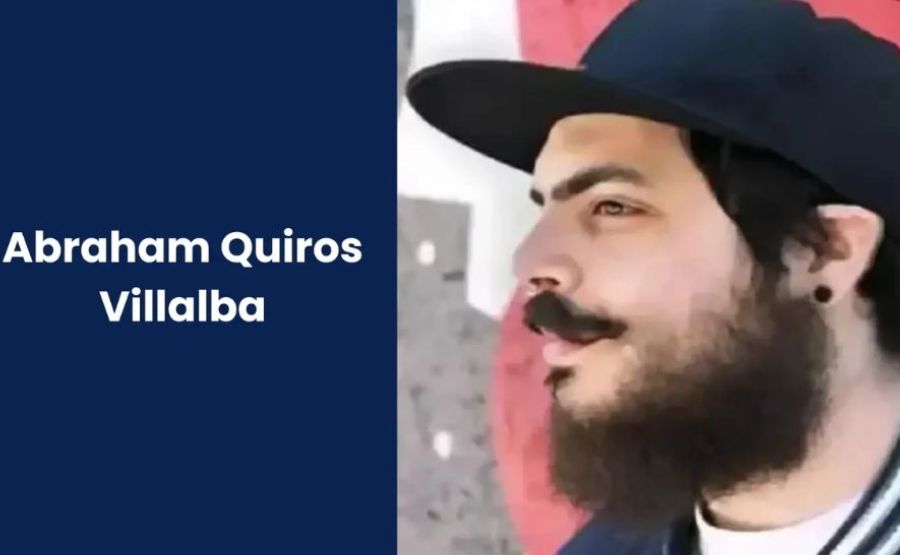
Abraham Quirós Villalba: The Quiet Authority Behind the Words
In an age when public identity is engineered for maximum visibility, Abraham Quirós Villalba has built genuine influence the old-fashioned way — article by article, reader by reader, in the unglamorous territory between government policy and the people it affects.
Quick Bio
| Category | Details |
| Full Name | Abraham Quirós Villalba |
| Known Origin | The most frequently mentioned location is Jerez de la Frontera in Andalusia, Spain. |
| Also Associated With | Puerto Rico; Costa Rica (disputed across sources) |
| Education | Philology, University of Cádiz (UCA) — completed 2013 |
| Primary Profession | Content Editor, Writer, Language Educator |
| Current Platform | Tododisca (Todo Disca) — editor since approximately 2020–2022 |
| Subject Specialties | Social Security, SSI, SSDI, IRS regulations, retirement benefits |
| Languages | Spanish (native), English; multilingual capacity |
| Teaching Experience | Spanish language instruction, including at Novosibirsk State University (Russia), 2014–2016 |
| Pen/Profile Name | Abraham (Poetufla) Q. — used in creative and educational contexts |
| Verified Professional Profiles | Muck Rack (verified byline), Tododisca author page |
| Notable Online Presence | Hundreds of published articles indexed across major benefit and finance platforms |
| Net Worth | Not publicly verified |
| Awards | No independently confirmed major awards |
The Problem With the Story — and Why It Matters
Before diving into life itself, an honest biography of Abraham Quirós Villalba must confront something unusual: his name has become a kind of container for multiple competing identities online.
Search the name and you encounter contradictions that strain credibility. Some profiles describe a Costa Rican renewable energy entrepreneur born in 1975. Others frame him as a Saudi Arabia–based oil-to-solar investor born in 1978. Still others paint him as a Madrid-born polymath born in 1997. One source connects him to Puerto Rico. Another to Texas. A third to Jerez de la Frontera.
The birthplaces disagree. The birth years disagree. The entire career trajectories — from solar farm builder to philology scholar — seem to describe different human beings.
This is not a minor editorial discrepancy. It is a textbook symptom of what happens when low-quality biographical content farms seize a real person’s name and pad it with fabricated achievements to generate search traffic. Many such sites recycle identical sentences under the pretense of original reporting.
What remains when you filter the noise? A clearer, more human, and ultimately more interesting figure: a Spanish-educated philologist and multilingual writer who became a trusted voice for some of the most financially vulnerable readers on the English and Spanish internet.
That story deserves to be told honestly.
See also “Cindy Paulson: The Witness Who Ended a Serial Killer’s Twelve-Year Reign“
Roots and Formation: The Making of a Language Mind
The most consistently supported account of Quirós Villalba’s origins places him in Jerez de la Frontera, a city in the Cádiz province of Andalusia, Spain — the same region where sherry wine is made and flamenco runs deep in the cultural soil. It is a place shaped by centuries of linguistic crosscurrents: Arabic, Latin, Castilian, and the cadences of a port city open to the Atlantic.
Growing up in that environment, he developed an early and lasting fascination with language itself — not just words, but the architecture of communication, the way grammar carries meaning across cultures and generations. This was not the passion of a dilettante. It became the animating principle of his entire career.
He pursued that interest formally at the University of Cádiz (UCA), one of Spain’s oldest and most respected academic institutions, completing a degree in philology in 2013. The study of language in recorded historical sources, including linguistics, literary criticism, and the development of meaning, is known as philology. It is a discipline that develops reading skills. carefully, write precisely, and think about how knowledge travels from one human to another. That training would prove more professionally useful than it might have seemed at graduation.
The year 2013 was, by coincidence or design, an inflection point in the digital media landscape. Online platforms were hungry for writers who could produce clear, reliable content consistently. The age of content-as-information-service was just beginning. Quirós Villalba entered the field at exactly the right moment.
Early Career: Learning the Digital Terrain
In the years immediately following his degree, Quirós Villalba moved between forms. He worked as a freelance writer and translator, taking on assignments across banking, economics, insurance, and technology — subjects that required both linguistic dexterity and the willingness to learn fast. He built his own blog, where he developed a voice and an audience.
He also taught. Between 2014 and 2016, he served as a Spanish language instructor at Novosibirsk State University in Russia — a remarkable posting for a young Andalusian graduate, and one that speaks to both his adaptability and his genuine love of pedagogy. Teaching Spanish to Russian university students, including economics majors, demanded more than grammar: it required cultural translation, patience, and the ability to make a foreign linguistic system feel intuitive. He did that work while still in his mid-twenties.
That international experience left a mark. Quirós Villalba returned from Russia with a sharper understanding of how language barriers create real-world disadvantages — how people shut out of information because of vocabulary or complexity are denied access to opportunity. That conviction would later shape his editorial philosophy at Tododisca.
He also explored content platforms and online teaching tools like Moodle and Google Classroom, building digital literacy alongside his linguistic credentials. He was not just a writer who happened to use the internet. He was a digital native in the fuller sense: someone who understood how audiences find content, how search behavior reflects human need, and how a well-placed explanation can reach someone at exactly the moment they need it.
The Tododisca Years: Precision in Service of Vulnerability
The clearest, most verifiable chapter of Quirós Villalba’s professional life begins around 2020, when he joined Tododisca — a Spanish-language platform (with extensive English content) dedicated to providing guidance on Social Security, disability benefits (SSI and SSDI), IRS regulations, and U.S. retirement systems.
The audience Tododisca serves is not abstract. These are retirees living on fixed incomes, disabled individuals navigating labyrinthine eligibility requirements, immigrants trying to understand a benefits system written in bureaucratic English, and caregivers trying to advocate for family members who cannot advocate for themselves. Getting the information wrong — explaining an eligibility deadline incorrectly, mischaracterizing an IRS rule — has direct financial consequences for real people.
Quirós Villalba took on that responsibility seriously. His Muck Rack profile — one of the few independently verified records of his professional output — shows a large and sustained archive of published articles under his verified byline. The topics are narrow but vital: payment schedules, cost-of-living adjustments, survivor benefits, SSDI eligibility criteria, tax deadlines. He covers the calendar of American financial bureaucracy with the precision of someone who understands that for many readers, missing a payment date is not an inconvenience but a crisis.
His editorial approach, as described by colleagues and evident in his published work, rests on a single governing principle: strip complexity down to its essential truth, then present that truth in language the reader can immediately act on. He does not write to impress. He writes to clarify.
That is a harder discipline than it sounds. Government benefit systems are deliberately complex, often as a result of decades of piecemeal legislation. Explaining the difference between SSI and SSDI — programs that are frequently confused even by the people who receive them — requires both technical accuracy and genuine empathy for the confusion itself. Quirós Villalba has spent years developing that dual competence.
The Educator’s Thread: Teaching as the Other Side of Writing
Throughout his professional life, Quirós Villalba has maintained a parallel identity as an educator. The two roles are not separate for him; they are aspects of the same commitment.
His time at Novosibirsk established him as a classroom teacher willing to work outside his comfort zone. But his educational work extends well beyond university walls. He has taught Spanish to foreign learners, developed curriculum materials, and used digital platforms to extend his reach. Sources describe his use of Moodle and Google Classroom not as technical novelties but as extensions of a pedagogical philosophy centered on access and adaptability.
There is also his identity as a creative writer — described in some sources under the pen name “Poetufla” — which suggests a person for whom language is not merely professional infrastructure but something closer to a personal relationship. Poets and editors share more than people imagine: both care obsessively about how words land on the reader, about the difference between precision and pedantry, between clarity and oversimplification.
That aesthetic sensibility, shaped by philology and expressed through poetry, gives his editorial work a texture that purely technical writers often lack. His articles do not read like government documents translated into plain language. They read like explanations offered by someone who genuinely wants you to understand.
A Name, a Myth, and the Information Economy
It would be dishonest to write about Abraham Quirós Villalba without addressing the mythology that has grown around his name online.
Dozens of low-credibility websites have constructed elaborate alternative biographies attributing to him achievements that appear nowhere in verified sources: solar farms across Texas, blockchain investments made in 2013, oil field work in Saudi Arabia, 50 schools built in rural Costa Rica, a net worth in the hundreds of millions. These claims are unverified, unsupported by independent documentation, and in several cases internally contradictory.
This phenomenon — sometimes called “content farm biography” — occurs when a real professional’s name generates enough search interest that automated or low-quality content operations begin generating fabricated or heavily embellished profiles to capture traffic. The subject has no control over it, and the proliferation of these articles can make it genuinely difficult to find the true record beneath the invented one.
The irony is sharp. A man who has spent his professional life fighting to make accurate, accessible information available to vulnerable people has himself become the subject of exactly the kind of misinformation that makes the internet unreliable. He deserves better than that.
What the record actually supports is a career of quiet, consistent, meaningful work: a philology graduate from Andalusia who taught on two continents, became fluent in the digital media landscape, and ultimately built a body of editorial work that helps hundreds of thousands of Spanish-speaking and English-speaking readers understand the financial systems that govern their lives.
That is a genuinely significant contribution — and it does not need embellishment.
Personal Life: What the Record Shows and Does Not Show
Quirós Villalba has maintained a deliberately low personal profile. Information about his family, relationships, and private life is sparse and mostly unverified in any strong source.
What can be inferred is a life defined by intellectual curiosity and geographic mobility. A young man from Jerez travels to Cádiz for university, then to Novosibirsk for two years of teaching, then into the digital publishing world. That kind of movement suggests someone comfortable with displacement, capable of building community in multiple languages and cultural contexts.
His creative writing persona — “Poetufla” — hints at an interior life that does not appear in his professional bylines. The name suggests whimsy, a sense of linguistic play, a person who finds pleasure in words beyond their instrumental uses. Whether he still writes poetry actively, or whether that identity belongs to an earlier season of his life, is unknown.
His commitment to platforms serving disabled individuals and vulnerable populations suggests a person for whom professional purpose is not separable from personal ethics. That is not a biographical fact so much as a character inference — but it is one the available evidence consistently supports.
Legacy and Lasting Influence
Legacy is a word usually reserved for the powerful and the famous. Quirós Villalba is neither. But influence takes many forms.
Consider the reader who discovers, through one of his articles, that they qualify for SSDI benefits they did not know existed. Consider the elderly Spanish-speaking retiree who finally understands, in clear terms, why their Social Security payment arrives on the third Wednesday of the month rather than the first. Consider the caregiver who learns, through a Tododisca explainer, that their dependent child qualifies for survivor benefits after a parent’s disability.
These are not dramatic moments. They do not make headlines. But they change the material conditions of real lives, and they happen in aggregate, across hundreds of articles and hundreds of thousands of readers, over years of sustained, careful work.
That is the form of legacy that editors and educators most often leave: not monuments, but changed minds and improved circumstances. It is a legacy that operates below the threshold of celebrity but above the threshold of mere employment. It matters.
Beyond the immediate audience, Quirós Villalba represents something valuable for digital journalism more broadly: proof that the skills of a humanistic education — philology, language study, close reading, precise writing — are not obsolete in the information economy. They are, in fact, precisely what the information economy most needs. The internet does not suffer from a shortage of content. It suffers from a shortage of trustworthy, carefully written, genuinely explanatory content.
He has, in his quiet and consistent way, contributed to solving that problem.
Final Words
Abraham Quirós Villalba is not the figure that many of the websites bearing his name would have you believe. He is not a solar energy titan, not a cryptocurrency pioneer, not a builder of schools across Costa Rica. Those are the inventions of a content ecosystem that values narrative drama over factual accuracy.
The real Abraham Quirós Villalba is, if anything, more interesting. He is a philologist who became a journalist. He is an Andalusian who taught Russian students. He is a language specialist who decided that the most important texts he could write were not literary criticism or poetry, but clear explanations of Social Security payment schedules for people who need that information to survive financially.
There is a kind of intellectual courage in that choice. It is easier and more prestigious to write for elite audiences about elevated subjects. It takes a different kind of seriousness to commit to explaining the IRS to retirees — day after day, article after article — because you believe that clarity is a form of justice.
Whether Quirós Villalba thinks of his work in those terms is unknown. But the record he has left behind makes that reading available. And in the end, what a person does over years, consistently and carefully, speaks louder than any biographical embellishment.
His story is still being written, one article at a time.
FAQs
1. Who is Abraham Quirós Villalba?
He is a Spanish-educated philologist, content editor, and language educator best known for his sustained editorial work at Tododisca, where he explains U.S. government benefit systems — including Social Security, SSI, SSDI, and IRS regulations — to Spanish-speaking and English-speaking audiences.
2. Where is Abraham Quirós Villalba from?
The most consistently cited origin is Jerez de la Frontera, in the Cádiz province of Andalusia, Spain. Other sources cite Puerto Rico, Costa Rica, and Madrid — but these appear to reflect unverified claims, many originating from low-quality content farms.
3. What did Abraham Quirós Villalba study?
He completed a degree in philology at the University of Cádiz (UCA) in 2013. Philology encompasses the study of language, literature, and textual history, giving him a strong foundation in both linguistic precision and written communication.
4. What is Tododisca?
Tododisca (Todo Disca) is an online platform that provides guidance and news about disability benefits, Social Security, IRS policies, and related financial topics, primarily serving Spanish-speaking and bilingual audiences navigating U.S. government programs.
5. What does Abraham Quirós Villalba write about?
His work focuses on Social Security payment schedules, cost-of-living adjustments, SSI and SSDI eligibility, survivor benefits, IRS deadlines, and retirement income guidance. He specializes in translating complex policy language into accessible, actionable content.
6. Where can I find his verified work?
His verified byline appears on Tododisca (tododisca.com) and is indexed on Muck Rack, a professional journalism credential platform. These are the most reliable sources for his actual published output.
7. Did Abraham Quirós Villalba teach at a university?
Yes. Between 2014 and 2016, he served as a Spanish language instructor at Novosibirsk State University in Russia, teaching both language students and economics students. He also has experience teaching Spanish to foreign learners through digital platforms.
8. Is Abraham Quirós Villalba a renewable energy entrepreneur?
No verified evidence supports this claim. Multiple low-credibility websites have attributed solar energy ventures and cryptocurrency investments to him, but these claims do not appear in any independent, documented source and are likely fabricated for search traffic purposes.
9. What is his net worth?
Unknown. Estimates found online range dramatically and are entirely unverified. Given that his documented career is in content editing and language education — not investment or entrepreneurship — extremely high net worth estimates are implausible on their face.
10. What is “Poetufla”?
“Poetufla” or “Abraham (Poetufla) Q.” is a creative or pen-name identity associated with Quirós Villalba’s writing outside his editorial work, suggesting involvement in poetry or creative content. It appears in a smaller number of sources and reflects the more literary dimension of his interests.
11. Has he won any major awards?
No independently confirmed awards have been documented. Some websites mention honors like “Global Renewable Energy Innovator Award” or “Humanitarian Impact Award,” but these appear alongside the fabricated entrepreneurial claims and carry no verifiable source.
12. Why are there so many conflicting biographies of him online?
His name has been targeted by content farm operations — low-quality websites that generate traffic by creating padded, often fabricated biographies of professionals who have a modest public presence. This is unfortunately common for people who work in digital media and have a searchable byline without a robust celebrity profile to counteract the noise.
13. What distinguishes his writing approach?
His philological training gives him a discipline-specific emphasis on precision, context, and the relationship between language and meaning. In practice, this shows up as an ability to strip away jargon, present complex regulatory information sequentially, and anticipate the reader’s point of confusion before it becomes an obstacle.
14. What audience does his work primarily serve?
His content is particularly valuable to retirees, disabled individuals navigating SSI and SSDI eligibility, caregivers, immigrants unfamiliar with U.S. benefit systems, and anyone trying to understand the practical mechanics of American social insurance programs.
15. What does Abraham Quirós Villalba’s career suggest about digital journalism?
His trajectory — from humanistic academic to digital content specialist — suggests that the skills of philology and language study retain enormous practical value in the internet era. Careful, clear, trustworthy writing about complex topics serves a genuine public need, and that need is not diminished by the abundance of low-quality content competing for the same search terms.
Empowering curious minds to explore, learn, and think deeper with Fact Aura.