Peter Spanton: The Man Who Remade Himself Three Times — and Spent 27 Years Doing It Quietly
Peter Spanton matters in 2026 not because he married a famous woman, but because his life — barmixer, Clerkenwell landlord, drinks innovator, private companion — traces the hidden geography of postwar British creativity: the people who built culture without asking to be photographed doing it.
Quick Bio
| Detail | Information |
| Full Name | Peter Charles Spanton |
| Born | January 1955, London, England |
| Age (2026) | 71 |
| Nationality | British |
| Primary Roles | Entrepreneur, Restaurateur, Beverages Creative Director |
| Known For | Vic Naylor’s bar (Clerkenwell, 1986–2005); Peter Spanton Drinks (est. 2010) |
| Early Career | Cocktail mixer at Blitz (Covent Garden) and The Fridge (Brixton), 1980s |
| Drinks Brand | Peter Spanton Drinks Ltd (incorporated July 2014; entered liquidation June 2020; brand remains active) |
| Awards | Gold, Silver & Bronze — SIP Awards, Great Taste Awards, Class Bar Awards (2017–2018) |
| Spouse | Janet Street-Porter (married 31 January 2026, Great Yarmouth, Norfolk) |
| Relationship Start | 1999 |
| Father | “Notcher” Spanton (1928–2012) |
| Companies House Occupation | “Drink Designer” |
| Residence | Haddiscoe, Norfolk; also Kent and London |
| Note | Often confused online with Peter Spanton the karateka (born 1943, Bow — an entirely separate person) |
The London He Grew Into
Peter Spanton was born in January 1955 into a city still working out what to do with its postwar rubble and its rationing memory. London in the late 1950s and 1960s was not yet the cultural capital it would become. But it was becoming.
He came of age in that particular transition — the decade when a working-class boy from London could, with enough sharpness and appetite, find his way into rooms his parents never entered. What his early years looked like in detail, he has largely declined to say. His father, a man named Notcher Spanton, was born in 1928 and died in 2012. Peter honored him obliquely: the No. 3 Dry Ginger from his drinks range carries the dedication “In memory of Notcher Spanton 1928 to 2012.” It is the most personal thing he has committed to a label. It tells you something about his relationship with sentiment — present but underplayed, worked into product rather than publicized.
He chose to keep his childhood his own. What followed after it, he has allowed the world to glimpse in fragments.
Two Worlds, One Decade: The New Romantic and the Cocktail Shaker
Before Vic Naylor’s and before the bottles with numbers on them, Peter Spanton spent the early 1980s behind two of the most culturally loaded bars in London. He worked as a cocktail mixer at Blitz, the Covent Garden club that served as the mothership of the New Romantic movement. Boy George collected coats there. Spandau Ballet played there. Steve Strange ran through the door. The drinks were almost secondary.
Then he moved to The Fridge in Brixton — the nightclub that ran from 1981 until 2010 and hosted everyone from Prince to Madonna to the Pet Shop Boys. These were not accidental career choices. They were positioning. Spanton was not chasing celebrity; he was studying a certain species of London night, understanding what it wanted and how it moved.
That education proved more useful than any business school. When he opened his own venue in 1986, he already knew what the atmosphere felt like from inside the machine.
Vic Naylor’s: A Clerkenwell Institution
The bar and restaurant he opened at 38 to 42 St John Street in Clerkenwell in June 1986 was called Vic Naylor’s. The name itself mattered — chosen, not his own, carrying the slight fiction of a local character rather than the vanity of the founder. He ran it for nearly twenty years.
By his own description on the brand’s website, the place operated as a “Clerkenwell demimonde every bit as carnal as its meat-market neighbour” — the Smithfield meat market sat directly opposite. The language is chosen with care. “Demimonde.” “Crazed dance.” Spanton was “the ring-master and demonic force at the centre.” This is a man with a literary eye describing his own past, and choosing the most loaded words available.
Barbican Life would later document the bar as “supposedly the start of the Clerkenwell bar/restaurant scene,” with what it diplomatically called “something of a celeb/gangster clientele.” The distinction between the two groups was, at Vic Naylor’s, apparently not always obvious.
Artists, journalists, musicians, and writers came through that door across two decades. The venue earned its place in the fabric of 1990s London not through marketing but through character. Then, in 1998, a Guy Ritchie film arrived. Lock, Stock and Two Smoking Barrels needed a bar for JD’s, the venue run by the character played by Sting. Ritchie chose Vic Naylor’s. The bar appeared on screen exactly as it existed in real life — no set dressing required.
During this period, Spanton lived on a Thames houseboat in Chelsea. He admitted to The Independent that he was, during these years, “a serious drinker.” The confession is offered without drama, but it carries weight. The man who would later build a premium soft drinks empire spent his most visible professional decade doing the opposite of abstaining.
The Pivot: Quitting Drinking and Building a Brand
Spanton stepped away from Vic Naylor’s around 2005. The venue itself was not sold until approximately 2010. The gap between those two dates — the withdrawal without immediate exit — says something about the complicated nature of detaching from a place that had been, for nearly two decades, an extension of his identity.
By 2010, with the bar behind him and sobriety established, he began bottling drinks on a small scale. The premise was simple and commercially underexplored. Adult non-alcoholic beverages, designed with the same seriousness applied to craft spirits — not sweet, not childish, not the usual tonic-and-nothing. He brought what he knew from both sides of the bar: what mixers were failing to do, and what discerning drinkers quietly wanted.
The range he developed carried numbers, not names. The numbering was deliberate. He left gaps — No. 1, No. 6, No. 8, No. 10, No. 11, No. 12 do not appear in the lineup, at least not publicly. The intention, he explained, was to make people ask why. He wanted curiosity built into the product architecture.
The flagship was No. 9 Cardamom Tonic — described on the brand’s own channels as “competition winning,” designed for gin, delivering cardamom’s aromatic heat against quinine’s bitterness. No. 3 Dry Ginger drew on the flavor memory of 1950s East London. No. 5 married lemongrass with ginger. No. 4 combined mint, dark chocolate, and aromatic bitters, designed for rum or amaretto. No. 7 Acai contained 55% acai — the Brazilian superberry — with no added sugar.
The technical claim that set the brand apart from its early competitors: these were the first beverages in the United Kingdom carbonated with carbon-neutral volcanic CO₂. The Caterer, the leading UK hospitality trade publication, confirmed the distinction. The claim positioned Peter Spanton Drinks not just as a premium product but as an environmentally conscious one — before sustainability branding became the standard vocabulary of every food company in Britain.
High-profile endorsements arrived organically. Chef Mark Hix stocked the drinks across his restaurants. Fergus Henderson served them at St John, the Michelin-recognized Clerkenwell restaurant that had helped define nose-to-tail cooking for a generation. Damon Albarn and Paul Simonon — of The Clash and Gorillaz — reportedly took the No. 7 Acai on tour with them.
The novelist and journalist Will Self wrote a piece praising No. 7 before the drink had even formally launched. Spanton’s response to the publicity revealed both his humor and his unpreparedness for scale. He told The Independent: “By that evening, I had 3,000 emails from everyone from recovering alcoholics to pregnant women, people in Muslim communities to people with medical difficulties.” He pulled the website immediately. The demand had overwhelmed his capacity overnight.
The brand won Gold, Silver, and Bronze at the SIP Awards, the Great Taste Awards, and the Class Bar Awards in 2017 and 2018. It reached retail through Ocado, Amazon UK, and Bottle Apostle, as well as high-end bars and boutique hotels.

The Company on Paper vs. The Brand in Practice
Here the picture becomes usefully complicated. Peter Spanton Limited, his first named company, was incorporated in May 2008 and dissolved in May 2018. Peter Spanton Drinks Ltd was incorporated in July 2014, entered creditors’ voluntary liquidation in June 2020, and was formally dissolved in July 2022.
Both companies are, by corporate record, gone. Yet the brand operates. Products remain listed on Amazon.co.uk and Ocado. The website peterspanton.com functions. His Instagram account — @peterspanton_ — carries over 1,500 posts.
What this means in practice is unclear from public records alone. It may indicate a restructured trading arrangement, a licensing deal, or simply a brand that continued operating informally after the corporate entities wound down. Spanton has not commented publicly on the structure. His net worth has never been disclosed, and any figures published online should be treated as guesswork.
Companies House records show one other detail of interest. Spanton served as Secretary of Janet Street-Porter Limited from April 2005 until October 2017. That formal business connection — the management of his partner’s company — ran parallel to his own entrepreneurial activities for over a decade. It suggests a relationship structured around genuine mutual support, not just romantic partnership.
Personal Life: Twenty-Seven Years of Discretion, Then Ten Minutes in Norfolk
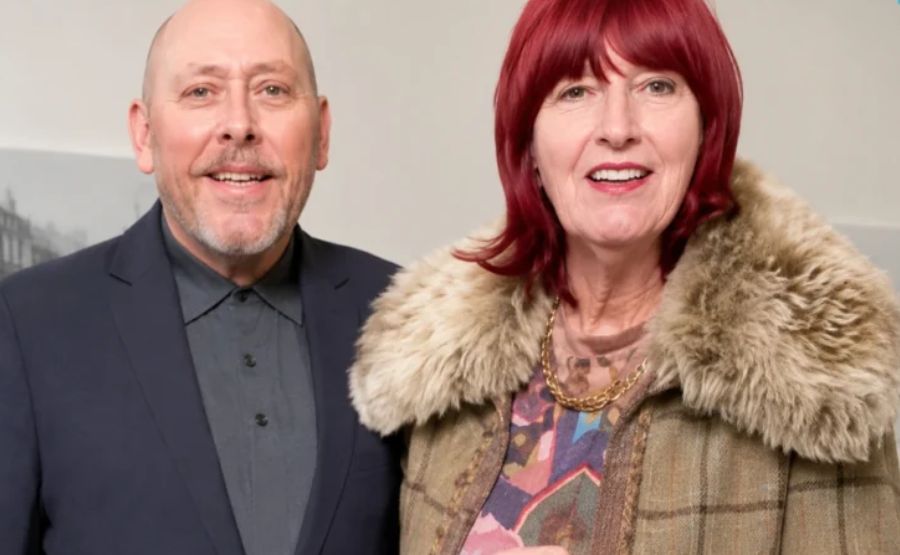
Peter Spanton met Janet Street-Porter in 1999. She was 52, already four marriages deep and professionally among the most recognizable women in British broadcasting. He was 44, running Vic Naylor’s and drinking seriously. Neither fact suggests an obvious match.
They stayed together for 27 years before formalizing anything. Janet had spent much of that period on record saying she saw no point in marrying again. In a 2012 interview with the London Evening Standard, she was direct: she didn’t see the “point” in walking down the aisle a fifth time. She held that position in various interviews for over a decade. She even acknowledged, with characteristic bluntness, that she had kept all her wedding and engagement rings from previous marriages in a chest of drawers — filed, not displayed.
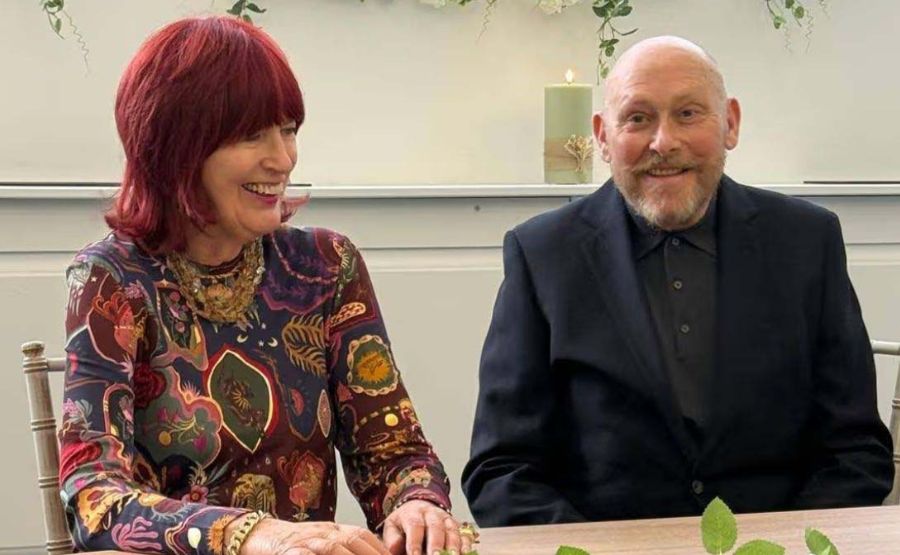
Then, over Christmas 2025, the two of them talked about it. On January 31, 2026, they drove to a registry office in Great Yarmouth, Norfolk. Six people were present: the couple, two former neighbors serving as witnesses, two close friends, and a dog named Badger. The room had chairs for a hundred guests. The ceremony lasted ten minutes.
Spanton had never been married before. Janet acknowledged this in her subsequent Loose Women announcement, explaining her nerves the day before: “I didn’t want to do anything embarrassing that I would regret. I didn’t want to make fun of Peter. I wanted it to be lovely for him, because he hasn’t been married before.”
That sentence lands differently the longer you consider it. A woman with four previous marriages worrying about the experience of a man who had none. Twenty-seven years of patience on his part. A ceremony that fits their temperament exactly — private, brief, definitive, with a dog in attendance.
Speaking to The Guardian in 2025, before the wedding, Janet had offered her most candid assessment of the relationship: “What do you define good as? It survived. I’m not bored.” That is either the most deflating thing a spouse can say, or the most honest. Coming from Janet Street-Porter — a woman whose career was built on her refusal to dress anything up — it reads as the latter.
They live primarily in Haddiscoe, Norfolk. They also maintain properties in Kent and London.
The Name Confusion Problem
Two men named Peter Spanton have lived notable lives. The other was born in 1943 in Bow, East London. He became a pioneer of British Wado-ryu karate, earned his first dan in 1966 under Tatsuo Suzuki, represented England at international competition, became England’s first international medal winner in the discipline, and spent decades teaching. He died on November 23, 2020, aged 77.
Multiple websites have merged details from both men’s biographies, creating a composite figure who apparently ran both a premium tonic brand and an international karate career simultaneously. This confusion has persisted long enough to become embedded in secondary sources that generate further confusion.
The karateka Peter Spanton was born in 1943. The drinks entrepreneur Peter Spanton was born in January 1955. They are not the same person, had no professional connection, and share only a name and a nationality.
Legacy and Influence
The premium mixer industry in the United Kingdom looks substantially different in 2026 than it did in 2010 when Peter Spanton began bottling his drinks from the remnants of Vic Naylor’s. Fever-Tree went public in 2014 and reached a market capitalization of over £2 billion at its peak. Fentimans expanded globally. Dozens of botanical tonic brands now occupy shelf space that previously held only Schweppes.
Peter Spanton Drinks predated much of this explosion. The brand helped define the category’s language — the idea that a mixer deserved as much consideration as the spirit it accompanied, that adult non-alcoholic drinks could carry genuine flavor complexity, that the drinker who had stopped drinking still deserved something interesting in a glass. These were not yet mainstream retail concepts when his No. 9 Cardamom Tonic was winning its first awards.
His influence in this space is rarely acknowledged by name, partly because he avoided the marketing noise through which influence usually gets attributed. No press tour. No Dragons’ Den appearance. No celebrity-fronted launch campaign. He relied on bartenders, food writers, and chefs — people like Fergus Henderson and Mark Hix — to carry the product to the audiences it was made for.
Whether the brand’s corporate dissolution represents a business setback, a strategic restructuring, or something else entirely is not publicly documented. What persists — the website, the retail presence, the Instagram account, the critical record — suggests a creator who is not finished with his creation regardless of what the Companies House filings indicate.
Final Words
Peter Spanton is a man who built three distinct careers across five decades, each one grounded in the same material: the sensory experience of what it means to spend time in a room with other people, with a drink in your hand. He started by mixing cocktails for the New Romantics. He spent twenty years holding court in a Clerkenwell bar that ended up in a British crime film. He then took everything he knew about what a drink should feel like and put it in bottles with numbers on them.
What he did not do, at any stage, was seek attention for himself. His name is on the brand, but he is not the brand. His relationship with one of Britain’s most publicly expressive women lasted 27 years before it produced a ten-minute ceremony in an empty registry office in Norfolk. He managed his partner’s company for twelve years without making that a public story.
He is 71 years old. His formal companies have been dissolved. His brand continues. He is recently married for the first time to a woman he has known for more than a quarter century. The picture that emerges is not of a man who failed to achieve recognition, but of a man who made a considered choice not to pursue it — and then built something recognized anyway.
The complications are real. The corporate record shows ventures that did not survive in their original form. The years at Vic Naylor’s were, by his own admission, years of serious drinking. The online record of his life is thin by the standards of anyone who has operated at his level of cultural adjacency for this long. Some of that thinness is privacy. Some may be something else.
But what remains is specific and earned: a cardamom tonic that serious bartenders put on their menus. A bar that Guy Ritchie used as a location without alteration. A marriage that took 27 years to arrange and ten minutes to complete.
FAQs
1. Who is Peter Spanton?
A British entrepreneur born in January 1955 in London. He is known for running Vic Naylor’s bar and restaurant in Clerkenwell from 1986 to approximately 2005, and for founding Peter Spanton Drinks, a premium mixer and tonic brand.
2. Is Peter Spanton married to Janet Street-Porter?
Yes. They married on January 31, 2026, at a registry office in Great Yarmouth, Norfolk. The ceremony lasted approximately ten minutes and was attended by six people, including their dog, Badger.
3. How long were they together before marrying?
They began their relationship in 1999. By the time of the wedding, they had been together for 27 years.
4. Has Peter Spanton been married before?
No. Janet Street-Porter confirmed he had never previously been married, which she cited as a reason for wanting the ceremony to feel meaningful for him.
5. What is Peter Spanton Drinks?
A brand of premium botanical mixers and tonics, launched around 2010. Products are numbered rather than named and include No. 9 Cardamom Tonic, No. 5 Lemongrass Tonic, No. 3 Dry Ginger, and others. The brand was the first in the UK to use carbon-neutral volcanic CO₂ for carbonation.
6. What awards has Peter Spanton Drinks won?
The brand received Gold, Silver, and Bronze at the SIP Awards, Great Taste Awards, and Class Bar Awards in 2017 and 2018.
7. What was Vic Naylor’s?
A bar and restaurant at 38–42 St John Street, Clerkenwell, London, that Spanton operated from June 1986 to December 2005. It attracted a culturally diverse clientele and was used as a filming location in Guy Ritchie’s Lock, Stock and Two Smoking Barrels (1998).
8. Where did Peter Spanton work before opening Vic Naylor’s?
He worked as a cocktail mixer at Blitz in Covent Garden and The Fridge in Brixton — two defining venues of the early 1980s London music and nightclub scene.
9. Why was Peter Spanton Drinks dissolved?
Peter Spanton Drinks Ltd entered creditors’ voluntary liquidation in June 2020 and was formally dissolved in July 2022. No public explanation has been given by Spanton or his representatives. The brand’s website and retail presence remain active.
10. Is Peter Spanton the same as the British karateka Peter Spanton?
No. The karateka Peter Spanton was born in 1943 in Bow, East London, and died in November 2020. The drinks entrepreneur Peter Spanton was born in January 1955. They share a name and nationality, but nothing else.
11. Who endorsed Peter Spanton Drinks early on?
Chef Fergus Henderson served the drinks at St John restaurant in Clerkenwell. Chef Mark Hix stocked them across his restaurants. Damon Albarn and Paul Simonon reportedly took No. 7 Acai on tour. Journalist and novelist Will Self wrote a piece praising the brand before it officially launched.
12. What does Peter Spanton’s listed occupation say on Companies House?
“Drink Designer.”
13. Where do Peter Spanton and Janet Street-Porter live?
Their primary residence is in Haddiscoe, Norfolk. They also maintain homes in Kent and London.
14. What is the significance of No. 3 Dry Ginger in the range?
The label carries the dedication “In memory of Notcher Spanton 1928 to 2012” — a tribute to his father. It is the most personal public statement Spanton has made about his family.
15. What is Peter Spanton’s estimated net worth?
No verified or disclosed figure exists. All published estimates are speculative. His companies have been privately held, and he has made no personal financial disclosures.
Empowering curious minds to explore, learn, and think deeper with Fact Aura.