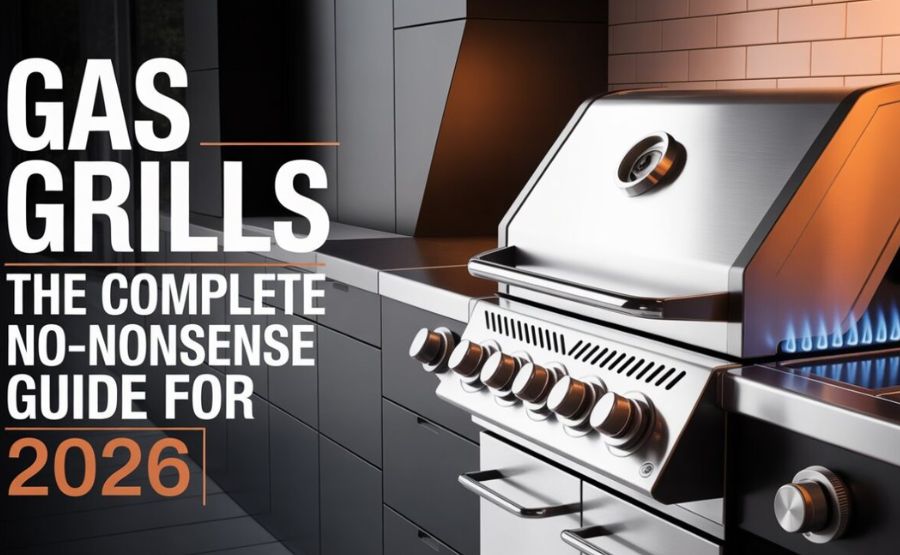
Gas Grills: Everything You Actually Want to Know
There’s a particular moment in early summer that a lot of people know by heart. You step outside, lift the cover off the grill, turn the knob, and press the ignition button. There’s a soft click, a small whoosh, and then the blue flame appears. Something about that moment just feels right. Like the season officially started.
Gas grills are woven into American outdoor life in a way that few other appliances have managed. And yet most people who own one don’t know much about where they came from, how they actually work, or what their real strengths and limitations are. So let’s sit down and talk through all of it — the history, the mechanics, the health questions, the ongoing debates — like a friend who’s genuinely thought about this stuff.
Key Facts
| Topic | Key Detail |
| Who invented the portable gas grill? | Don McGlaughlin of Chicago Combustion Corporation, first portable model sold in 1954 |
| Who invented the propane gas grill? | William Wepfer and Melton Lancaster of the Arkansas Louisiana Gas Company, 1960s |
| What fuel do gas grills use? | Natural gas (NG) or propane (LP): propane is most frequently used for portable models. |
| How hot can a gas grill get? | Typically 100–450°F on standard models; high-end models can reach 700°F |
| What are BTUs? | British Thermal Units — a measure of heat output; more BTUs doesn’t always mean better cooking |
| Are gas grills cleaner than charcoal? | Indeed, per usage, propane emits around 60% less CO2 than charcoal. |
| Do gas grills produce fewer carcinogens? | Yes — significantly less PAH exposure compared to charcoal, per research |
| What is lava rock used for? | Early gas grills used lava rock to mimic charcoal flavor; less common today |
| Most common gas grill size? | Two to four burners for residential use |
| How many Americans own gas grills? | As of recent years, gas grills are the most common type owned by American households |
| When did natural gas grills enter homes? | Around 1959–1960, when Chicago Combustion began wholesaling to gas companies |
| What is an infrared gas grill? | A gas grill that heats a ceramic tile to emit radiant heat, often cooking more evenly |
It Started With a Problem No One Had Solved Yet
The gas grill didn’t appear out of nowhere. It came from a long chain of people trying to make outdoor cooking less miserable.
Humans have been cooking over fire for nearly two million years — that’s not an exaggeration, that’s what archaeologists believe based on evidence of our earliest ancestors. The word “barbecue” itself traces back to the Arawak people of the Caribbean, who slow-cooked meats on wooden structures they called barbacoa. Spanish explorers picked up the word and eventually the practice spread northward into what became the American South, where whole pigs and smoke became religion.
Fast forward to the 1920s. Henry Ford, of all people, got tangled up in the charcoal business. He was camping and noticed leftover wood scraps and sawdust from his assembly lines going to waste. He pressed them into briquettes with tar and cornstarch. For decades these were sold as Ford Briquettes, and later became what most people today know as Kingsford.
Then in 1952, a welder named George Stephen was fed up. He worked at Weber Brothers Metal Works in Chicago and was tired of ashes blowing into his food. He cut a metal buoy in half, welded three legs onto the bottom, laid a grate across it, and used the top half as a lid. That slightly accidental invention became the Weber kettle — still one of the most recognizable grills in the world.
But the gas grill has its own origin story, and it’s a little quieter.
Louis McGlaughlin started the Chicago Combustion Corporation in 1932, initially making gas burners for commercial and industrial use. His most famous early product was something called the BROILBURGER — a gas-fired broiler for restaurants that wanted charcoal flavor without charcoal hassle. It debuted at the 1939 World’s Fair in New York City.
His son Don McGlaughlin pushed the technology forward into homes. In 1954, Chicago Combustion sold the first portable gas grill designed for residential use. They borrowed the 20-pound propane cylinders that plumbers had been using as a fuel source for torches — repurposing them for backyard cooking. The name they gave their brand eventually became LazyMan, inspired by just how much easier gas made everything compared to charcoal.
Then in the 1960s, two employees at the Arkansas Louisiana Gas Company — William Wepfer and Melton Lancaster — took a regular charcoal grill and rebuilt it in a garage to run on natural gas. Wepfer was the marketing director; his job was to find new customers for the gas company. He found millions of them. Their propane grill became one of the most widely adopted designs in American households and started what most people think of as the modern gas grilling era.
See also “Google Block Breaker: The Full Story of the Secret Game Hiding in Plain Sight“
How a Gas Grill Actually Works
If you’ve ever wondered what’s happening inside that cabinet on wheels, here’s the basic picture.
Fuel — either propane from a tank or natural gas piped from your home — flows through a regulator that controls pressure, then through valves connected to each burner knob. When you turn a knob, you’re opening a valve and letting gas flow to the burner. The burner is a hollow metal tube with small holes drilled along it. Gas escapes through those holes and mixes with air in a small chamber called the venturi.
That gas-air mixture is what actually burns. The flame sits at the burner surface. Above the burners sit heat shields or flame tamers — metal pieces, sometimes shaped like inverted Vs, that protect the burners and distribute heat more evenly across the cooking grate. When fat drips from food onto these shields, it vaporizes and rises back up as steam and smoke, which adds flavor. It’s not the same as charcoal smoke, but it’s not nothing.
The cooking grate sits above all of this. It can be cast iron, stainless steel, or porcelain-coated steel. Each material holds heat differently and has different maintenance needs. Cast iron holds heat beautifully but rusts if not seasoned and dried properly. Stainless is easier to maintain but loses heat faster.
Temperature control is where gas genuinely has an edge over charcoal. You turn the knob and the heat adjusts. With charcoal, you’re managing airflow and coal arrangement and hoping for the best. Gas lets you set a zone for searing and another for gentle cooking, and you can switch between them in seconds.
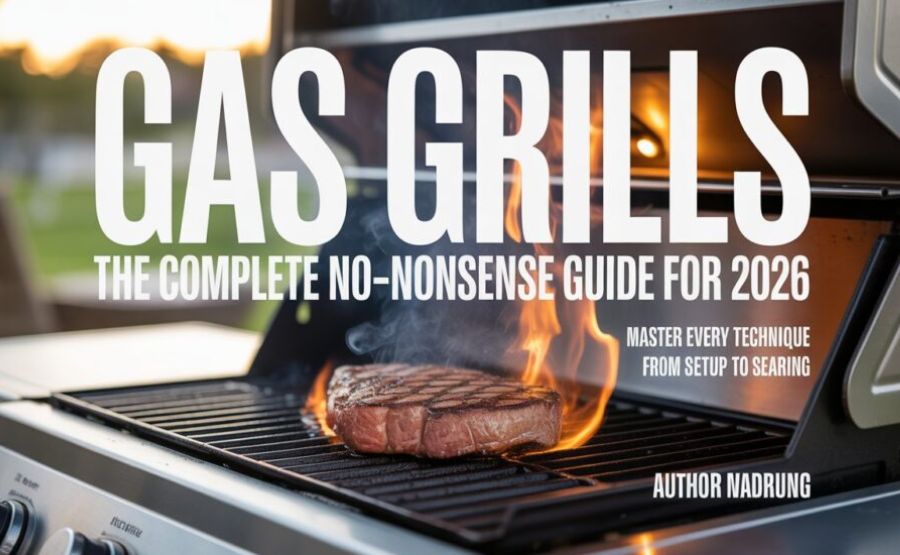
The Real Appeal: Why People Choose Gas
Ask a gas grill owner why they switched from charcoal and you’ll almost always hear some version of the same answer: time.
Charcoal takes 20 to 30 minutes to reach cooking temperature. You have to light it, wait for it, manage it. Gas grills are typically ready in 10 to 15 minutes. On a Tuesday evening when you’re trying to get dinner on the table before the sun goes down and someone needs homework help, those 15 minutes matter enormously.
The convenience goes beyond startup time. Temperature control is easier. Cleanup is simpler — no ash to deal with, just residue on the grates that a good brush handles. Many gas grills come with side burners for sauces or sides. Some have rotisserie attachments, smoker boxes for adding wood chips, and built-in thermometers that are actually useful.
For people who grill frequently — multiple times a week, not just for special occasions — gas becomes the default because it removes friction. It’s not about passion for the grill itself. It’s about the meal that comes off it.
There’s also the safety angle. Propane burns cleaner than charcoal. According to EPA figures, propane produces about 60% less carbon dioxide per use than charcoal. Research published in peer-reviewed journals has found that exposure to harmful particles — specifically the cancer-linked compounds called polycyclic aromatic hydrocarbons, or PAHs — is dramatically lower with gas grills than with charcoal. One study found the difference was four orders of magnitude: charcoal briquettes produced vastly more PAH-loaded particles in the breathing zone than propane.
That’s not a small thing. For people who grill often, or who cook near children, or who have respiratory sensitivities, gas is genuinely a healthier environment.
Where Gas Falls Short
Let’s be honest about the other side, because there is one.
Flavor. This is the argument charcoal devotees make, and they’re not wrong. The compounds created when charcoal burns and when fats hit hot coals produce a smoky depth that gas just doesn’t replicate naturally. You can add a smoker box — a small metal container with wood chips that sits on a burner — and get partway there. But if you close your eyes and compare a steak cooked on gas versus one cooked over lump charcoal, most people can taste the difference.
Gas grills also struggle to achieve the very high temperatures that serious searing requires. Standard residential models top out around 450°F. Good charcoal, managed properly, can push well past 600°F. That ferocious heat is what creates the Maillard reaction — the browning and caramelization on the surface of a steak that makes it taste like something you’d pay restaurant prices for. Some high-end gas grills, particularly infrared models, can reach 700°F or higher. But those cost significantly more.
Cost is another reality. A decent gas grill runs more upfront than a comparable charcoal grill. Then you have ongoing propane costs. A 20-pound propane tank typically runs about 15 to 20 hours of cooking time. If you grill three times a week, that tank goes quickly. Natural gas grills, connected to a home gas line, avoid the tank problem but require professional installation of a gas line to the patio — at its own cost.
Maintenance on gas grills is also more involved than charcoal. Burners corrode and clog over time. The venturi tubes — the small chambers where gas and air mix — can get blocked by debris or even insects nesting inside them over winter. Valves wear out. Igniters fail. A gas grill has more parts that can break than a charcoal kettle, which is basically just metal and a vent.
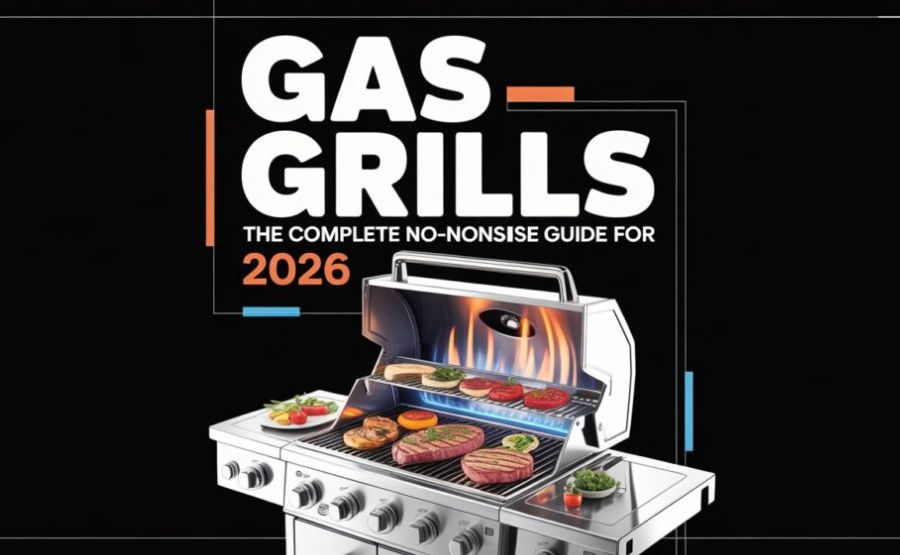
Common Misconceptions
Here’s one that surprises people: more BTUs does not mean better cooking. BTU stands for British Thermal Unit and it measures heat output. But a grill with 60,000 BTUs and poor heat distribution can cook worse than one with 40,000 BTUs and excellent heat shields. What matters is how evenly the heat spreads, how well the lid retains it, and how well you can control it. Don’t buy a grill because the BTU number sounds impressive.
Another misconception: gas grills are completely safe with no risks. They’re much safer than many people fear, but propane requires respect. Tanks should be stored upright and outdoors. You should always check hose connections for leaks — the soap bubble test works perfectly — and never use a gas grill in an enclosed space. Carbon monoxide accumulation in garages or covered patios is a real danger.
And then there’s the idea that gas grilling is environmentally neutral because propane burns clean. Cleaner than charcoal, yes. But propane is still a fossil fuel. Its extraction and transportation have ecological costs. Gas grilling is a better environmental choice compared to charcoal, but it’s not a green choice in any absolute sense.
The Bigger Picture: Grilling as Culture
Americans grill roughly 3 billion times per year, by various estimates. On Independence Day alone, some 150 million hot dogs are consumed. The backyard grill is one of the most consistent social spaces in American life — a place where conversation happens easily, where barriers come down, where someone always ends up crowded around the heat even when it’s not that cold.
This social function is real and worth appreciating. Grilling moves cooking outside and into shared space. The cook isn’t hidden in a kitchen — they’re part of the gathering. The smells reach everyone before the food does. There’s something about standing around a grill that makes talking easier.
Gas grills democratized this further. Because they’re convenient and quick, more people grill more often. Apartments with balconies, condos with tiny outdoor spaces, families with unpredictable weeknight schedules — gas made outdoor cooking possible for people who couldn’t justify the time investment of charcoal.
The Ongoing Ethics: What You Cook Matters More Than How You Cook It
Environmental scientists have made an interesting point that tends to get lost in the charcoal-versus-gas debate. Since meat production accounts for more than half of all food-related greenhouse gas emissions, what you put on the grill matters more than which grill you use.
Swapping beef for chicken or pork on a gas grill makes a bigger carbon difference than switching from charcoal to gas while still grilling beef. And grilling vegetables — which gas handles perfectly, with controlled heat, no ash, no bitterness from excessive smoke — is even better.
This isn’t a guilt trip about grilling. It’s just a wider lens. The tool matters, but the choices you make with it matter more.
What Gas Grills Might Look Like in the Future
Infrared technology is already changing what gas grills can do. Instead of flame heating the grates and then the food indirectly, infrared grills heat a ceramic tile that emits radiant heat directly at the food. This locks in moisture, creates more even cooking, and reaches much higher temperatures. Chefs have used infrared systems in restaurants for decades. Residential versions are now much more accessible.
Smart connectivity is appearing in higher-end models — built-in probes connected to apps that alert your phone when meat hits the target temperature. Some grills adjust their own flame intensity based on those readings.
Hybrid grills, which can run on gas for weekday convenience but accept charcoal or wood pellets when someone wants to spend a Saturday smoking ribs, are also gaining popularity. low and slow. The idea that you need to choose one method permanently is slowly dissolving.
And as renewable fuels develop — hydrogen, biogas, and others — the environmental argument against gas grilling may weaken further. Clean-burning renewable gas would preserve all the convenience and safety advantages of gas without the fossil fuel footprint.
Final Words
The gas-versus-charcoal debate has been going on for sixty years and will probably continue indefinitely. Both sides have real points. Charcoal devotees aren’t wrong about flavor. Gas advocates aren’t wrong about convenience and health. The answer that makes the most sense is: use what actually fits your life and your cooking.
If you grill twice a year for big gatherings and love spending hours over charcoal with a beer in hand, charcoal might be your thing. If you cook outside three nights a week and need dinner on the table in 30 minutes, gas is probably right for you.
The best grill is the one you actually use.
FAQs
1. What’s the difference between propane and natural gas for grilling?
Propane comes in portable tanks — those familiar silver cylinders — and is the most common setup for residential grills. Natural gas connects directly to your home’s gas line through a permanent fitting. Natural gas is often cheaper per hour of use, but you need a gas line to the patio and a grill specifically designed for it. Propane is portable and requires no installation but needs regular tank refills.
2. What is the lifespan of a propane tank?
A standard 20-pound propane tank typically gives you 15 to 20 hours of cooking time, depending on how many burners you run and at what intensity. For a family that grills two or three times per week, one tank might last three to five weeks.
3. How do I know if my propane tank is running low?
The old trick is to pour warm water down the side of the tank and feel for the line where it changes from warm to cool — that’s where the propane level sits. You can also buy inexpensive magnetic gauges that attach to the outside. Many hardware stores sell tanks in exchange programs, which is often more convenient than refilling.
4. Why does my gas grill have hot and cold spots?
Heat distribution varies by design. Cheap grills often have thin metal heat shields that don’t spread heat evenly. Preheating for at least 10 to 15 minutes with the lid closed helps. If you have consistent cold spots on one side, the burner or the heat shields on that side may need cleaning or replacement.
5. Can I get a smoky flavor from a gas grill?
Yes — with a smoker box. Fill a small metal box with wood chips (hickory, apple, cherry, mesquite — all work differently), place it on or near a burner, and close the lid. The chips smolder and add real smoke flavor. It takes a little trial and error to find how much wood and how long to soak the chips, but it works well.
6. Are gas grills safer than charcoal?
In most respects, yes. Gas produces less air pollution, fewer PAHs in the immediate cooking environment, and no ash that can reignite accidentally. That said, gas grills require attention to hose connections, proper storage of tanks, and strict avoidance of enclosed spaces. Neither type is dangerous when used correctly.
7. How often should I clean my gas grill?
The grates should be brushed after every use while they’re still warm. A deeper clean — removing the grates, cleaning the heat shields, and checking the burners — should happen a few times per season. Before storing for winter or after a long idle period, check the venturi tubes for spider webs or debris, which can block gas flow and cause flare-ups.
8. My igniter stopped working. What should I do?
Igniters are often the first thing to fail on a gas grill and the easiest to fix. They’re inexpensive and widely available in hardware stores. If you need to grill before getting a replacement, a long grill lighter or match held near the burner while you turn on the gas works safely. Just turn the gas on first, then ignite immediately.
9. What’s an infrared gas grill and is it worth the extra cost?
Infrared grills heat a ceramic plate that emits radiant heat, similar to how the sun warms you. This cooks food more evenly, reaches higher temperatures (great for searing), and keeps moisture in better. They’re generally more expensive. For serious steak cooks or people who want restaurant-quality searing, the investment can be very much worth it.
10. Can I leave my propane tank connected to the grill when I’m not using it?
It’s safe to leave the tank connected between uses, but the valve on the tank itself should be turned off when you’re done grilling. This prevents any slow leak through the regulator. For storage over winter, disconnect the tank and store it upright, outdoors, away from direct sunlight and ignition sources.
11. What’s the best number of burners for a home grill?
For most families, two to three burners is plenty. Multiple burners let you create heat zones — high heat on one side for searing, low or off on the other for indirect cooking larger cuts. Four burners give you more flexibility but also a bigger footprint and a higher cost. Match the size to how often you actually cook for large groups.
12. Are gas grills good for cooking vegetables?
Gas grills are actually excellent for vegetables. The controlled heat lets you grill without burning, and the grill grates create those appealing char marks. Bell peppers, zucchini, corn on the cob, mushrooms, asparagus — all do very well with medium-high direct heat and just a little olive oil.
13. Is a gas grill a good buy for apartment balconies?
Check your building’s rules first — many apartment buildings prohibit propane tanks on balconies above a certain floor, and some ban gas grills entirely. If allowed, a compact two-burner grill works well in small spaces. Natural gas grills won’t work unless your building has gas connections on balconies, which is rare.
14. How long should a gas grill last?
A well-made gas grill, properly maintained, can last 10 to 15 years. Budget grills made with thin steel often rust through the firebox within 3 to 5 years. The single most important thing you can do to extend a grill’s life is use a cover and clean it regularly. Burners and grates are replaceable, so even an older grill can be refreshed rather than replaced.
15. Gas or charcoal — which is really better?
Honestly? It depends on the cook. Gas wins on speed, convenience, health, and clean burning. Charcoal wins on flavor depth, high-heat capability, and a lower upfront cost. Many passionate home cooks own both. If you’re buying your first grill and you want something you’ll use regularly without a lot of fuss, gas is probably the better starting point.
Empowering curious minds to explore, learn, and think deeper with Fact Aura.